• Fri frakt över 249 kr
  • •
  • Snabba leveranser
  • •
  • Billiga böcker
Kundservice

Du är på sajten för privatpersoner.

Företag, bibliotek eller offentlig verksamhet?

Du handlar på classic.bokus.com, där alla dina funktioner finns intakta.
Till classic.bokus.com
Bokus logotyp. Gå till startsidan.
  • Erbjudanden
  • Nyheter
  • Student
  • Topplistor
  • Barn & ungdom
  • Bokus Play
  • E-böcker
  • Pocketböcker
  • Spel & pussel

10% rabatt på allt med kod NYSTART10 →

Sidfot

Mina sidor

    Hjälp

    • Kundservice
    • Vanliga frågor och svar
    • Frakt och leverans
    • Retur vid ångerrätt
    • Reklamera vara
    • Betalning
    • Köpvillkor
    • Allmänna villkor
    • Information om webbplatsens tillgänglighet

    Om Bokus

    • Om oss
    • Pressrum
    • För studenter
    • För företag
    • För bibliotek och offentlig verksamhet
    • För leverantörer
    • Hållbarhet

    Populärt

    • Aktuella erbjudanden
    • Presentkort
    • Studentlitteratur
    • Nya böcker
    • Topplistor
    • Signerade böcker
    • Engelska böcker

    Inspiration

    • Boktips
    • BookTok
    • Populära bokserier
    • Barnbokskaraktärer
    • Populära författare
    Logotyp för Bokus
    Följ oss på Facebook (extern länk)Följ oss på Instagram (extern länk)Följ oss på YouTube (extern länk)Följ oss på TikTok (extern länk)
    bokus @ CookiesAnpassa cookiesIntegritetspolicyKöpvillkor
    Till Citymail hemsida (extern länk)Till Budbee hemsida (extern länk)Till Postnord hemsida (extern länk)Till Schenker hemsida (extern länk)Till Early Bird hemsida (extern länk)Till Walleys hemsida (extern länk)
    1. Skönlitteratur
    2. Litteraturvetenskap
    3. Litteraturvetenskap

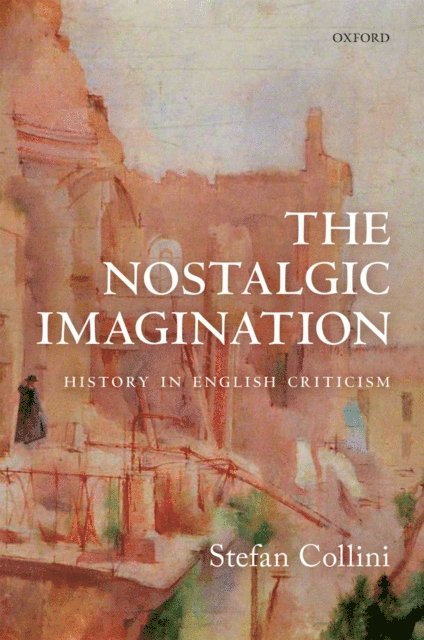
    The Nostalgic Imagination

    History in English Criticism

    AvStefan Collini

    Häftad, Engelska, 2020

    441 kr

    Skickas . Fri frakt över 249 kr.

    Fler format och utgåvor

    Inbunden

    724 kr

    Beskrivning

    This unusual book explores the historical assumptions at work in the style of literary criticism that came to dominate English studies in the twentieth century. Stefan Collini shows how the work of critics renowned for their close attention to 'the words on the page' was in practice bound up with claims about the nature and direction of historical change, the interpretation of the national past, and the scholarship of earlier historians. Among the major figures examined in detail are T.S. Eliot, F.R. Leavis, William Empson, and Raymond Williams, while there are also original discussions of such figures as Basil Willey, L.C. Knights, Q.D. Leavis, and Richard Hoggart. The Nostalgic Imagination argues that in the period between Eliot's The Sacred Wood and Williams's The Long Revolution, the writings of such critics came to occupy the cultural space left by academic history's retreat into specialized, archive-bound monographs. Their work challenged the assumptions of the Whig interpretation of English history, and entailed a revision of the traditional relations between 'literary history' and 'general history'. Combining close textual analysis with wide-ranging intellectual history, this volume both revises the standard story of the history of literary criticism and illuminates a central feature of the cultural history of twentieth-century Britain.
    Produktinformation

    • Utgivningsdatum:2020-01-30
    • Mått:155 x 231 x 15 mm
    • Vikt:409 g
    • Format:Häftad
    • Språk:Engelska
    • Antal sidor:256
    • Förlag:OUP OXFORD
    • ISBN:9780198860334

    Utforska kategorier

    • Litteraturvetenskap inom Skönlitteratur
    • Europas historia inom Historia och arkeologi
    • Socialhistoria och kulturhistoria inom Historia och arkeologi

    Recensioner i media

    The Nostalgic Imagination takes its place among Stefan Collini's works as an example par excellence of the rigour that, he teaches us, the critic must exert to remain even-handed: which is in itself the highest praise.

    Innehållsförteckning

    • Introduction 1: Whig History and the Mind of England 2: Scrutinizing the Present Phase of Human History 3: Science and Capitalism as Background 4: Rationalism, Christianity, and Ambiguity 5: The History of the Reading Public 6: The Long Industrial Revolution 7: Literary history as cultural history Postscript