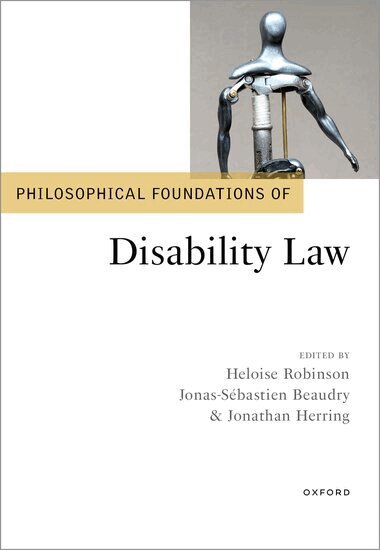
Inbunden, Engelska, 2027
Philosophical Foundations of Disability Law
2237 kr
Kommande
Beskrivning
Disability law is one of the most urgent and rapidly developing areas of legal scholarship, engaging fundamental questions about equality, autonomy, personhood, and the role of law in responding to exclusion. Yet its philosophical foundations have not been brought together in a sustained way. By placing disability law in dialogue with philosophy and related fields, this volume offers a major intervention in an emerging area and a framework for understanding its scope, principles, and future direction.The collection brings conceptual clarity to legal challenges that continue to shape disabled people's lives, from discrimination and structural exclusion to questions of respect, human flourishing, and legal recognition. Its chapters move across areas of law and legal traditions while opening disability law to broader interdisciplinary conversations, including perspectives from theology, literature, and history.Philosophical Foundations of Disability Law is the first volume of its kind to bring together distinguished scholars in law and philosophy, as well as other relevant disciplines, with contributions that can grow the field of disability law like never before. Through an innovative approach, the chapters cover an especially extensive and diverse range of topics, engaging key philosophical themes as well as intersectional perspectives. For researchers and students interested in disability law, disability and philosophy, and disability studies, the collection can serve as a foundational text.
Produktinformation
- Utgivningsdatum: 2027-02-05
- Mått: 171 x 246 x undefined mm
- Format: Inbunden
- Språk: Engelska
- Serie: Philosophical Foundations of Law
- Antal sidor: 488
- Förlag: OUP OXFORD
- ISBN: 9780198909309
Utforska kategorier
Betyg & recensioner
0 recensioner
Inga recensioner tillgängliga.