Bokus
Esther Liberman Cuenca - The Making of Urban Customary Law in Medieval and Reformation England, Inbunden

Inbunden, Engelska, 2025

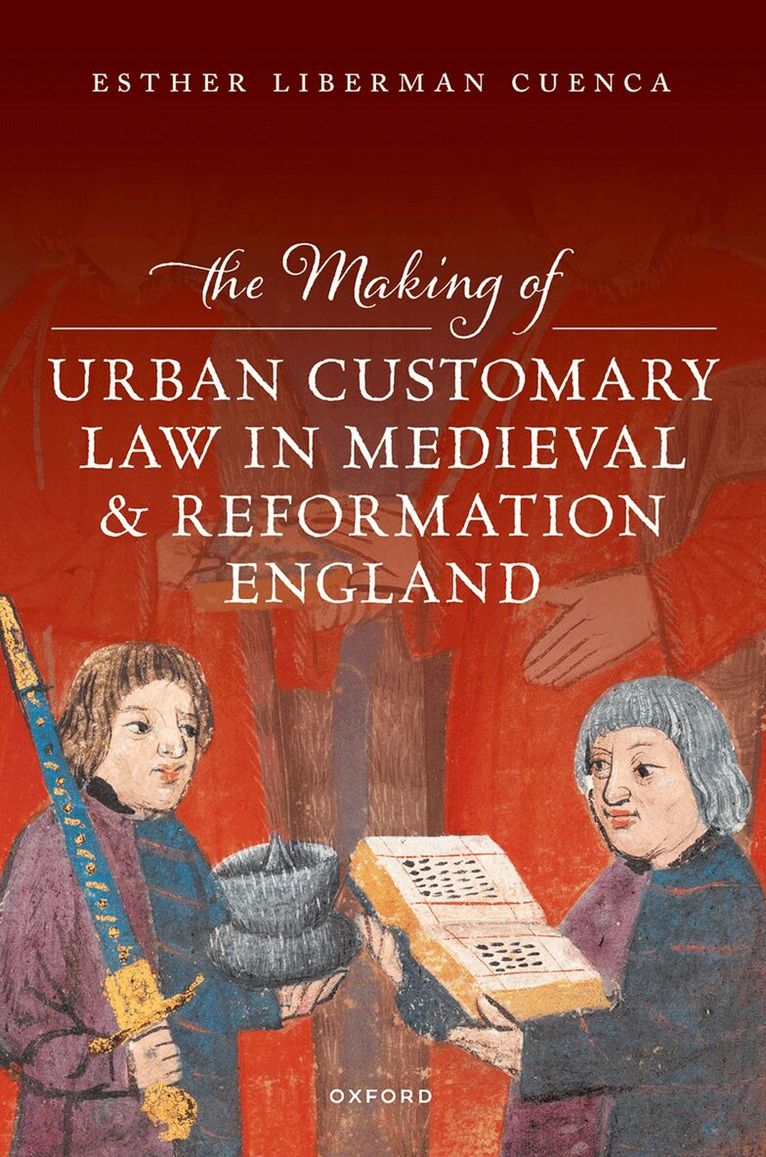
The Making of Urban Customary Law in Medieval and Reformation England

Av Esther Liberman Cuenca

1516 kr

Beställningsvara. Skickas inom 5-8 vardagar. Fri frakt över 249 kr.

Beskrivning
Drawing on a quantitative analysis of hundreds of printed and archival sources from 77 towns, The Making of Urban Customary Law in Medieval England is the first cross-regional investigation into the history of urban customs since Mary Bateson's seminal, two-volume work Borough Customs (1904-1906). In contrast to English common law and church law, which both had long institutional and academic traditions devoted to training men in their legal philosophies, customary law constituted local practices that acquired the force of law over time. Urban customary law regulated political officeholding, trade, property holding, and even moral behaviour in English towns. The Making of Urban Customary Law argues that urban customs, which governed the lives of people in English towns, were crucial to the development of a distinct, bourgeois identity in England-an evolution that this new study tracks from the early twelfth to the late sixteenth centuries. In the years following the Black Death, and especially during the Reformation period, this law became more concerned with defining political authority, maintaining morality, and articulating a consensus about the “common good” for townspeople. This book makes two principal claims: First, customary law advanced the business interests of an urban oligarchy. These were urban (male) elites who drafted laws and obtained privileges to enhance their wealth and assert their political independence from local lords, and often made claims about the legitimacy of their privileges or laws by rooted them in history or some kind of ancestral past. These lawmakers also made considerable efforts to establish their identities as morally upright and even-handed patriarchs. In so doing, urban customary law played a central role in the development of a distinct bourgeois identity in medieval and Reformation England. Second, this law lent particular meanings to the “common good” in towns, as it helped these lawmakers articulate policies that cohered to their vision of an ideal civic community.
Produktinformation
  • Utgivningsdatum: 2025-03-27
  • Mått: 165 x 240 x 20 mm
  • Vikt: 628 g
  • Format: Inbunden
  • Språk: Engelska
  • Antal sidor: 288
  • Förlag: OUP OXFORD
  • ISBN: 9780198916772
  • Utmärkelser: Honorable Mention, Lynn Hollen Lees Prize for Best Book in European Urban History, Urban History Association
Utforska kategorier
Mer om författaren

Esther Liberman Cuenca received her PhD in History from Fordham University and is Assistant Professor of History at the University of Houston-Victoria in Victoria, Texas. She is an editor of the undergraduate textbook, Law, Justice, and Society in the Medieval World: An Introduction through Film (Fordham Press, 2025), and her essays have appeared in Urban History, The Paris Review, Continuity and Change, and Historical Reflections/Réflexions Historiques. She has received fellowships and awards from the Mellon Foundation, Medieval Academy of America, and American Philosophical Society. In 2022/23, she was a Member at the Institute for Advanced Study in Princeton.

Recensioner i media

The Making of Urban Customary Law is a remarkable feat. It grapples with multiple, inconsistent, and dense legal traditions that shifted over time and continued to change into the eighteenth century. ...It provides researchers a methodological framework and a critical guide to source materials to incorporate urban custom into broad studies of medieval society.

Betyg & recensioner

0 recensioner

Inga recensioner tillgängliga.