• Fri frakt över 249 kr
  • •
  • Snabba leveranser
  • •
  • Billiga böcker
Kundservice

Du är på sajten för privatpersoner.

Företag, bibliotek eller offentlig verksamhet?

Du handlar på classic.bokus.com, där alla dina funktioner finns intakta.
Till classic.bokus.com
Bokus logotyp. Gå till startsidan.
  • Erbjudanden
  • Nyheter
  • Student
  • Topplistor
  • Barn & ungdom
  • Bokus Play
  • E-böcker
  • Pocketböcker
  • Spel & pussel

10% rabatt på allt med kod NYSTART10 →

Sidfot

Mina sidor

    Hjälp

    • Kundservice
    • Vanliga frågor och svar
    • Frakt och leverans
    • Retur vid ångerrätt
    • Reklamera vara
    • Betalning
    • Köpvillkor
    • Allmänna villkor
    • Information om webbplatsens tillgänglighet

    Om Bokus

    • Om oss
    • Pressrum
    • För studenter
    • För företag
    • För bibliotek och offentlig verksamhet
    • För leverantörer
    • Hållbarhet

    Populärt

    • Aktuella erbjudanden
    • Presentkort
    • Studentlitteratur
    • Nya böcker
    • Topplistor
    • Signerade böcker
    • Engelska böcker

    Inspiration

    • Boktips
    • BookTok
    • Populära bokserier
    • Barnbokskaraktärer
    • Populära författare
    Logotyp för Bokus
    Följ oss på Facebook (extern länk)Följ oss på Instagram (extern länk)Följ oss på YouTube (extern länk)Följ oss på TikTok (extern länk)
    bokus @ CookiesAnpassa cookiesIntegritetspolicyKöpvillkor
    Till Citymail hemsida (extern länk)Till Budbee hemsida (extern länk)Till Postnord hemsida (extern länk)Till Schenker hemsida (extern länk)Till Early Bird hemsida (extern länk)Till Walleys hemsida (extern länk)
    1. Ekonomi och Ledarskap
    2. Företagsekonomi
    3. Affärsetik

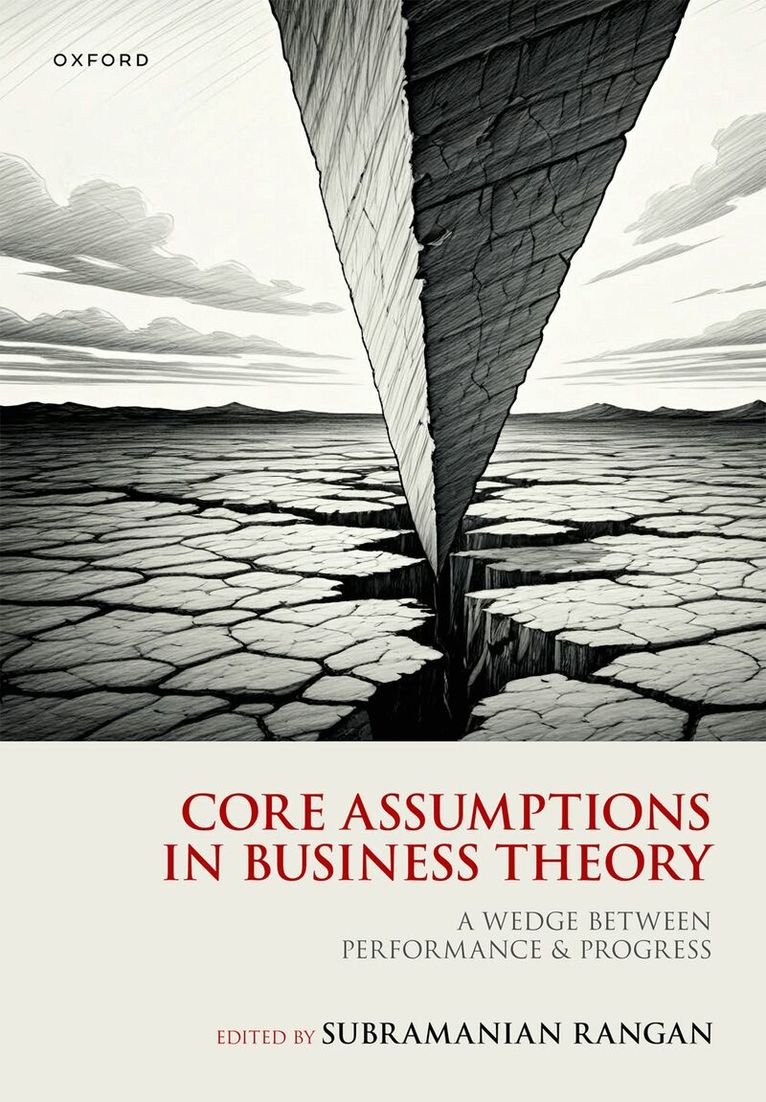
    Core Assumptions in Business Theory

    A Wedge Between Performance and Progress

    AvSubramanian Rangan

    Inbunden, Engelska, 2025

    1 699 kr

    Beställningsvara. Skickas inom 5-8 vardagar. Fri frakt över 249 kr.

    Beskrivning

    The modern market-based economy generates wealth, but it lags on well-being; it has mastered efficiency, but struggles with equity; it boasts size, but falls short on sustainability. In other words, our economy delivers performance but neglects progress (i.e., well-being, equity, and sustainability). Many rightly call for tighter regulation, higher (“true”) prices, and longer-term incentives. Others appeal to corporate purpose, shared value, and stakeholder-centricity.Beyond regulation and the practice of business, we must attend as well to education and the theory of business. In particular, we must look at business theory's core assumptions, whose weaknesses are long known. In an applied field such as business, where theory tends to be normative, flawed assumptions could act as a “wedge” cleaving apart performance and progress. In this volume, Subramanian Rangan brings together eminent social scientists and philosophers to explore core assumptions in each of the major fields of business-including economics, strategy, marketing, operations, decision science, leadership, governance, technology, and finance. This structured field-by-field reflection reveals and expands the bounds of our rationality. Core Assumptions in Business Theory proposes a revised profit function that integrates harm, outlines how economic actors may draw on moral philosophy to enact Pareto-equity (and not just Pareto-efficiency), suggests a two-stage rationality approach that can attend to well-being, and recasts marketing as consumer education and not merely demand promotion. With an emphasis on education rather than regulation of economic power, this volume argues that moral reasoning and moral roles can fruitfully supplement prudential reasoning and functional responsibilities. Such an evolution will enable our economy to be both modern and moral.This is an open access title available under the terms of a CC BY-NC-ND 4.0 International licence. It is free to read on the Oxford Academic platform and offered as a free PDF download from OUP and selected open access locations.

    Produktinformation

    • Utgivningsdatum:2025-05-08
    • Mått:181 x 252 x 25 mm
    • Vikt:846 g
    • Format:Inbunden
    • Språk:Engelska
    • Antal sidor:400
    • Förlag:OUP OXFORD
    • Medarbetare:Subramanian Rangan
    • ISBN:9780198944218

    Utforska kategorier

    • Affärsetik inom Ekonomi och Ledarskap
    • Ekonomisk politik inom Ekonomi och Ledarskap
    • Ekonomiska system inom Ekonomi och Ledarskap

    Mer om författaren

    Subi Rangan is Professor of Strategy and Management at INSEAD, the global business school, where he holds the Abu Dhabi Crown Prince Court Endowed Chair in Societal Progress. His research focuses on how economic actors may better integrate performance and progress. In 2013 he initiated the Society for Progress, a fellowship of eminent philosophers, social scientists, and business leaders. He is also the editor of Capitalism Beyond Mutuality? (OUP, 2018) and Performance & Progress (OUP, 2015).

    Innehållsförteckning

    • List of Figures List of Contributors Subramanian Rangan: Introduction Part I. Economics 1: Subramanian Rangan: From Market-Pareto to Moral-Pareto: Seven Problematic Assumptions in Business Economics Theory 2: Jean Tirole: Assumptions in Economics 3: Robert H. Frank: A Half-Dozen Assumptions That Have Led Economists Astray 4: David Autor: Some Assumptions in Labor Economics 5: Joshua Cohen: Reflection on Tirole's Chapter 6: Philip Pettit: Reflections on Autor's and Frank's Chapters 7: Ellen Quigley: Reflections on Frank's, Kailas's, Rangan's, and Tirole's Chapters Part II. Strategy 8: Jay B. Barney: The Social Welfare Implications of Strategic Management Theory 9: Elizabeth Anderson: Reflections on Barney's Chapter 10: Michael Fuerstein: Humanitarian Monopolists: Reflections on Barney's Chapter Part III. Marketing 11: Philip Kotler: Fundamental Assumptions in Marketing 12: Hilke Plassmann: Three Assumptions Underlying Customer Value Management: An Interdisciplinary Perspective 13: Valerie Tiberius: Does Anyone Need a Rolex?: Reflections on Kotler's and Plassmann's Chapters 14: Michael Fuerstein: I ''Need'' a Rolex: Reflections on Kotler's and Plassmann's Chapters Part IV. Decision Science 15: James G. March: Theories of Choice and Value Endogeneity 16: Itzhak Gilboa: Some Questionable Assumptions in Economic Theory 17: David Schmidtz: Reflections on Gilboa's and March's Chapters Part V. Operations Research 18: Edward H. Kaplan: The Assumptions of Operations Research 19: Philip Kitcher: Reflections on Kaplan's Chapter - I 20: Mathias Risse: Reflections on Kaplan's Chapter - II Part VI. Organization Theory and Sociology 21: Julie Battilana: Fundamental Assumptions in Organization Theory 22: James P. Walsh: Organization and Management Theory: Our Assumptions and the Quest for a Better World 23: Kwame Anthony Appiah: Assumptions Rational and Not: Reflections on Battilana's and Walsh's Chapters 24: John W. Meyer: The Orientation of Economic Sociology: Assumptions and Limits 25: Gerald F. Davis: Assumptions Underlying Sociological Models in Business Schools 26: David Schmidtz: Social Science Assumptions: Reflections on Meyer's Chapter 27: Philip Kitcher: Methodological Individualism-Lessons (?) from Biology: Reflections on Davis's and Meyer's Chapters 28: Valerie Tiberius: Philosophical Concepts in Organization and Leadership Part VII. Leadership and Corporate Governance 29: Ramón Mendiola: Fundamental Assumptions about True Leaders 30: Ravi Kailas: A Discussion on Corporate Governance 31: Bertrand Collomb: Incorrect Assumptions That Have Guided Our Economic System 32: Kwame Anthony Appiah: Corporate Governance and Leadership: Reflections on Kailas's and Mendiola's Chapters 33: Philip Pettit: On Corporate Governance: Reflections on Kailas's Chapter Part VIII. Technology 34: S. D. Shibulal: Assumptions Regarding Technology 35: Jim Hagemann Snabe: A Compass for Technology 36: Elizabeth Anderson: Situating the Assumptions of Technology in Broader Normative Frameworks: Reflections on Shibulal's and Snabe's Chapters 37: Susan Neiman: Concerns about Technology: Reflections on Shibulal's and Snabe's Chapters Part IX. Finance 38: Raghuram Rajan: Taking Stock of Some Core Assumptions in Finance 39: Marti G. Subrahmanyam: The Finance Paradigm 40: Susan Neiman: Reflections on Rajan's and Subrahmanyam's Chapters - I 41: Mathias Risse: Reflections on Rajan's and Subrahmanyam's Chapters - II Ebba Abdon Hansmeyer: Afterword: Evolving the Theory, Actors, and Practice of Business Index