• Fri frakt över 249 kr
  • •
  • Snabba leveranser
  • •
  • Billiga böcker
Kundservice

Du är på sajten för privatpersoner.

Företag, bibliotek eller offentlig verksamhet?

Du handlar på classic.bokus.com, där alla dina funktioner finns intakta.
Till classic.bokus.com
Bokus logotyp. Gå till startsidan.
  • Erbjudanden
  • Student
  • Topplistor
  • Barn & ungdom
  • Bokus Play
  • E-böcker
  • Ljudböcker
  • Pocketböcker
  • Spel & pussel

Upp till 25% på utvalda nyheter →

Sidfot

Mina sidor

    Hjälp

    • Kundservice
    • Vanliga frågor och svar
    • Frakt och leverans
    • Retur vid ångerrätt
    • Reklamera vara
    • Betalning
    • Köpvillkor
    • Allmänna villkor
    • Information om webbplatsens tillgänglighet

    Om Bokus

    • Om oss
    • Pressrum
    • För studenter
    • För företag
    • För bibliotek och offentlig verksamhet
    • För leverantörer
    • Hållbarhet

    Populärt

    • Aktuella erbjudanden
    • Presentkort
    • Studentlitteratur
    • Nya böcker
    • Topplistor
    • Signerade böcker
    • Engelska böcker

    Inspiration

    • Boktips
    • BookTok
    • Populära bokserier
    • Barnbokskaraktärer
    • Populära författare
    Logotyp för Bokus
    Följ oss på Facebook (extern länk)Följ oss på Instagram (extern länk)Följ oss på YouTube (extern länk)Följ oss på TikTok (extern länk)
    bokus @ CookiesAnpassa cookiesIntegritetspolicyKöpvillkor
    Till Citymail hemsida (extern länk)Till Budbee hemsida (extern länk)Till Postnord hemsida (extern länk)Till Schenker hemsida (extern länk)Till Early Bird hemsida (extern länk)Till Walleys hemsida (extern länk)
    1. Språk och ordböcker
    2. Språkvetenskap och lingvistik

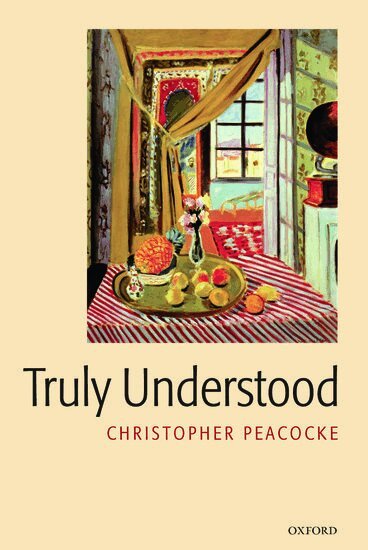
    Truly Understood

    AvChristopher Peacocke

    Inbunden, Engelska, 2008

    867 kr

    Beställningsvara. Skickas inom 5-8 vardagar. Fri frakt över 249 kr.

    Fler format och utgåvor

    E-bok

    395 kr

    E-bok

    395 kr

    Häftad

    709 kr

    Beskrivning

    In Truly Understood, Christopher Peacocke argues that truth and reference have a much deeper role in the explanation of meaning and understanding than has hitherto been appreciated. Examination of specific concepts shows that a grasp of these concepts has to be characterized in terms of reference, identity, and relations to the world. Peacocke develops a positive general theory of understanding based on the idea that concepts are individuated by their fundamental reference rules, which contrasts sharply with conceptual-role, inferentialist, and pragmatist approaches to meaning. He treats thought about the material world, about places and times, and about the self within the framework of this general account, and extends the theory to explain the normative dimensions of content, which he believes are founded in the network of connections between concepts and the level of reference and truth. In the second part of the book, Peacocke explores the application of this account to some problematic mental phenomena, including the conception of many subjects of experience, concepts of conscious states, mental action, and our ability to think about the contents of our own and others' mental states.

    Produktinformation

    • Utgivningsdatum:2008-04-24
    • Mått:164 x 241 x 24 mm
    • Vikt:620 g
    • Format:Inbunden
    • Språk:Engelska
    • Antal sidor:356
    • Förlag:OUP OXFORD
    • ISBN:9780199239443

    Utforska kategorier

    • Språkvetenskap och lingvistik inom Språk och ordböcker
    • Filosofiska discipliner inom Filosofi och religion
    • Kognitiv psykologi inom Psykologi och pedagogik

    Recensioner i media

    An interesting development in [Peacocke's] on-going project of elucidating the nature of understanding and concept-possession... Very interesting.

    Innehållsförteckning

    • Preface ; Introduction ; Acknowledgments and Sources ; PART I: A THEORY OF UNDERSTANDING ; 1. Truth's Role in Understanding ; 2. Reference and Reasons ; 3. The First Person as a Case Study ; 4. Implicit Conceptions ; PART II: APPLICATIONS TO MENTAL CONCEPTS ; 5. Conceiving of Conscious States ; 6. 'Another I': Representing Perception and Action ; 7. Mental Action ; 8. Representing Thoughts ; Conclusion