• Fri frakt över 249 kr
  • •
  • Snabba leveranser
  • •
  • Billiga böcker
Kundservice

Du är på sajten för privatpersoner.

Företag, bibliotek eller offentlig verksamhet?

Du handlar på classic.bokus.com, där alla dina funktioner finns intakta.
Till classic.bokus.com
Bokus logotyp. Gå till startsidan.
  • Erbjudanden
  • Nyheter
  • Student
  • Topplistor
  • Barn & ungdom
  • Bokus Play
  • E-böcker
  • Pocketböcker
  • Spel & pussel

10% studentrabatt med kod TERM26

Sidfot

Mina sidor

    Hjälp

    • Kundservice
    • Vanliga frågor och svar
    • Frakt och leverans
    • Retur vid ångerrätt
    • Reklamera vara
    • Betalning
    • Köpvillkor
    • Allmänna villkor
    • Information om webbplatsens tillgänglighet

    Om Bokus

    • Om oss
    • Pressrum
    • För studenter
    • För företag
    • För bibliotek och offentlig verksamhet
    • För leverantörer
    • Hållbarhet

    Populärt

    • Aktuella erbjudanden
    • Presentkort
    • Studentlitteratur
    • Nya böcker
    • Topplistor
    • Signerade böcker
    • Engelska böcker

    Inspiration

    • Boktips
    • BookTok
    • Populära bokserier
    • Barnbokskaraktärer
    • Populära författare
    Logotyp för Bokus
    Följ oss på Facebook (extern länk)Följ oss på Instagram (extern länk)Följ oss på YouTube (extern länk)Följ oss på TikTok (extern länk)
    bokus @ CookiesAnpassa cookiesIntegritetspolicyKöpvillkor
    Till Citymail hemsida (extern länk)Till Budbee hemsida (extern länk)Till Postnord hemsida (extern länk)Till Schenker hemsida (extern länk)Till Early Bird hemsida (extern länk)Till Walleys hemsida (extern länk)
    1. Samhälle och politik
    2. Samhälle och kultur
    3. Sociala grupper och identitet
    4. Genusvetenskap

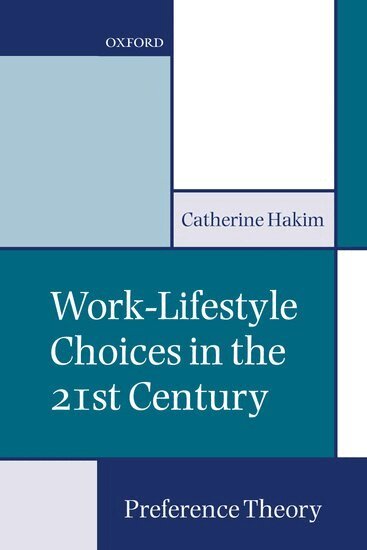
    Work-Lifestyle Choices in the 21st Century

    Preference Theory

    AvCatherine Hakim

    Inbunden, Engelska, 2000

    Del i serien OUP Oxford

    1 027 kr

    Beställningsvara. Skickas inom 5-8 vardagar. Fri frakt över 249 kr.

    Fler format och utgåvor

    Häftad

    1 275 kr

    Beskrivning

    In this book, Hakim presents a new, multi-disciplinary theory for explaining and predicting current and future patterns of women's choice between employment and family work. Preference theory is the first theory developed specifically to explain women's behaviour and choices. As such, it constitutes a major break from male-centred theorizing to date in sociology and economics.Preference theory is grounded on the substantial body of new research on women's work and fertility that has flourished within feminist scholarship. It identifies five major historical changes that collectively are producing a qualitatively new scenario for women in prosperous societies in the 21st century.Throughout the analysis, the USA and Britain illustrate what the new scenario means for women, how it alters their preferences and work-lifestyles choices. Hakim also reviews research evidence on contemporary developments across Europe, Canada, Australia, Japan, and the far East to develop a new theory that is genuine international in perspective.

    Produktinformation

    • Utgivningsdatum:2000-11-09
    • Mått:161 x 241 x 24 mm
    • Vikt:651 g
    • Format:Inbunden
    • Språk:Engelska
    • Serie:OUP Oxford
    • Antal sidor:356
    • Förlag:OUP OXFORD
    • ISBN:9780199242092

    Utforska kategorier

    • Genusvetenskap inom Samhälle och politik
    • Sociologi inom Samhälle och politik

    Mer om författaren

    Catherine Hakim, Senior Research Fellow, London School of Economics

    Recensioner i media

    A compelling book, original in its approach and its theoretical development ... An important contribution of Work-Lifestyle Choices in the 21st Century comes in the consideration Hakim gives to the implications of preference theory for the impact of public policies on women's (and men's) choices about employment, family, and the combination of the two.

    Innehållsförteckning

    • 1. Introduction ; 2. The failure to predict ; 3. Causes of the new scenario ; 4. The polarisation of preferences and behaviour ; 5. Things are different in the younger generation ; 6. Heterogeneous preferences ; 7. Marriage markets and educational equality ; 8. Policy applications ; 9. Preferences among men ; 10. Conclusion