• Fri frakt över 249 kr
  • •
  • Snabba leveranser
  • •
  • Billiga böcker
Kundservice

Du är på sajten för privatpersoner.

Företag, bibliotek eller offentlig verksamhet?

Du handlar på classic.bokus.com, där alla dina funktioner finns intakta.
Till classic.bokus.com
Bokus logotyp. Gå till startsidan.
  • Erbjudanden
  • Nyheter
  • Student
  • Topplistor
  • Barn & ungdom
  • Bokus Play
  • E-böcker
  • Pocketböcker
  • Spel & pussel

10% rabatt på allt med kod NYSTART10 →

Sidfot

Mina sidor

    Hjälp

    • Kundservice
    • Vanliga frågor och svar
    • Frakt och leverans
    • Retur vid ångerrätt
    • Reklamera vara
    • Betalning
    • Köpvillkor
    • Allmänna villkor
    • Information om webbplatsens tillgänglighet

    Om Bokus

    • Om oss
    • Pressrum
    • För studenter
    • För företag
    • För bibliotek och offentlig verksamhet
    • För leverantörer
    • Hållbarhet

    Populärt

    • Aktuella erbjudanden
    • Presentkort
    • Studentlitteratur
    • Nya böcker
    • Topplistor
    • Signerade böcker
    • Engelska böcker

    Inspiration

    • Boktips
    • BookTok
    • Populära bokserier
    • Barnbokskaraktärer
    • Populära författare
    Logotyp för Bokus
    Följ oss på Facebook (extern länk)Följ oss på Instagram (extern länk)Följ oss på YouTube (extern länk)Följ oss på TikTok (extern länk)
    bokus @ CookiesAnpassa cookiesIntegritetspolicyKöpvillkor
    Till Citymail hemsida (extern länk)Till Budbee hemsida (extern länk)Till Postnord hemsida (extern länk)Till Schenker hemsida (extern länk)Till Early Bird hemsida (extern länk)Till Walleys hemsida (extern länk)
    1. Kultur
    2. Arkitektur

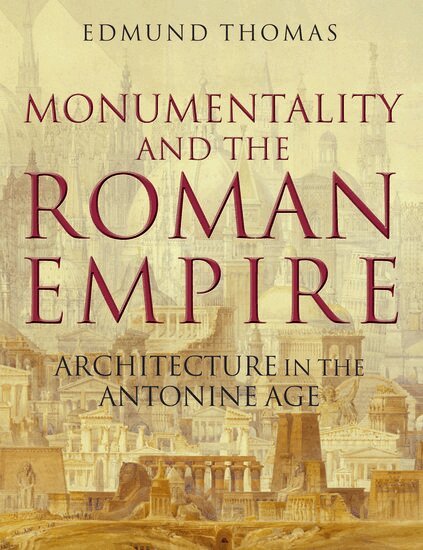
    Monumentality and the Roman Empire

    Architecture in the Antonine Age

    AvEdmund Thomas

    Inbunden, Engelska, 2007

    5 728 kr

    Beställningsvara. Skickas inom 5-8 vardagar. Fri frakt över 249 kr.

    Fler format och utgåvor

    E-bok

    3 656 kr

    Beskrivning

    The quality of 'monumentality' is attributed to the buildings of few historical epochs or cultures more frequently or consistently than to those of the Roman Empire. It is this quality that has helped to make them enduring models for builders of later periods. This extensively illustrated book, the first full-length study of the concept of monumentality in Classical Antiquity, asks what it is that the notion encompasses and how significant it was for the Romans themselves in moulding their individual or collective aspirations and identities. Although no single word existed in antiquity for the qualities that modern authors regard as making up that term, its Latin derivation - from monumentum, 'a monument' - attests plainly to the presence of the concept in the mentalities of ancient Romans, and the development of that notion through the Roman era laid the foundation for the classical ideal of monumentality, which reached a height in early modern Europe. This book is also the first full-length study of architecture in the Antonine Age - when it is generally agreed the Roman Empire was at its height. By exploring the public architecture of Roman Italy and both Western and Eastern provinces of the Roman Empire from the point of view of the benefactors who funded such buildings, the architects who designed them, and the public who used and experienced them, Edmund Thomas analyses the reasons why Roman builders sought to construct monumental buildings and uncovers the close link between architectural monumentality and the identity and ideology of the Roman Empire itself.

    Produktinformation

    • Utgivningsdatum:2007-11-15
    • Mått:226 x 284 x 26 mm
    • Vikt:1 250 g
    • Format:Inbunden
    • Språk:Engelska
    • Antal sidor:408
    • Förlag:OUP OXFORD
    • ISBN:9780199288632

    Utforska kategorier

    • Arkitektur inom Kultur
    • Europas historia inom Historia och arkeologi
    • Konsthistoria inom Kultur

    Mer om författaren

    Edmund Thomas is Lecturer in Ancient Visual and Material Culture, University of Durham.

    Recensioner i media

    Seldom have I read a book containing on the one hand such a broad and extensive overview of Antonine architecture and, on the other, such an abundance of information about selected aspects of the topic ... However, the present book sets new standards for how Antonine architecture should be addressed ... such a well-written book deserves to be read by many scholars, students and interested readers in general.

    Innehållsförteckning

    • Introduction ; I. MONUMENTAL FORM ; 1. Principles of monumental form in antiquity ; 2. The contribution of Antoninus Pius ; 3. The symbolic significance of monumental forms under the Antonines ; 4. Patrons and the monumentality of architecture ; 5. Creating form: architects in the Antonine age ; Conclusion ; II. MONUMENTS OF CITY AND EMPIRE ; 6. Buildings, politics, and the monumentality of Antonine cities ; 7. The cities and the emperor ; 8. Imperial architecture ; Conclusion ; III. MONUMENTS AND MEMORY ; 9. The monuments of the past ; 10. Building the monuments of the future ; Conclusion ; IV. RESPONSES TO MONUMENTS ; 11. Experiencing and responding to public architecture ; 12. The architectural descriptions of Lucian of Samosata ; Conclusion ; CONCLUSION