• Fri frakt över 249 kr
  • •
  • Snabba leveranser
  • •
  • Billiga böcker
Kundservice

Du är på sajten för privatpersoner.

Företag, bibliotek eller offentlig verksamhet?

Du handlar på classic.bokus.com, där alla dina funktioner finns intakta.
Till classic.bokus.com
Bokus logotyp. Gå till startsidan.
  • Erbjudanden
  • Nyheter
  • Student
  • Topplistor
  • Barn & ungdom
  • Bokus Play
  • E-böcker
  • Pocketböcker
  • Spel & pussel

10% rabatt på allt med kod: NYSTART10 →

Sidfot

Mina sidor

    Hjälp

    • Kundservice
    • Vanliga frågor och svar
    • Frakt och leverans
    • Retur vid ångerrätt
    • Reklamera vara
    • Betalning
    • Köpvillkor
    • Allmänna villkor
    • Information om webbplatsens tillgänglighet

    Om Bokus

    • Om oss
    • Pressrum
    • För studenter
    • För företag
    • För bibliotek och offentlig verksamhet
    • För leverantörer
    • Hållbarhet

    Populärt

    • Aktuella erbjudanden
    • Presentkort
    • Studentlitteratur
    • Nya böcker
    • Topplistor
    • Signerade böcker
    • Engelska böcker

    Inspiration

    • Boktips
    • BookTok
    • Populära bokserier
    • Barnbokskaraktärer
    • Populära författare
    Logotyp för Bokus
    Följ oss på Facebook (extern länk)Följ oss på Instagram (extern länk)Följ oss på YouTube (extern länk)Följ oss på TikTok (extern länk)
    bokus @ CookiesAnpassa cookiesIntegritetspolicyKöpvillkor
    Till Citymail hemsida (extern länk)Till Budbee hemsida (extern länk)Till Postnord hemsida (extern länk)Till Schenker hemsida (extern länk)Till Early Bird hemsida (extern länk)Till Walleys hemsida (extern länk)
    1. Filosofi och religion
    2. Filosofi
    3. Filosofiska discipliner

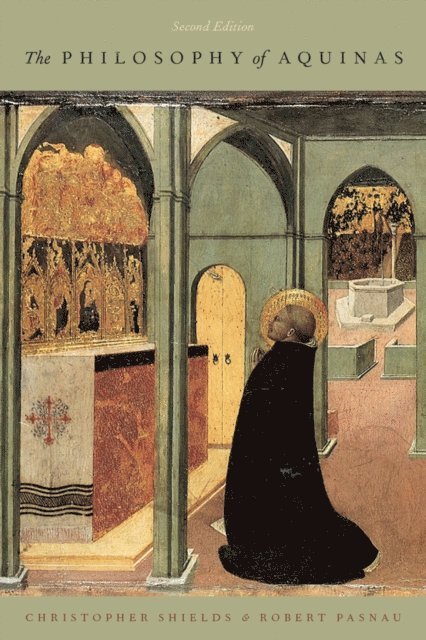
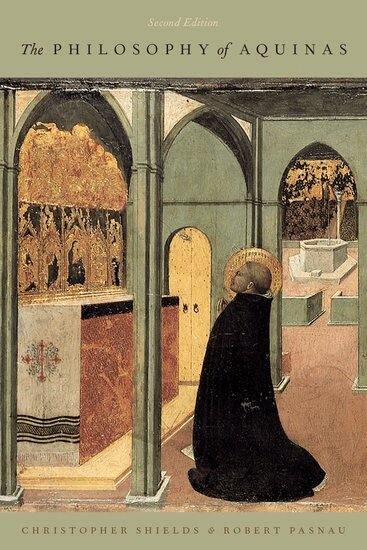
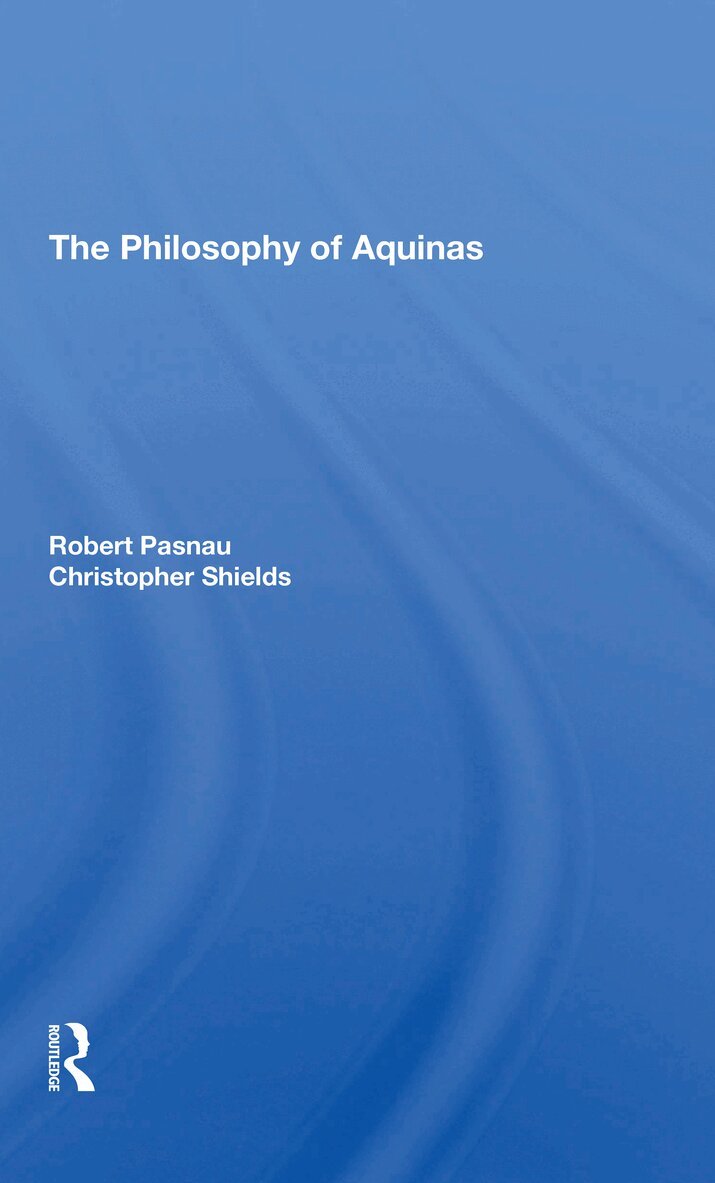
    The Philosophy of Aquinas

    AvChristopher Shields,Robert Pasnau

    Inbunden, Engelska, 2016

    2 722 kr

    Beställningsvara. Skickas inom 5-8 vardagar. Fri frakt över 249 kr.

    Fler format och utgåvor

    Häftad

    689 kr

    Beskrivning

    This new and updated edition of Christopher Shields and Robert Pasnau's The Philosophy of Aquinas introduces the Aquinas' overarching explanatory framework in order to provide the necessary background to his philosophical investigations across a wide range of areas: rational theology, metaphysics, philosophy of human nature, philosophy of mind, and ethical and political theory. Although not intended to provide a comprehensive evaluation of all aspects of Aquinas' far-reaching writings, the volume presents a systematic introduction to the principal areas of his philosophy and attends no less to Aquinas' methods and argumentative strategies than to his ultimate conclusions. The authors have updated the second edition in light of recent scholarship on Aquinas, while streamlining and refining their presentation of the key elements of Aquinas' philosophy.

    Produktinformation

    • Utgivningsdatum:2016-06-23
    • Mått:229 x 146 x 31 mm
    • Vikt:729 g
    • Format:Inbunden
    • Språk:Engelska
    • Antal sidor:336
    • Upplaga:2
    • Förlag:OUP USA
    • ISBN:9780199301232

    Utforska kategorier

    • Filosofiska discipliner inom Filosofi och religion
    • Religion: allmänt inom Filosofi och religion

    Mer om författaren

    Christopher Shields received his Ph.D. in Philosophy from Cornell University. Currently Shuster Professor of Philosophy and Concurrent Professor of Classics at the University of Notre Dame, he has also held permanent positions at the University of Colorado at Boulder, and the University of Oxford. In addition, he has held visiting posts at Cornell University, Yale University, St. Louis University, Stanford University, the Chinese University of Hong Kong, and the Humboldt University of Berlin.Robert Pasnau received his Ph.D. in Philosophy from Cornell University, and has taught at the University of Colorado Boulder since 1999. He is the editor of Oxford Studies in Medieval Philosophy and the Cambridge History of Medieval Philosophy and has published widely on both the history of philosophy and contemporary questions.

    Recensioner i media

    The book surely deserves to be read by analytic philosophers who want to learn more about Aquinas.

    Innehållsförteckning

    • Preface 1 Life and Work1.1 Early Years1.2 A Young Scholar1.3 Master of Theology1.4 Back to Italy1.5 A Second Term in Paris1.6 Breakdown2 Aquinas's Explanatory Framework: The Four Causes2.1 Introducing the Four Causes 2.1.1 Matter and Form 2.1.2 The Efficient Cause 2.1.3 The Final Cause 2.1.4 The Four Causes Reviewed and Briefly Illustrated2.2 The Four Causes Developed and Articulated 2.2.1 Mutual Priority 2.2.2 Priority Among the Causes 2.2.3 Proximate and Non-Proximate Causes 2.2.4 Causal Coincidence 2.2.5 Incidental Causes2.3 Conclusions3 Aquinas's Metaphysical Framework: Being and Essence3.1 Beings and Essences3.2 Material Substances 3.2.1 First Qualification 3.2.2 Second Qualification 3.2.3 Third Qualification3.3 Immaterial Substances3.4 Substance and Accidents3.5 Universals 3.5.1 Qualitative Sameness 3.5.2 Numerical Sameness3.6 Conclusions4 God's Existence and Nature4.1 Our Knowledge of God4.2 Phase One: God's Existence 4.2.1 The Proof from Motion 4.2.2 The Proof from Degrees of Truth4.3 Phase Two: God's Nature 4.3.1 Absolute Simplicity 4.3.2 From Intellect to Will4.4 Understanding God's Attributes: Analogical Predication4.5 Conclusions5 The Order of the Universe5.1 God's Power 5.1.1 Creation 5.1.2 Omnipotence and Creation 5.1.3 The Beginning of the Universe5.2 The Created Order5.3 Providence 5.3.1 Conservation 5.3.2 Necessity and Freedom5.4 Conclusions6 The Human Soul and the Human Body6.1 The Special Status of Human Beings6.2 Soul as a Principle of Life6.3 Souls and Bodies: Hylomorphism6.4 Against Reductive Materialism6.5 Against Platonism6.6 A Difficult Intermediary6.7 Soul as Subsistent6.8 Where in the Body Is the Soul?6.9 Conclusions7 Sense and Intellect7.1 The Nature of Cognition7.2 The Cognitive Powers 7.2.1 Sensation 7.2.2 The Immateriality of Cognition 7.2.3 An Argument for the Intellect's Immateriality7.3 Cognitive Functions 7.3.1 The Objects of Intellect 7.3.2 Abstraction 7.3.3 Illumination 7.3.4 Concept Formation7.4 Conclusions8 The Goal of Human Life8.1 Introduction8.2 That There Is a Human End8.3 Happiness8.4 What Happiness Is Not8.5 What Happiness Is8.6 The Beatific Vision8.7 Conclusions9 Ethics9.1 Overview9.2 Natural Law 9.2.1 Nature and Eternal Law 9.2.2 Natural Inclinations 9.2.3 The Passions9.3 Virtue 9.3.1 The Need for Virtue 9.3.2 The Perfection of Virtue 9.3.3 Prudence9.4 ConclusionsGlossaryCatalog of WorksIndex