• Fri frakt över 249 kr
  • •
  • Snabba leveranser
  • •
  • Billiga böcker
Kundservice

Du är på sajten för privatpersoner.

Företag, bibliotek eller offentlig verksamhet?

Du handlar på classic.bokus.com, där alla dina funktioner finns intakta.
Till classic.bokus.com
Bokus logotyp. Gå till startsidan.
  • Erbjudanden
  • Nyheter
  • Student
  • Topplistor
  • Barn & ungdom
  • Bokus Play
  • E-böcker
  • Pocketböcker
  • Spel & pussel

10% rabatt på allt med kod NYSTART10 →

Sidfot

Mina sidor

    Hjälp

    • Kundservice
    • Vanliga frågor och svar
    • Frakt och leverans
    • Retur vid ångerrätt
    • Reklamera vara
    • Betalning
    • Köpvillkor
    • Allmänna villkor
    • Information om webbplatsens tillgänglighet

    Om Bokus

    • Om oss
    • Pressrum
    • För studenter
    • För företag
    • För bibliotek och offentlig verksamhet
    • För leverantörer
    • Hållbarhet

    Populärt

    • Aktuella erbjudanden
    • Presentkort
    • Studentlitteratur
    • Nya böcker
    • Topplistor
    • Signerade böcker
    • Engelska böcker

    Inspiration

    • Boktips
    • BookTok
    • Populära bokserier
    • Barnbokskaraktärer
    • Populära författare
    Logotyp för Bokus
    Följ oss på Facebook (extern länk)Följ oss på Instagram (extern länk)Följ oss på YouTube (extern länk)Följ oss på TikTok (extern länk)
    bokus @ CookiesAnpassa cookiesIntegritetspolicyKöpvillkor
    Till Citymail hemsida (extern länk)Till Budbee hemsida (extern länk)Till Postnord hemsida (extern länk)Till Schenker hemsida (extern länk)Till Early Bird hemsida (extern länk)Till Walleys hemsida (extern länk)
    1. Kultur
    2. Musikböcker
    3. Musik: stilar och genrer
    4. Världsmusik

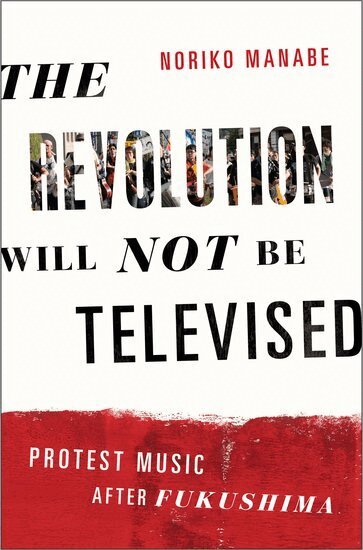
    The Revolution Will Not Be Televised

    Protest Music After Fukushima

    AvNoriko Manabe

    Inbunden, Engelska, 2016

    2 620 kr

    Beställningsvara. Skickas inom 5-8 vardagar. Fri frakt över 249 kr.

    Fler format och utgåvor

    Häftad

    746 kr

    Beskrivning

    Nuclear power has been a contentious issue in Japan since the 1950s, and in the aftermath of the Fukushima nuclear power plant disaster, the conflict has only grown. Government agencies and the nuclear industry continue to push a nuclear agenda, while the mainstream media adheres to the official line that nuclear power is Japan's future. Public debate about nuclear energy is strongly discouraged. Nevertheless, antinuclear activism has swelled into one of the most popular and passionate movements in Japan, leading to a powerful wave of protest music.The Revolution Will Not Be Televised: Protest Music After Fukushima shows that music played a central role in expressing antinuclear sentiments and mobilizing political resistance in Japan. Combining musical analysis with ethnographic participation, author Noriko Manabe offers an innovative typology of the spaces central to the performance of protest music--cyberspace, demonstrations, festivals, and recordings. She argues that these four spaces encourage different modes of participation and methods of political messaging. The openness, mobile accessibility, and potential anonymity of cyberspace have allowed musicians to directly challenge the ethos of silence that permeated Japanese culture post-Fukushima. Moving from cyberspace to real space, Manabe shows how the performance and reception of music played at public demonstrations are shaped by the urban geographies of Japanese cities. While short on open public space, urban centers in Japan offer protesters a wide range of governmental and commercial spaces in which to demonstrate, with activist musicians tailoring their performances to the particular landscapes and soundscapes of each. Music festivals are a space apart from everyday life, encouraging musicians and audience members to freely engage in political expression through informative and immersive performances. Conversely, Japanese record companies and producers discourage major-label musicians from expressing political views in recordings, forcing antinuclear musicians to express dissent indirectly: through allegories, metaphors, and metonyms. The first book on Japan's antinuclear music, The Revolution Will Not Be Televised provides a compelling new perspective on the role of music in political movements.

    Produktinformation

    • Utgivningsdatum:2016-01-14
    • Mått:236 x 155 x 33 mm
    • Vikt:907 g
    • Format:Inbunden
    • Språk:Engelska
    • Antal sidor:464
    • Förlag:OUP USA
    • ISBN:9780199334681
    • Utmärkelser:Winner of the 2017 John Whitney Hall Book Prize, Association for Asian StudiesWinner of the 2018 British Forum for Ethnomusicology Book PrizeHonorable Mention, Alan Merriam Book Prize, Society for Ethnomusicology, 2016

    Utforska kategorier

    • Världsmusik inom Kultur
    • Naturvetenskap:allmänt inom Naturvetenskap och teknik
    • Miljövetenskap och miljöpolitik inom Naturvetenskap och teknik

    Mer om författaren

    Noriko Manabe is Assistant Professor of Music at Princeton University. She has been conducting field research on the Japanese antinuclear movement since 2011 and on Japanese hip-hop, reggae, and EDM scenes since 2005. She was previously a ranked analyst researching the internet, media, and videogame industries at JP Morgan in Tokyo. She holds a PhD in Music from CUNY Graduate Center with concentrations in ethnomusicology and music theory.

    Recensioner i media

    clearly and engagingly written ... fascinating.

    Innehållsförteckning

    • I Section One: The Background 1 Introduction: Analyzing political music under self-censorship 2 The nuclear past and present: Structures of power and civil resistance 3 Musicians in the antinuclear movement: Motivations, roles, and risks II Section Two: Spaces of Protest 4 Cyberspace: Playback and participation 5.1 Demonstrations (1): Introduction to music in demonstrations 5.2 Demonstrations (2): Emergence of sound demonstrations 5.3 Demonstrations (3): The evolution of performance style in antinuclear demonstrations 5.4 Demonstrations (4): Urban geography, music, and protest 6 Festivals: Differing models of communication 7 Recordings: Allegories, metaphors, and metonyms 8 Conclusion: Protesting under (and against) constraints Bibliography