E-bok, Engelska, 2017
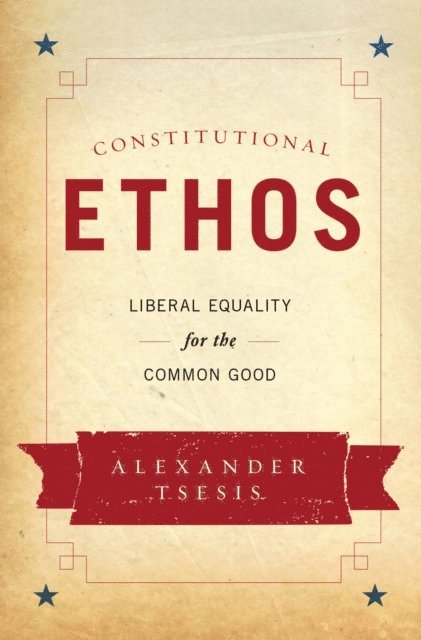
Constitutional Ethos
523 kr
Läs direkt i Bokus Reader – eller ladda ned till din enhet (PDF kräver ofta zoom och scroll på små skärmar).
Beskrivning
Judges, courts, and scholars in the United States agree that the Constitution is the supreme law of the land, but there is much disagreement about its meaning. So what seems to be incontestable truth is riddled with disagreements about every day questions of decision making on matter such as whether people are entitled to government created programs, what rights are fundamental, the criteria for voting, the three branches of governments'' several responsibilities, and even who should have the final say in defining the Constitution''s meaning.
Constitutional Ethos is a groundbreaking investigation into the fundamental principles of constitutional principle, meaning, and interpretation. It explores the core purposes of American representative democracy in light of historical sources, recent precedents, and contemporary debates. Alexander Tsesis argues that a central norm of U.S. law can be derived from the Declaration of Independence and Preamble. This book develops a theory of constitutional law structured on the public duty to protect individual rights for the general welfare. The maxim of constitutional governance synthesizes the protection of individual and public rights. The ideal is neither solely theoretical nor customary but tied to a firm foundation that the people then build upon by lobbying elected officials and petitioning appointed judges. Representative government has an interlinked obligation to the individual and the general welfare. This paradigm for responsible governance sets the baseline against which citizens can hold policy makers accountable to the structural and normative commitments of the Constitution. A pluralistic system must respect human dignity and govern for the betterment of the body politic.
Those mandates set the terms for exercising legitimate power at the federal, state, and local levels to protect individual rights to achieve the common good of civil society. Tsesis demonstrates that ethos is binding on the conduct of all three branches of government and their officeholders. His argument challenges the more common U.S. perspective among academics and judges, who typically discount the existence of any objective constitutional value, regarding the document as a construct of social norms. To the contrary, Tsesis shows that the people established the terms of the nation''s founding documents to protect universal, unalienable rights. The structure of government provides the mechanisms of those in a pluralistic state to set reasonable limitations for the betterment of society as a whole. Understanding the Constitution''s special place in American legal culture is essential for resolving a host of contemporary issues; including, those involving marital, gender, and voting equalities.
The state is a means of optimizing the well-being of individuals. Human productivity can best flourish in a society of equals, where talents can be brought to bear in the betterment of self and other members of the community. The Constitution does not create rights but protects those universal ideals of representative democracy first set out in the Declaration of Independence. It further grants authority to political institutions for the enforcement of policies and concrete laws for the betterment of society or some relevant segment of it. Many scholars with leanings in legal realism and process theory believe the authority of government is a social construct created by popular majorities; Tsesis convincingly demonstrates, to the contrary, that even those laws enacted by popular majorities are not authoritative unless they accord with a central maxim of constitutionalism, which is the protection of individual rights for the common good.
Constitutional Ethos is a groundbreaking investigation into the fundamental principles of constitutional principle, meaning, and interpretation. It explores the core purposes of American representative democracy in light of historical sources, recent precedents, and contemporary debates. Alexander Tsesis argues that a central norm of U.S. law can be derived from the Declaration of Independence and Preamble. This book develops a theory of constitutional law structured on the public duty to protect individual rights for the general welfare. The maxim of constitutional governance synthesizes the protection of individual and public rights. The ideal is neither solely theoretical nor customary but tied to a firm foundation that the people then build upon by lobbying elected officials and petitioning appointed judges. Representative government has an interlinked obligation to the individual and the general welfare. This paradigm for responsible governance sets the baseline against which citizens can hold policy makers accountable to the structural and normative commitments of the Constitution. A pluralistic system must respect human dignity and govern for the betterment of the body politic.
Those mandates set the terms for exercising legitimate power at the federal, state, and local levels to protect individual rights to achieve the common good of civil society. Tsesis demonstrates that ethos is binding on the conduct of all three branches of government and their officeholders. His argument challenges the more common U.S. perspective among academics and judges, who typically discount the existence of any objective constitutional value, regarding the document as a construct of social norms. To the contrary, Tsesis shows that the people established the terms of the nation''s founding documents to protect universal, unalienable rights. The structure of government provides the mechanisms of those in a pluralistic state to set reasonable limitations for the betterment of society as a whole. Understanding the Constitution''s special place in American legal culture is essential for resolving a host of contemporary issues; including, those involving marital, gender, and voting equalities.
The state is a means of optimizing the well-being of individuals. Human productivity can best flourish in a society of equals, where talents can be brought to bear in the betterment of self and other members of the community. The Constitution does not create rights but protects those universal ideals of representative democracy first set out in the Declaration of Independence. It further grants authority to political institutions for the enforcement of policies and concrete laws for the betterment of society or some relevant segment of it. Many scholars with leanings in legal realism and process theory believe the authority of government is a social construct created by popular majorities; Tsesis convincingly demonstrates, to the contrary, that even those laws enacted by popular majorities are not authoritative unless they accord with a central maxim of constitutionalism, which is the protection of individual rights for the common good.
Produktinformation
- Utgivningsdatum: 2017-02-27
- Språk: Engelska
- Filformat: PDF
- Kopieringsskydd: LCP
- ISBN: 9780199359851
- Förlag: Oxford University Press
Utforska kategorier
Betyg & recensioner
0 recensioner
Inga recensioner tillgängliga.