• Fri frakt över 249 kr
  • •
  • Snabba leveranser
  • •
  • Billiga böcker
Kundservice

Du är på sajten för privatpersoner.

Företag, bibliotek eller offentlig verksamhet?

Du handlar på classic.bokus.com, där alla dina funktioner finns intakta.
Till classic.bokus.com
Bokus logotyp. Gå till startsidan.
  • Erbjudanden
  • Student
  • Topplistor
  • Barn & ungdom
  • Bokus Play
  • E-böcker
  • Ljudböcker
  • Pocketböcker
  • Spel & pussel

Upp till 25% på utvalda nyheter →

Sidfot

Mina sidor

    Hjälp

    • Kundservice
    • Vanliga frågor och svar
    • Frakt och leverans
    • Retur vid ångerrätt
    • Reklamera vara
    • Betalning
    • Köpvillkor
    • Allmänna villkor
    • Information om webbplatsens tillgänglighet

    Om Bokus

    • Om oss
    • Pressrum
    • För studenter
    • För företag
    • För bibliotek och offentlig verksamhet
    • För leverantörer
    • Hållbarhet

    Populärt

    • Aktuella erbjudanden
    • Presentkort
    • Studentlitteratur
    • Nya böcker
    • Topplistor
    • Signerade böcker
    • Engelska böcker

    Inspiration

    • Boktips
    • BookTok
    • Populära bokserier
    • Barnbokskaraktärer
    • Populära författare
    Logotyp för Bokus
    Följ oss på Facebook (extern länk)Följ oss på Instagram (extern länk)Följ oss på YouTube (extern länk)Följ oss på TikTok (extern länk)
    bokus @ CookiesAnpassa cookiesIntegritetspolicyKöpvillkor
    Till Citymail hemsida (extern länk)Till Budbee hemsida (extern länk)Till Postnord hemsida (extern länk)Till Schenker hemsida (extern länk)Till Early Bird hemsida (extern länk)Till Walleys hemsida (extern länk)
    1. Samhälle och politik
    2. Social välfärd och brottslighet
    3. Brottslighet och kriminologi
    4. Kriminalvård och straff

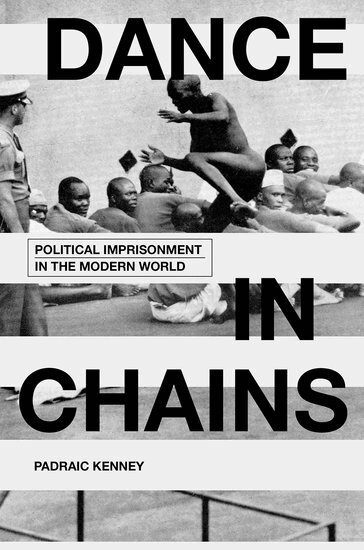
    Dance in Chains

    Political Imprisonment in the Modern World

    AvPadraic Kenney

    Inbunden, Engelska, 2017

    538 kr

    Beställningsvara. Skickas inom 3-6 vardagar. Fri frakt över 249 kr.

    Fler format och utgåvor

    E-bok

    366 kr

    E-bok

    366 kr

    Beskrivning

    What is it that political prisoners do? What part does the imprisoned activist play in the conflict between regimes and their opponents around the world? Why, in short, are there political prisoners? The answers to these questions may seem obvious, as political incarceration today seems to offer the clearest evidence of a repressive regime, and of a determined political opposition. Yet surely there are more effective alternatives, for both states and their opponents, than incarceration. Imprisoned opponents, like those of the African National Congress in South Africa, or of Solidarity in Poland, or of the Irish Republican Army in Northern Ireland --just to mention a few examples from the last quarter-century--may eventually claim or share power, while those who are executed or exiled will not pose the same threat. From the opposition's point of view, in turn, imprisonment, even though it deprives the movement of a valued contributor, is often a badge of honor, and central to the story of contestation with the regime. So does prison contribute to the struggle, or is it a hindrance? Remarkably, the political prisoner has never received attention as a historical actor, our perceptions of them awash in clichés and archetypes. We think immediately of Nelson Mandela, or perhaps Václav Havel: good men, engaged in a moral struggle against bad regimes. But can that really be an acceptable definition, when Adolph Hitler too was a political prisoner? Can we understand what political prisoners are and what they do if we do not include those whose goals or ethics are different from our own?Dance in Chains--the title inspired by a song composed by a socialist on death row in a Warsaw prison 120 years ago--draws upon research in Poland, Ireland, South Africa and includes over a dozen different regimes over the last 150 years. These cases are not primarily comparative, but serve as pillars holding up a global investigation of the phenomenon. In each case, generation after generation of political opponents has gone to prison since at least the turn of the twentieth century. Yet they also vary widely, as regimes ranging from communist to fascist to colonial to democratic has imprisoned an equally wide range of opponents. Taken together, they yield a sufficiently wide spectrum to allow the reader to understand one of the central characters of modern political history.

    Produktinformation

    • Utgivningsdatum:2017-11-16
    • Mått:163 x 236 x 27 mm
    • Vikt:635 g
    • Format:Inbunden
    • Språk:Engelska
    • Antal sidor:344
    • Förlag:OUP USA
    • ISBN:9780199375745

    Utforska kategorier

    • Kriminalvård och straff inom Samhälle och politik
    • Allmän historia och världshistoria inom Historia och arkeologi

    Mer om författaren

    Padraic Kenney is Professor of History and International Studies at Indiana University. He is the author of The Burdens of Freedom: Eastern Europe since 1989, A Carnival of Revolution: Central Europe, 1989, and Rebuilding Poland: Workers and Communists, 1945-1950. He has served as president of the Association for Slavic, East European, and Eurasian Studies.

    Recensioner i media

    Dance in Chains provides a good start into the confrontation with the 'political prison' in the 20th century. Kenney's great achievement is to solve the issue of a specific case and the history of a single regime and to understand it as a superordinate phenomenon in the 20th century. The study invites to further thinking and critical questioning of a problem, which, as the author also shows, has not lost its relevance.

    Innehållsförteckning

    • AcknowledgmentsIntroduction: Where a Free Man Can Abide With HonorChapter 1: "But I have no wish to be Discharged":  When Imprisonment Became PoliticalChapter 2:  Night and Fog: The Regime and its PrisonersChapter 3: "Everyone learned prison": Becoming a Political PrisonerChapter 4: "You have the consolation of being very much in the fight": Representing the Cause in PrisonChapter 5: "How to Free Your Prisoner": The Personal and the Political of International Prisoner SupportChapter 6: "A Close-Knit Group, Chosen With Care": Community and Order in the Political Camp and PrisonChapter 7: "I was Confusing The Prison": The Contest in the CellChapter 8: "Why wouldn't I laugh, when I win either way?": The Hunger StrikeChapter 9: Captive Academy: How Prison Forges PoliticsConclusion: A Recaptured NarrativeEpilogue: Today's Political PrisonNotesIndex