• Fri frakt över 249 kr
  • •
  • Snabba leveranser
  • •
  • Billiga böcker
Kundservice

Du är på sajten för privatpersoner.

Företag, bibliotek eller offentlig verksamhet?

Du handlar på classic.bokus.com, där alla dina funktioner finns intakta.
Till classic.bokus.com
Bokus logotyp. Gå till startsidan.
  • Erbjudanden
  • Nyheter
  • Student
  • Topplistor
  • Barn & ungdom
  • Bokus Play
  • E-böcker
  • Pocketböcker
  • Spel & pussel

10% rabatt på allt med kod NYSTART10 →

Sidfot

Mina sidor

    Hjälp

    • Kundservice
    • Vanliga frågor och svar
    • Frakt och leverans
    • Retur vid ångerrätt
    • Reklamera vara
    • Betalning
    • Köpvillkor
    • Allmänna villkor
    • Information om webbplatsens tillgänglighet

    Om Bokus

    • Om oss
    • Pressrum
    • För studenter
    • För företag
    • För bibliotek och offentlig verksamhet
    • För leverantörer
    • Hållbarhet

    Populärt

    • Aktuella erbjudanden
    • Presentkort
    • Studentlitteratur
    • Nya böcker
    • Topplistor
    • Signerade böcker
    • Engelska böcker

    Inspiration

    • Boktips
    • BookTok
    • Populära bokserier
    • Barnbokskaraktärer
    • Populära författare
    Logotyp för Bokus
    Följ oss på Facebook (extern länk)Följ oss på Instagram (extern länk)Följ oss på YouTube (extern länk)Följ oss på TikTok (extern länk)
    bokus @ CookiesAnpassa cookiesIntegritetspolicyKöpvillkor
    Till Citymail hemsida (extern länk)Till Budbee hemsida (extern länk)Till Postnord hemsida (extern länk)Till Schenker hemsida (extern länk)Till Early Bird hemsida (extern länk)Till Walleys hemsida (extern länk)
    1. Kultur
    2. Scenkonst och film
    3. Film

    A Modernist Cinema

    Film Art from 1914 to 1941

    AvScott W. Klein,Scott W. Klein

    Häftad, Engelska, 2022

    535 kr

    Beställningsvara. Skickas inom 5-8 vardagar. Fri frakt över 249 kr.

    Beskrivning

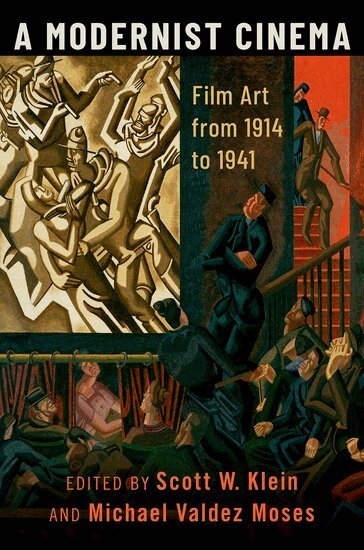
    In A Modernist Cinema, sixteen distinguished scholars in the field of the New Modernist Studies explore the interrelationships among modernism, cinema, and modernity. Focusing on several culturally influential films from Europe, America, and Asia produced between 1914 and 1941, this collection of essays contends that cinema was always a modernist enterprise. Examining the dialectical relationship between a modernist cinema and modernity itself, these essays reveal how the movies represented and altered our notions and practices of modern life, as well as how the so-called crises of modernity shaped the evolution of filmmaking. Attending to the technical achievements and formal qualities of the works of several prominent directors - Giovanni Pastrone, D. W. Griffith, Sergei Eisenstein, Fritz Lang, Alfred Hitchcock, F. W. Murnau, Carl Theodore Dreyer, Dziga Vertov, Luis Buñuel, Yasujiro Ozu, John Ford, Jean Renoir, Charlie Chaplin, Leni Riefenstahl, and Orson Welles - these essays investigate several interrelated topics: how a modernist cinema represented and intervened in the political and social struggles of the era; the ambivalent relationship between cinema and the other modernist arts; the controversial interconnection between modern technology and the new art of filmmaking; the significance of representing the mobile human body in a new medium; the gendered history of modernity; and the transformative effects of cinema on modern conceptions of temporality, spatial relations, and political geography.

    Produktinformation

    • Utgivningsdatum:2022-02-02
    • Mått:157 x 237 x 21 mm
    • Vikt:567 g
    • Format:Häftad
    • Språk:Engelska
    • Antal sidor:334
    • Förlag:OUP USA
    • ISBN:9780199379460

    Utforska kategorier

    • Film inom Kultur

    Mer om författaren

    Scott W. Klein is Professor of English and Artistic Director of the Secrest Artists Series at Wake Forest University, North Carolina. He is the author of The Fictions of James Joyce and Wyndham Lewis: Monsters of Nature and Design the editor of the Oxford World's Classics edition of the 1928 edition of Wyndham Lewis's Tarr, and with Mark Antliff the editor of the essay collection Vorticism: New Perspectives. He has published essays in such journals as ELH, Modernist Cultures, Twentieth Century Literature, and The James Joyce Quarterly, and is on the editorial boards of the Oxford Complete Writings of Wyndham Lewis edition and of the The Journal of Wyndham Lewis.Michael Valdez Moses is Professor of Literature and the Humanities in the Smith Institute for Political Economy and Philosophy and in the Argyros School of Business and Economics at Chapman University, and Associate Emeritus Professor at Duke University, where he was a faculty member of the English Department from 1987 to 2019. He is the author of The Novel and the Globalization of Culture (1995), co-editor of Modernism and Colonialism: British and Irish Literature, 1900-1939 (2010) and Modernism, Postcolonialism, and Globalism: Anglophone Literature, 1950 to the Present (2019), and editor of The Writings of J. M. Coetzee (special issue of South Atlantic Quarterly, 1994) and Modernism and Cinema (special issue of Modernist Cultures, 2010).He has been a Visiting Fellow at the Humanities Research Centre at the Australian National University, a Duke Endowment Fellow at the National Humanities Center, USIA Visiting Professor at the Universitat Autónoma de Barcelona and at Université Cadi Ayyad in Marrakech, and the MacLean Distinguished Visiting Professor at Colorado College. He is former Director of Graduate Studies in the English Department of Duke University and a founding co-editor of the journal, Modernist Cultures.

    Recensioner i media

    The volume does not descend into a vague "modernists go to the movies" survey. Rather, despite the canonicity of the films, each essay provides strong case studies. Though all the essays have a similar implicit thesis--something like "this film, which does not seem to be modernist, actually speaks to modernism"--the variety of topics covered is the book's strong suit.

    Innehållsförteckning

    • Introduction Chapter 1: Giovanni Pastrone's Cabiria, Gesture, Modernism, by Enda Duffy and Maurizia BoscagliChapter 2: D. W. Griffith's Intolerance and the Ever-Present Now, by Michael North Chapter 3: Sergei Eisenstein's Collage: Filming Montage in Museums at Night, by Lisa SiraganianChapter 4: From Automaton to Autonomy: Mechanical Reproduction in Fritz Lang's Metropolis, by Richard BegamChapter 5: "Suspense is Like a Woman": Sex and Style in Alfred Hitchcock's Pleasure Garden and The Lodger, by Laura Frost Chapter 6: F. W. Murnau's Sunrise: Between Two Worlds, by Laura MarcusChapter 7: "A Language Worth the Trouble of Learning"? Carl Theodore Dreyer's The Passion of Joan of Arc, by Andrzej GasiorekChapter 8: Intervals of Transition: Dziga Vertov's The Man With a Movie Camera, by Tyrus MillerChapter 9: Luis Buñuel, Surrealism and the Politics of Disorder, by Michael WoodChapter 10: Yasujir's Ozu's A Story of Floating Weeds and the Art of Being Behind, by Carrie J. Preston Chapter 11: "Saved from the Blessings of Civilization": John Ford's Stagecoach, the West, and American Vernacular Modernism, by Michael Valdez MosesChapter 12: "Tout le monde a ses raisons" The Problem of Impressionist Commitment in Jean Renoir's La Règle du jeu, by Jesse Matz Chapter 13: "You Must Speak": Silence, Scale, and Power in Charlie Chaplin's The Great Dictator, by Scott W. Klein Chapter 14: Leni Riefenstahl's Nazi Neoclassicism: Olympia, by Elizabeth Otto Chapter 15: On Auratic and Sentimental Objects: High and Low Modernism in Orson Welles' Citizen Kane, by Douglas Mao Index