• Fri frakt över 249 kr
  • •
  • Snabba leveranser
  • •
  • Billiga böcker
Kundservice

Du är på sajten för privatpersoner.

Företag, bibliotek eller offentlig verksamhet?

Du handlar på classic.bokus.com, där alla dina funktioner finns intakta.
Till classic.bokus.com
Bokus logotyp. Gå till startsidan.
  • Erbjudanden
  • Nyheter
  • Student
  • Topplistor
  • Barn & ungdom
  • Bokus Play
  • E-böcker
  • Pocketböcker
  • Spel & pussel

10% rabatt på allt med kod: NYSTART10 →

Sidfot

Mina sidor

    Hjälp

    • Kundservice
    • Vanliga frågor och svar
    • Frakt och leverans
    • Retur vid ångerrätt
    • Reklamera vara
    • Betalning
    • Köpvillkor
    • Allmänna villkor
    • Information om webbplatsens tillgänglighet

    Om Bokus

    • Om oss
    • Pressrum
    • För studenter
    • För företag
    • För bibliotek och offentlig verksamhet
    • För leverantörer
    • Hållbarhet

    Populärt

    • Aktuella erbjudanden
    • Presentkort
    • Studentlitteratur
    • Nya böcker
    • Topplistor
    • Signerade böcker
    • Engelska böcker

    Inspiration

    • Boktips
    • BookTok
    • Populära bokserier
    • Barnbokskaraktärer
    • Populära författare
    Logotyp för Bokus
    Följ oss på Facebook (extern länk)Följ oss på Instagram (extern länk)Följ oss på YouTube (extern länk)Följ oss på TikTok (extern länk)
    bokus @ CookiesAnpassa cookiesIntegritetspolicyKöpvillkor
    Till Citymail hemsida (extern länk)Till Budbee hemsida (extern länk)Till Postnord hemsida (extern länk)Till Schenker hemsida (extern länk)Till Early Bird hemsida (extern länk)Till Walleys hemsida (extern länk)
    1. Ekonomi och Ledarskap
    2. Nationalekonomi
    3. Ekonomisk historia

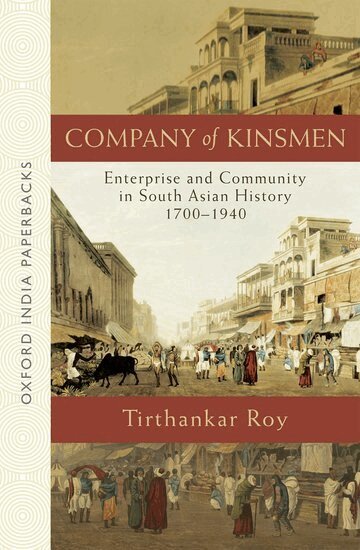
    Company of Kinsmen

    Enterprise and Community in South Asian History 1700-1940

    AvTirthankar Roy

    Häftad, Engelska, 2018

    Del i serien Oxford India Paperbacks

    221 kr

    Beställningsvara. Skickas inom 5-8 vardagar. Fri frakt över 249 kr.

    Beskrivning

    This book chronicles how the concept of organizing people to serve economic ends emerged in early modern and colonial India. It examines rules of cooperation, why people decided to join forces, how disputes were settled, and how cooperative communities became increasingly unstable in more modern times. It focuses on five dimensions: actor, agent, time, purpose, and region. The leading actors are peasants, labourers, artisans, merchants/bankers, and the states. The rules of cooperation that formed inside communities of merchants and others were respected by the states. However, these rules would eventually become unstable due to the integration of India within a global-industrial economy and the introduction of a new rule of law in the old guise of 'custom'. As a result, the endogamous guild, a kind of collective that used marriage rules to secure cooperative ties, became weaker, to be supplanted by other forms of organization. Collectives controlled property, managed resources, supplied training, and conducted negotiations. The regional angle is important because regions differed on the composition of enterprise, and globalization and colonialism unfolded unevenly across space. The book presents an economic history of institutional change in South Asia.

    Produktinformation

    • Utgivningsdatum:2018-04-12
    • Mått:143 x 216 x 17 mm
    • Vikt:248 g
    • Format:Häftad
    • Språk:Engelska
    • Serie:Oxford India Paperbacks
    • Antal sidor:268
    • Upplaga:2
    • Förlag:OUP OXFORD
    • ISBN:9780199486809

    Utforska kategorier

    • Ekonomisk historia inom Ekonomi och Ledarskap
    • Asiens historia inom Historia och arkeologi

    Mer om författaren

    Tirthankar Roy is Professor of Economic History in the London School of Economics. He works on economic history, business history, history of development policy and the classical music of India.He is the author of The Economic History of India (3/e 2011)

    Recensioner i media

    This book, by a leading economic historian of South Asia, addresses a long-standing problem .. that of the dependent or independent role of social organization in the working of an economy .. [and] advances our understanding of an important economic region in both the past and the present. Sumit Guha (Journal of Interdisciplinary History)

    Innehållsförteckning

    • List of FiguresPreface Introduction: Indian Society and the Economic History of India 1. Context: Economic history and 'culture'2. States: A political theory of the community3. Merchants: Guild as corporation4. Artisans: Guild for training5. Workers: Collective bargaining6. Peasants: Property and market Epilogue BibliographyIndex