• Fri frakt över 249 kr
  • •
  • Snabba leveranser
  • •
  • Billiga böcker
Kundservice

Du är på sajten för privatpersoner.

Företag, bibliotek eller offentlig verksamhet?

Du handlar på classic.bokus.com, där alla dina funktioner finns intakta.
Till classic.bokus.com
Bokus logotyp. Gå till startsidan.
  • Erbjudanden
  • Nyheter
  • Student
  • Topplistor
  • Barn & ungdom
  • Bokus Play
  • E-böcker
  • Pocketböcker
  • Spel & pussel

10% rabatt på allt med kod: NYSTART10 →

Sidfot

Mina sidor

    Hjälp

    • Kundservice
    • Vanliga frågor och svar
    • Frakt och leverans
    • Retur vid ångerrätt
    • Reklamera vara
    • Betalning
    • Köpvillkor
    • Allmänna villkor
    • Information om webbplatsens tillgänglighet

    Om Bokus

    • Om oss
    • Pressrum
    • För studenter
    • För företag
    • För bibliotek och offentlig verksamhet
    • För leverantörer
    • Hållbarhet

    Populärt

    • Aktuella erbjudanden
    • Presentkort
    • Studentlitteratur
    • Nya böcker
    • Topplistor
    • Signerade böcker
    • Engelska böcker

    Inspiration

    • Boktips
    • BookTok
    • Populära bokserier
    • Barnbokskaraktärer
    • Populära författare
    Logotyp för Bokus
    Följ oss på Facebook (extern länk)Följ oss på Instagram (extern länk)Följ oss på YouTube (extern länk)Följ oss på TikTok (extern länk)
    bokus @ CookiesAnpassa cookiesIntegritetspolicyKöpvillkor
    Till Citymail hemsida (extern länk)Till Budbee hemsida (extern länk)Till Postnord hemsida (extern länk)Till Schenker hemsida (extern länk)Till Early Bird hemsida (extern länk)Till Walleys hemsida (extern länk)
    1. Historia och arkeologi
    2. Arkeologi

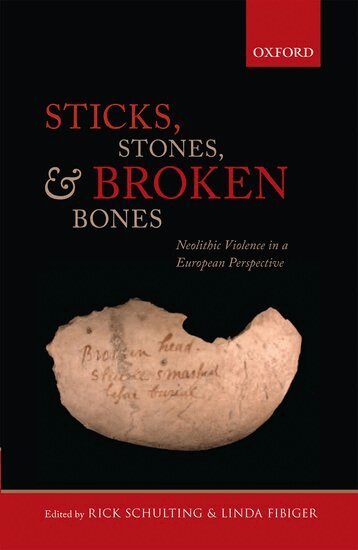
    Sticks, Stones, and Broken Bones

    Neolithic Violence in a European Perspective

    AvFIBIGER SCHULTING,Rick J. Schulting

    Inbunden, Engelska, 2012

    3 223 kr

    Beställningsvara. Skickas inom 5-8 vardagar. Fri frakt över 249 kr.

    Beskrivning

    Sticks, Stones, and Broken Bones: Neolithic Violence in a European Perspective presents an up-to-date overview of the evidence for violent injuries on human skeletons of the Neolithic period in Europe, ranging from 6700 to 2000 BC. Unlike other lines of evidence - weapons, fortifications, and imagery - the human skeleton preserves the actual marks of past violent encounters. The papers in this volume are written by the experts undertaking the archaeological analysis, and present evidence from eleven European countries which provide, for the first time, the basis for a comparative approach between different regions and periods. Difficulties and ambiguities in interpreting the evidence are also discussed, although many of the cases are clearly the outcome of conflict. Injuries often show healing, but others can be seen as the cause of death. In many parts of Europe, women and children appear to have been the victims of violence as often as adult men. The volume not only presents an excellent starting point for a new consideration of the prevalence and significance of violence in Neolithic Europe, but provides an invaluable baseline for comparisons with both earlier and later periods.

    Produktinformation

    • Utgivningsdatum:2012-04-19
    • Mått:145 x 218 x 28 mm
    • Vikt:734 g
    • Format:Inbunden
    • Språk:Engelska
    • Antal sidor:420
    • Förlag:OUP OXFORD
    • ISBN:9780199573066

    Utforska kategorier

    • Arkeologi inom Historia och arkeologi
    • Antropologi inom Samhälle och politik
    • Arkeologi: metod och teknik inom Historia och arkeologi

    Mer om författaren

    Dr Rick Schulting is an archaeologist with strong interests in bioarchaeology as a rich source of information about past peoples. His main area of research is the Mesolithic and Neolithic of western Europe. Another interest is documenting the skeletal evidence for interpersonal violence and placing this within a population perspective in order to better understand its impact on early societies. Dr Linda Fibiger is a Lecturer in Human Osteoarchaeology at the University of Edinburgh. Her main interests include interpersonal violence and conflict in prehistoric Europe, human remains from caves, Irish Early Christian Burials, and standards and practice in osteoarchaeology. She has published widely on commercial and research projects in Britain and Ireland, and has recently been involved in an AHRC-funded research project at the University of Cardiff, investigating changing lifeways in the earliest agricultural societies of central Europe.

    Innehållsförteckning

    • 1. Skeletal evidence for interpersonal violence in Neolithic Europe: an introduction ; 2. The placement of the Feathers: Violence among Sub-boreal foragers from Gotland, central Baltic Sea ; 3. Violence in the Stone Age from an Eastern Baltic perspective ; 4. Skeletal trauma and violence among the early farmers of the North European Plain: Evidence from Neolithic settlements of the Lengyel Culture in Kuyavia, North-Central Poland ; 5. The Neolithic massacre at Talheim - A pivotal find in conflict archaeology ; 6. The early Neolithic site Asparn/Schletz (Lower Austria): Anthropological evidence of interpersonal violence ; 7. Violence against the living, violence against the dead: Evidence of a crisis and mass cannibalism on the human remains from Herxheim, Germany ; 8. Violence in the Single Grave Culture of Northern Germany ; 9. Injured but special: On associations between skull defects and burial treatment in the Corded Ware Culture of Central Germany ; 10. Investigating cranial trauma in the German Wartberg Culture ; 11. Interpersonal violence in the Late Mesolithic and Middle Neolithic in the Netherlands ; 12. Neolithic violence in France: an overview ; 13. Skeletal evidence for interpersonal violence: beyond mortuary monuments in southern Britain ; 14. Evidence of trauma in Neolithic Greece ; 15. Prehistoric violence in Northern Spain: San Juan ante Portam Latinam ; 16. Evidence of traumatic skeletal injuries in the collective burial caves of the Nabao Valley, Central Portugal ; 17. Skeletal evidence of interpersonal violence from Portuguese Late Neolithic collective burials: an overview