• Fri frakt över 249 kr
  • •
  • Snabba leveranser
  • •
  • Billiga böcker
Kundservice

Du är på sajten för privatpersoner.

Företag, bibliotek eller offentlig verksamhet?

Du handlar på classic.bokus.com, där alla dina funktioner finns intakta.
Till classic.bokus.com
Bokus logotyp. Gå till startsidan.
  • Erbjudanden
  • Student
  • Topplistor
  • Barn & ungdom
  • Bokus Play
  • E-böcker
  • Ljudböcker
  • Pocketböcker
  • Spel och pussel

Pocketfynda! Hundratals böcker för 49 kr/st →

Sidfot

Mina sidor

    Hjälp

    • Kundservice
    • Vanliga frågor och svar
    • Frakt och leverans
    • Retur vid ångerrätt
    • Reklamera vara
    • Betalning
    • Köpvillkor
    • Allmänna villkor
    • Information om webbplatsens tillgänglighet

    Om Bokus

    • Om oss
    • Pressrum
    • För studenter
    • För företag
    • För bibliotek och offentlig verksamhet
    • För leverantörer
    • Hållbarhet

    Populärt

    • Aktuella erbjudanden
    • Presentkort
    • Studentlitteratur
    • Nya böcker
    • Topplistor
    • Signerade böcker
    • Engelska böcker

    Inspiration

    • Boktips
    • BookTok
    • Barnbokskaraktärer
    • Populära författare
    Logotyp för Bokus
    Följ oss på Facebook (extern länk)Följ oss på Instagram (extern länk)Följ oss på YouTube (extern länk)Följ oss på TikTok (extern länk)
    bokus @ CookiesAnpassa cookiesIntegritetspolicyKöpvillkor
    Till Citymail hemsida (extern länk)Till Budbee hemsida (extern länk)Till Postnord hemsida (extern länk)Till Schenker hemsida (extern länk)Till Early Bird hemsida (extern länk)Till Walleys hemsida (extern länk)
    1. Ekonomi och Ledarskap
    2. Nationalekonomi
    3. Mikroekonomi

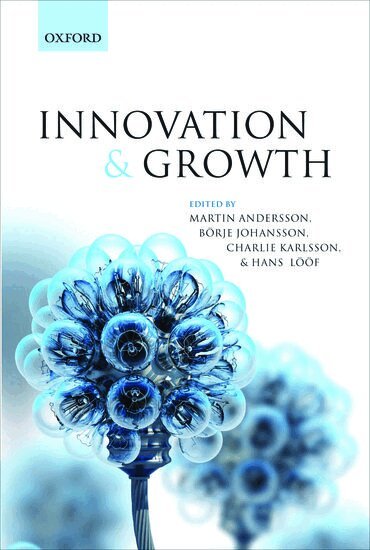
    Innovation and Growth

    From R&D Strategies of Innovating Firms to Economy-wide Technological Change

    AvANDERSSON ET AL,Martin Andersson

    Inbunden, Engelska, 2012

    2 803 kr

    Beställningsvara. Skickas inom 5-8 vardagar. Fri frakt över 249 kr.

    Beskrivning

    This volume provides an understanding of firms' R&D and innovation strategies and their economy-wide consequences. It is based on the premise that differences in firm-level returns, as well as economy-wide outcomes, may be linked to the heterogeneous ways in which firms organize and undertake R&D and innovation activities. It emphasizes innovation strategies of innovating firms, and reflects that innovation efforts do not represent a uniform type of expenditure. Organized into three parts the volume moves from the micro to the macro-level. This structure highlights the notion that R&D and innovation and growth are two interdependent perspectives. The first of these is micro-oriented and focuses on innovation processes of firms, where R&D activities and other innovation efforts give rise to consequences such as a strengthening of resource bases, growth of sales and employment, patents, new products, increasing productivity and profits, and improved chances of survival. The second perspective comprises economy-wide effects in the form of overall technological change, growth in total factor productivity, and structural change processes, where certain sectors may benefit from new inputs from other sectors while others experience declining markets and reduced output.The book brings together contributions and perspectives from both economics and business scholars, and will appeal to academics, researchers, and students interested in R&D and innovation strategies, international business, business strategy, and the economics of technological change.

    Produktinformation

    • Utgivningsdatum:2012-09-20
    • Mått:171 x 240 x 25 mm
    • Vikt:690 g
    • Format:Inbunden
    • Språk:Engelska
    • Antal sidor:368
    • Förlag:OUP OXFORD
    • ISBN:9780199646685

    Utforska kategorier

    • Mikroekonomi inom Ekonomi och Ledarskap
    • Affärsutveckling inom Ekonomi och Ledarskap
    • Makroekonomi inom Ekonomi och Ledarskap

    Mer om författaren

    Martin Andersson is an economist by training and has a PhD in economics from the Jonkoping International Business School (JIBS). Before joining CIRCLE, Prof. Andersson worked as research coordinator at CESIS and post-doc researcher at the Royal Institute of Technology (KTH) and JIBS. His research focuses on innovation, trade and location and their interplay, including non-linear relations and dynamics in innovation and learning processes. Börje Johansson received his PhD at the University in Gothenburg in 1978. Prof. Johansson is editor of the international journal Annals of Regional Science (Springer-Verlag). In Sweden he has carried out major projects on high-speed train development and on transport policies for the National Swedish Road Authority.Charlie Karlsson is also Guest Professor of Economics at University West, Trollhättan and Associate Professor in Regional Planning at the Royal Institute of Technology, Stockholm. He holds a BSc and an MSc in Economics from the University of Gothenburg and a PhD in Economics from Umea University. In his research, Prof. Karlsson has focused on infrastructure economics, urban economics, the economics of innovation and technological change, regional economics, spatial industrial dynamics, entrepreneurship and small business economics, international trade, and the economics of R&D and higher education.Hans Lööf is also deputy director of the Center for Excellence of Science and Innovation Studies and program manager for the Master Programme Economics of Innovation and Growth. Prof. Lööf is member of the editorial board of The Annals of Regional Science and has worked as expert on innovation for the Ministry of Industry in Sweden. His main research interest is the process of economic growth, and its relation to knowledge, technology, and innovation. This includes areas such as micro econometrics, economics of innovation, economic geography, international trade, industrial dynamics, and financial economics.

    Innehållsförteckning

    • PART I. UNDERSTANDING THE R&D STRATEGIES OF THE INNOVATION FIRM; PART II. FIRM-LEVEL RETURN TO R&D STRATEGIES; PART III. BEYOND THE FIRM - ECONOMY-WIDE EFFECTS OF R&D STRATEGIES; PART IV. REFLECTIONS