• Fri frakt över 249 kr
  • •
  • Snabba leveranser
  • •
  • Billiga böcker
Kundservice

Du är på sajten för privatpersoner.

Företag, bibliotek eller offentlig verksamhet?

Du handlar på classic.bokus.com, där alla dina funktioner finns intakta.
Till classic.bokus.com
Bokus logotyp. Gå till startsidan.
  • Erbjudanden
  • Student
  • Topplistor
  • Barn & ungdom
  • Bokus Play
  • E-böcker
  • Ljudböcker
  • Pocketböcker
  • Spel & pussel

Upp till 25% på utvalda nyheter →

Sidfot

Mina sidor

    Hjälp

    • Kundservice
    • Vanliga frågor och svar
    • Frakt och leverans
    • Retur vid ångerrätt
    • Reklamera vara
    • Betalning
    • Köpvillkor
    • Allmänna villkor
    • Information om webbplatsens tillgänglighet

    Om Bokus

    • Om oss
    • Pressrum
    • För studenter
    • För företag
    • För bibliotek och offentlig verksamhet
    • För leverantörer
    • Hållbarhet

    Populärt

    • Aktuella erbjudanden
    • Presentkort
    • Studentlitteratur
    • Nya böcker
    • Topplistor
    • Signerade böcker
    • Engelska böcker

    Inspiration

    • Boktips
    • BookTok
    • Populära bokserier
    • Barnbokskaraktärer
    • Populära författare
    Logotyp för Bokus
    Följ oss på Facebook (extern länk)Följ oss på Instagram (extern länk)Följ oss på YouTube (extern länk)Följ oss på TikTok (extern länk)
    bokus @ CookiesAnpassa cookiesIntegritetspolicyKöpvillkor
    Till Citymail hemsida (extern länk)Till Budbee hemsida (extern länk)Till Postnord hemsida (extern länk)Till Schenker hemsida (extern länk)Till Early Bird hemsida (extern länk)Till Walleys hemsida (extern länk)
    1. Naturvetenskap och teknik
    2. Matematik och naturvetenskap
    3. Naturvetenskap:allmänt
    4. Populärvetenskap

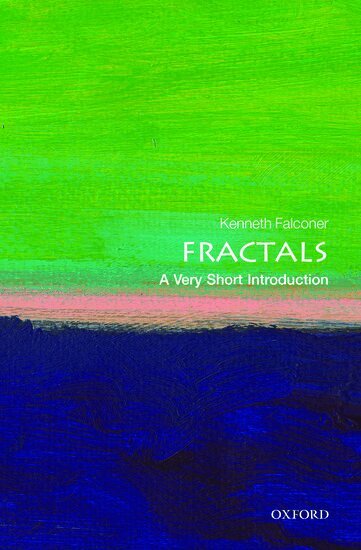
    Fractals

    A Very Short Introduction

    AvKenneth Falconer

    Häftad, Engelska, 2013

    Del i serien Very Short Introductions

    110 kr

    Beställningsvara. Skickas inom 5-8 vardagar. Fri frakt över 249 kr.

    Fler format och utgåvor

    E-bok

    89 kr

    Beskrivning

    Many are familiar with the beauty and ubiquity of fractal forms within nature. Unlike the study of smooth forms such as spheres, fractal geometry describes more familiar shapes and patterns, such as the complex contours of coastlines, the outlines of clouds, and the branching of trees. In this Very Short Introduction, Kenneth Falconer looks at the roots of the 'fractal revolution' that occurred in mathematics in the 20th century, presents the 'new geometry' of fractals, explains the basic concepts, and explores the wide range of applications in science, and in aspects of economics.This is essential introductory reading for students of mathematics and science, and those interested in popular science and mathematics.ABOUT THE SERIES: The Very Short Introductions series from Oxford University Press contains hundreds of titles in almost every subject area. These pocket-sized books are the perfect way to get ahead in a new subject quickly. Our expert authors combine facts, analysis, perspective, new ideas, and enthusiasm to make interesting and challenging topics highly readable.

    Produktinformation

    • Utgivningsdatum:2013-09-26
    • Mått:115 x 170 x 8 mm
    • Vikt:136 g
    • Format:Häftad
    • Språk:Engelska
    • Serie:Very Short Introductions
    • Antal sidor:160
    • Förlag:OUP OXFORD
    • ISBN:9780199675982

    Utforska kategorier

    • Populärvetenskap inom Naturvetenskap och teknik
    • Matematik inom Naturvetenskap och teknik

    Mer om författaren

    Kenneth Falconer is Professor of Pure Mathematics at St Andrews University. He has published many papers on fractal geometry, and three books on the topic, including Fractal Geometry: Mathematical Foundations and Applications (Wiley-Blackwell).

    Recensioner i media

    Fractals: A Very Short Introduction is an obvious starting point for lay readers interested in fractals. It presents the key ideas and explains their context and significance, while introducing and using some very basic mathematics.

    Innehållsförteckning

    • Preface ; 1. The fractal concept ; 2. Self-similarity ; 3. Fractal dimension ; 4. Julia sets and the Mandelbrot set ; 5. Random walks and Brownian motion ; 6. Fractals in the real world ; 7. A little history ; Further reading