• Fri frakt över 249 kr
  • •
  • Snabba leveranser
  • •
  • Billiga böcker
Kundservice

Du är på sajten för privatpersoner.

Företag, bibliotek eller offentlig verksamhet?

Du handlar på classic.bokus.com, där alla dina funktioner finns intakta.
Till classic.bokus.com
Bokus logotyp. Gå till startsidan.
  • Erbjudanden
  • Nyheter
  • Student
  • Topplistor
  • Barn & ungdom
  • Bokus Play
  • E-böcker
  • Pocketböcker
  • Spel & pussel

10% studentrabatt med kod TERM26

Sidfot

Mina sidor

    Hjälp

    • Kundservice
    • Vanliga frågor och svar
    • Frakt och leverans
    • Retur vid ångerrätt
    • Reklamera vara
    • Betalning
    • Köpvillkor
    • Allmänna villkor
    • Information om webbplatsens tillgänglighet

    Om Bokus

    • Om oss
    • Pressrum
    • För studenter
    • För företag
    • För bibliotek och offentlig verksamhet
    • För leverantörer
    • Hållbarhet

    Populärt

    • Aktuella erbjudanden
    • Presentkort
    • Studentlitteratur
    • Nya böcker
    • Topplistor
    • Signerade böcker
    • Engelska böcker

    Inspiration

    • Boktips
    • BookTok
    • Populära bokserier
    • Barnbokskaraktärer
    • Populära författare
    Logotyp för Bokus
    Följ oss på Facebook (extern länk)Följ oss på Instagram (extern länk)Följ oss på YouTube (extern länk)Följ oss på TikTok (extern länk)
    bokus @ CookiesAnpassa cookiesIntegritetspolicyKöpvillkor
    Till Citymail hemsida (extern länk)Till Budbee hemsida (extern länk)Till Postnord hemsida (extern länk)Till Schenker hemsida (extern länk)Till Early Bird hemsida (extern länk)Till Walleys hemsida (extern länk)
    1. Ekonomi och Ledarskap
    2. Nationalekonomi
    3. Mikroekonomi

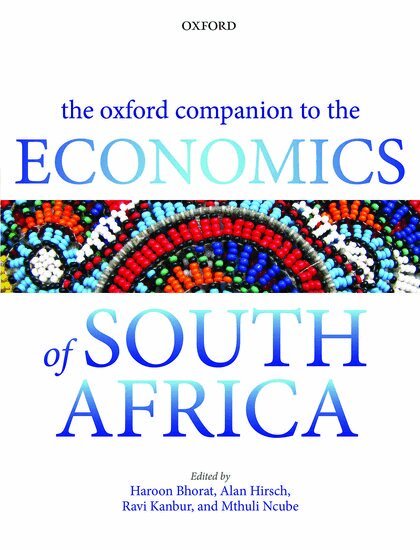
    The Oxford Companion to the Economics of South Africa

    AvBhorat Et Al,Haroon Bhorat

    Inbunden, Engelska, 2014

    2 209 kr

    Beställningsvara. Skickas inom 5-8 vardagar. Fri frakt över 249 kr.

    Beskrivning

    In 1994 South Africa saw the end of apartheid. The new era of political freedom was seen as the foundation for economic prosperity and inclusion. The last two decades have seen mixed results. Economic growth has been volatile. While inequalities in public services have been reduced, income inequality has increased, and poverty has remained stagnant. As the twentieth anniversary of the transition to democracy approaches in 2014, the economic policy debates in South Africa are in full flow. They combine a stocktake of the various programs of the last two decades with a forward looking discussion of strategy in the face of an ever open but volatile global economy. Underlying the discourse are basic and often unresolved differences on an appropriate strategy for an economy like South Africa, with a strong natural resource base but with deeply entrenched inherited inequalities, especially across race. This volume contributes to the policy and analytical debate by pulling together perspectives on a range of issues: micro, macro, sectoral, country wide and global, from leading economists working on South Africa. Other than the requirement that it be analytical and not polemical, the contributors were given freedom to put forward their particular perspective on their topic. The economists invited are from within South Africa and from outside; from academia and the policy world; from international and national level economic policy agencies. The contributors include recognized world leaders in South African economic analysis, as well as the very best of the younger crop of economists who are working on the study of South Africa, the next generation of leaders in thought and policy.

    Produktinformation

    • Utgivningsdatum:2014-11-27
    • Mått:198 x 254 x 30 mm
    • Vikt:1 046 g
    • Format:Inbunden
    • Språk:Engelska
    • Antal sidor:456
    • Förlag:OUP OXFORD
    • ISBN:9780199689248

    Utforska kategorier

    • Mikroekonomi inom Ekonomi och Ledarskap
    • Ekonomisk politik inom Ekonomi och Ledarskap
    • Finansiering inom Ekonomi och Ledarskap

    Mer om författaren

    The editors are four global leaders in development economics and in African and South African economic analysis and policy, who between them have held or hold the following positions: Chief Economist, African Development Bank; Deputy Director General in the Presidency of the Republic of South Africa; Chief Director, Department of Trade and Industry, South Africa; Presidential Economic Advisor, South Africa; G20 Sherpa, South Africa; Co-Chair G20 Development Working Group; Chief Economist for Africa, The World Bank; Professor of Economics, University of Cape Town; Dean of Commerce, Law and Management, University of Witwatersrand; Professor of Economics, Cornell University.

    Innehållsförteckning

    • Overview: Economic Policy in South Africa: Past, Present, and Future ; PART 1: THE ECONOMICS OF POST-APARTHEID SOUTH AFRICA ; 1. Twenty Years of Economic Policy-Making: Putting People First ; 2. South Africa's Growth Performance ; 3. Macroeconomic Scenarios for South Africa: 2013-2025 ; 4. The Liberation Dividend ; 5. The Political Economy of Restructuring in South Africa ; 6. South Africa's Suboptimal Political Economy Equilibrium ; 7. Data Issues in South Africa ; PART 2: SOUTH AFRICA AND THE WORLD ECONOMY ; 8. Trade Policy Reform in South Africa ; 9. The Evolution and Impact of Foreign Direct Investment into South Africa since 1994 ; 10. South Africa's Economic Relations with Africa ; 11. South Africa's Exchange Rate Policy and Exchange Rate Developments ; PART 3: MACROECONOMICS AND FISCAL POLICY ; 12. South Africa's Fiscal Framework ; 13. Intergovernmental Fiscal Relations in South Africa ; 14. (Dis)Saving in South Africa ; 15. Inflation in South Africa ; 16. Monetary Policy in South Africa since 1994 ; 17. Central Banking After the Global Financial Crisis: The South African Case ; PART 4: FINANCE, INDUSTRY, AND INFRASTRUCTURE ; 18. Capital Markets ; 19. The Visible Hand: Shaping Stability and Inclusion in the South African Financial Sector ; 20. Banking and Credit Markets ; 21. Industrialisation Strategy ; 22. Industrial Structure and Competition Policy ; 23. Investment Climate ; 24. Commanding Heights: The Governance of State-Owned Enterprises in Contemporary South Africa ; 25. Economic Regulation of the Energy Sector ; 26. Technology and Innovation: Performance, Policy, and Prospects ; 27. Electricity Supply ; PART 5: LABOUR AND EMPLOYMENT ; 28. Capturing South Africa's Demographic Dividend ; 29. Unemployment in South Africa ; 30. Segmented Labor Markets in South Africa ; 31. Labour Law ; 32. Public Employment in South Africa ; 33. Youth Unemployment Policy ; 34. Informality in South Africa ; 35. South Africa's Migrant Labour System ; PART 6: POVERTY AND INEQUALITY IN SOUTH AFRICA ; 36. Poverty and Poverty Lines in South Africa ; 37. Post-apartheid Poverty and Inequality Trends ; 38. Income Mobility in South Africa ; 39. Gender Inequality ; PART 7: POST-APARTHEID SOCIAL POLICY ; 40. Origins, Trends, and Debates in Black Economic Empowerment ; 41. Health Challenges Past and Future ; 42. The Macro Economics of AIDS in South Africa ; 43. Child Development ; 44. Education in South Africa since 1994 ; 45. Social Safety Nets ; 46. Social Security and Social Grants ; 47. Urbanization ; 48. Public Financing for Housing ; PART 8 LAND, AGRICULTURE, AND ENVIRONMENT ; 49. Land and Land Reform in South Africa ; 50. The Politics and Economics of Water in South Africa, 1994 to 2013 ; 51. Agriculture and Rural Development in the Post-Apartheid Era ; 52. Environmental Policy and the State in Post-Apartheid South Africa