• Fri frakt över 249 kr
  • •
  • Snabba leveranser
  • •
  • Billiga böcker
Kundservice

Du är på sajten för privatpersoner.

Företag, bibliotek eller offentlig verksamhet?

Du handlar på classic.bokus.com, där alla dina funktioner finns intakta.
Till classic.bokus.com
Bokus logotyp. Gå till startsidan.
  • Erbjudanden
  • Nyheter
  • Student
  • Topplistor
  • Barn & ungdom
  • Bokus Play
  • E-böcker
  • Pocketböcker
  • Spel & pussel

10% rabatt på allt med kod NYSTART10 →

Sidfot

Mina sidor

    Hjälp

    • Kundservice
    • Vanliga frågor och svar
    • Frakt och leverans
    • Retur vid ångerrätt
    • Reklamera vara
    • Betalning
    • Köpvillkor
    • Allmänna villkor
    • Information om webbplatsens tillgänglighet

    Om Bokus

    • Om oss
    • Pressrum
    • För studenter
    • För företag
    • För bibliotek och offentlig verksamhet
    • För leverantörer
    • Hållbarhet

    Populärt

    • Aktuella erbjudanden
    • Presentkort
    • Studentlitteratur
    • Nya böcker
    • Topplistor
    • Signerade böcker
    • Engelska böcker

    Inspiration

    • Boktips
    • BookTok
    • Populära bokserier
    • Barnbokskaraktärer
    • Populära författare
    Logotyp för Bokus
    Följ oss på Facebook (extern länk)Följ oss på Instagram (extern länk)Följ oss på YouTube (extern länk)Följ oss på TikTok (extern länk)
    bokus @ CookiesAnpassa cookiesIntegritetspolicyKöpvillkor
    Till Citymail hemsida (extern länk)Till Budbee hemsida (extern länk)Till Postnord hemsida (extern länk)Till Schenker hemsida (extern länk)Till Early Bird hemsida (extern länk)Till Walleys hemsida (extern länk)
    1. Samhälle och politik
    2. Politik och statsskick

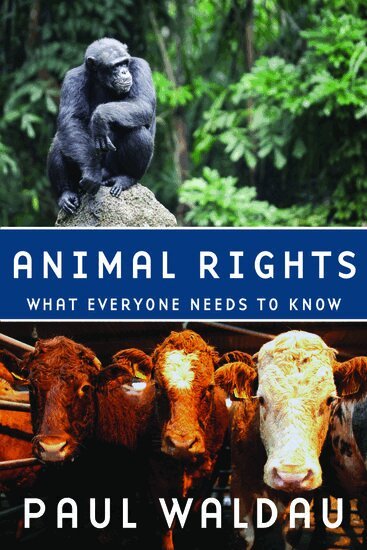
    Animal Rights

    What Everyone Needs to Know®

    AvPaul Waldau

    Häftad, Engelska, 2011

    Del i serien What Everyone Needs To Know®

    188 kr

    Beställningsvara. Skickas inom 5-8 vardagar. Fri frakt över 249 kr.

    Fler format och utgåvor

    Inbunden

    1 135 kr

    E-bok

    109 kr

    E-bok

    109 kr

    Beskrivning

    In this compelling volume in the What Everyone Needs to Know series, Paul Waldau expertly navigates the many heated debates surrounding the complex and controversial animal rights movement. Organized around a series of probing questions, this timely resource offers the most complete, even-handed survey of the animal rights movement available. The book covers the full spectrum of issues, beginning with a clear, highly instructive definition of animal rights. Waldau looks at the different concerns surrounding companion animals, wild animals, research animals, work animals, and animals used for food, provides a no-nonsense assessment of the treatment of animals, and addresses the philosophical and legal arguments that form the basis of animal rights. Along the way, readers will gain insight into the history of animal protection-as well as the political and social realities facing animals today-and become familiar with a range of hot-button topics, from animal cognition and autonomy, to attempts to balance animal cruelty versus utility. Chronicled here are many key figures and organizations responsible for moving the animal rights movement forward, as well as legislation and public policy that have been carried out around the world in the name of animal rights and animal protection. The final chapter of this indispensable volume looks ahead to the future of animal rights, and delivers an animal protection mandate for citizens, scientists, governments, and other stakeholders.With its multidisciplinary, non-ideological focus and all-inclusive coverage, Animal Rights represents the definitive survey of the animal rights movement-one that will engage every reader and student of animal rights, animal law, and environmental ethics.

    Produktinformation

    • Utgivningsdatum:2011-02-24
    • Mått:137 x 206 x 17 mm
    • Vikt:259 g
    • Format:Häftad
    • Språk:Engelska
    • Serie:What Everyone Needs To Know®
    • Antal sidor:256
    • Förlag:OUP USA
    • ISBN:9780199739967

    Utforska kategorier

    • Politik och statsskick inom Samhälle och politik
    • Lag och samhälle inom Juridik
    • Filosofiska discipliner inom Filosofi och religion

    Mer om författaren

    Paul Waldau is a scholar working at the intersection of animal studies, ethics, religion, law and cultural studies. He has served multiple times as the Bob Barker Lecturer on Animal Law at Harvard Law School, directed animal law reading groups at Yale Law School, and was the Director of Tufts University's Center for Animals and Public Policy from 2004 through 2008.

    Recensioner i media

    Waldau is particularly interesting

    Innehållsförteckning

    • PrefaceChapter 1: General InformationWhy do we need to know what is meant by "animal rights"?Who, what are "animals"?Where do we find "them"?Is concern for animal rights new?Chapter 2: The Animals ThemselvesWhat do we know about animals' realities?Why do their realities matter?How does science categorize animals?How valuable is this scientific map in animal rights discussions?How valuable are the non-scientific categories we use when classifying animals?What do we know about numbers?Who, what are companion animals?Which animals are research animals, and how are they treated?What is the situation with entertainment animals?What is the status of animals used for food?What about work and production animals?Is today's widespread concern for food and production animals new?Who, what are wildlife?Are wild animals more truly "animal" than are companion, food, production and research animals?What other categories are popular?Chapter 3: Philosophical ArgumentsHow do moral rights differ from legal rights?What role has philosophy played in the modern animal right movement?What have been the principal philosophical arguments about the moral importance of animals?What does philosophy suggest about our "knowledge" of other animals?Chapter 4: History and CultureWhen did animal protection first occur?Does animal protection occur in all cultures?Has there been an increase in the number of people protecting animals?Is it now possible to tell the full story of the humans' efforts at animal protection?Chapter 5: LawsWhat is (traditional) law on animals?What is happening today in "animal law"?Legal EducationLitigationLegislationEnforcementWhat is the role of legal rights in "animal rights" debates?What is the significance of the "rights versus welfare" debate?What is possible under today's developing animal law?Is it likely that law, lawyers, and legislation will lead our societies in changes regarding the status of animals?Chapter 6: Political RealitiesWhat are the political realities for animals today?What successes have there been in politics?What failures have there been?What is the overall state of today's animal protection movement?What are the prospects today for legal rights for animals?What are the prospects for moral rights?What has been the role of the anti-vivisection movement?How significant is today's "Alternatives Movement"?What about Public Policy? Is there any movement here?What will be the impact of the increasingly high profile and heavy funding of public health initiatives?What is the relationship of animal protection concerns to the worldwide environmental movement?Does animal protection mean job losses?What impact do ethnic and national food traditions have in animal rights discussions?What role do religious traditions play in the politics of animal protection?Chapter 7: Social RealitiesWhat are the prevailing attitudes today in different societies regarding animals?What is our heritage?What importance have compassion and anti-cruelty had in the past?How are attitudes changing today?How well informed are modern consumers about current practices regarding animals?What about circuses and zoos? Do they educate us or imprison us?What is the role of sanctuaries?What animals are in the city?Chapter 8: Education and the ArtsWhat is the most effective way of learning about animals?What has been the traditional role of animals in education?Have compassion and anti-cruelty been important values in education?What is happening in earliest (elementary) levels of education?What about secondary education (high schools)?What is happening in colleges and universities?What is the field of "animal studies"?What is the role of the professions and professional schools?What has been the role of the arts?Chapter 9: Contemporary SciencesWhat is the role of science generally in our knowledge and treatment of animals outside our species?Which natural sciences have played important roles in our understanding of animals?Which social sciences today contribute to our understanding of animals?Which animals are intelligent or self-aware?Do other animals have their own communities?Do animals have emotions?Chapter 10: Major Figures and Organizations in the Animal Rights MovementTwo Henries-Salt and SpiraTwo Theologians-Schweitzer and LinzeyInsightful Women-Ruth Harrison and Rosalind GodlovitzKey Philosophers-Peter Singer and Tom ReganFrom Welfare to Rights-Richard Ryder and Bernard RollinCreative Pioneering Across Boundaries-Betty Lawrence and Carol AdamsThe Law Arrives-Joyce Tischler and Steven WiseFrom New Zealand to Austria-Barbara Leonard and Martin BalluchSanctuary-Carol Noon, Carol Buckley, Dame Sheldrick, Lisa KaneLeadership in India-Maneka Gandhi and Raj PanjwaniLeadership in China-Song Wei and Jill RobinsonIngrid NewkirkWayne Pacelle and Gene BaurChapter 11: The Future of Animal RightsWho are the others who join us in the more-than-human community?Can ethics work hand-in-hand with science?What is the role of the individual citizen?What is the role of nonprofit organizations?What is the role of corporations?What is the role of municipalities and villages and other local communities?What is the role of provinces, states and countries in animal protection?GlossaryChronology of Important EventsSuggestions for Further ReadingIndex