• Fri frakt över 249 kr
  • •
  • Snabba leveranser
  • •
  • Billiga böcker
Kundservice

Du är på sajten för privatpersoner.

Företag, bibliotek eller offentlig verksamhet?

Du handlar på classic.bokus.com, där alla dina funktioner finns intakta.
Till classic.bokus.com
Bokus logotyp. Gå till startsidan.
  • Erbjudanden
  • Nyheter
  • Student
  • Topplistor
  • Barn & ungdom
  • Bokus Play
  • E-böcker
  • Pocketböcker
  • Spel & pussel

10% studentrabatt med kod TERM26

Sidfot

Mina sidor

    Hjälp

    • Kundservice
    • Vanliga frågor och svar
    • Frakt och leverans
    • Retur vid ångerrätt
    • Reklamera vara
    • Betalning
    • Köpvillkor
    • Allmänna villkor
    • Information om webbplatsens tillgänglighet

    Om Bokus

    • Om oss
    • Pressrum
    • För studenter
    • För företag
    • För bibliotek och offentlig verksamhet
    • För leverantörer
    • Hållbarhet

    Populärt

    • Aktuella erbjudanden
    • Presentkort
    • Studentlitteratur
    • Nya böcker
    • Topplistor
    • Signerade böcker
    • Engelska böcker

    Inspiration

    • Boktips
    • BookTok
    • Populära bokserier
    • Barnbokskaraktärer
    • Populära författare
    Logotyp för Bokus
    Följ oss på Facebook (extern länk)Följ oss på Instagram (extern länk)Följ oss på YouTube (extern länk)Följ oss på TikTok (extern länk)
    bokus @ CookiesAnpassa cookiesIntegritetspolicyKöpvillkor
    Till Citymail hemsida (extern länk)Till Budbee hemsida (extern länk)Till Postnord hemsida (extern länk)Till Schenker hemsida (extern länk)Till Early Bird hemsida (extern länk)Till Walleys hemsida (extern länk)
    1. Naturvetenskap och teknik
    2. Matematik och naturvetenskap
    3. Biologi
    4. Biokemi

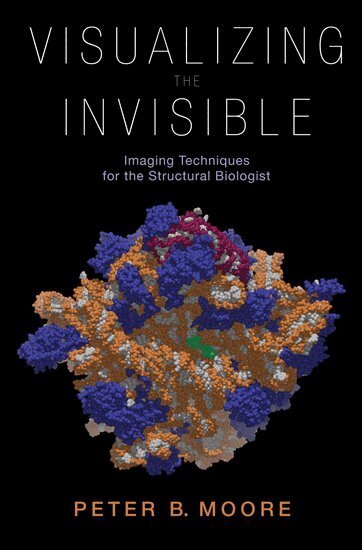
    Visualizing the Invisible

    Imaging Techniques for the Structural Biologist

    AvPeter Moore

    Inbunden, Engelska, 2012

    1 923 kr

    Beställningsvara. Skickas inom 5-8 vardagar. Fri frakt över 249 kr.

    Fler format och utgåvor

    E-bok

    1 119 kr

    Beskrivning

    Knowledge of the microscopic structure of biological systems is the key to understanding their physiological properties. Most of what we now know about this subject has been generated by techniques that produce images of the materials of interest, one way or another, and there is every reason to believe that the impact of these techniques on the biological sciences will be every bit as important in the future as they are today. Thus the 21st century biologist needs to understand how microscopic imaging techniques work, as it is likely that sooner or later he or she will have to use one or another of them, or will otherwise become dependent on the information that they provide. The objective of this textbook is to introduce its readers to the many techniques now available for imaging biological materials, e.g. crystallography, optical microscopy and electron microscopy, at a level that will enable them to use them effectively to do research. Since all of these experimental methods are best understood in terms of Fourier transformations, this book explains the relevant concepts from this branch of mathematics, and then illustrates their elegance and power by applying them to each of the techniques presented. The book is derived from a one-term course in structural biology that the author gave for many years at Yale. It is intended for students interested either in doing structural research themselves, or in exploiting structural information produced by others. Over the years, the course was taken successfully by advanced undergraduates and by graduate students. Scientists interested in entering the structural biology field later in their careers may also find it useful.

    Produktinformation

    • Utgivningsdatum:2012-04-19
    • Mått:155 x 236 x 25 mm
    • Vikt:680 g
    • Format:Inbunden
    • Språk:Engelska
    • Antal sidor:384
    • Förlag:OUP USA
    • ISBN:9780199767090

    Utforska kategorier

    • Biokemi inom Naturvetenskap och teknik
    • Cellbiologi inom Naturvetenskap och teknik
    • Kemi inom Naturvetenskap och teknik

    Mer om författaren

    Peter Moore is a biophysical chemist who got his Ph.D. at Harvard with J.D. Watson, and spent most of his subsequent career at Yale. He is best known for his work on the three-dimensional structure of the ribosome, which he pursued using a wide variety of biophysical methods.

    Recensioner i media

    I highly recommend this book

    Innehållsförteckning

    • Part 1. Fundamental Concepts. ; 1. On the Scattering of Electromagnetic Radiation by Atoms and Molecules. ; 2. Molecular Scattering and the Fourier Transform. ; 3. Scattering by Condensed Phases: a More Sophisticated Look at Atomic and Molecular Scattering. ; Appendix 3.3: Energy absorption and the imaginary part of ?. ; Part 2. Crystallography. ; 4. On the Diffraction of X-rays by Crystals. ; 5. On the Appearance of Crystalline Diffraction Patterns. ; 6. Solving the Phase Problem. ; 7. Electron Density Maps and Molecular Structures. ; Part 3. Non-Crystallographic Diffraction. ; 8. Diffraction from Non-Crystalline Samples. ; Part 4. Optical Microscopy. ; 9. Image Formation Using Lenses. ; 10. The Light Microscope. ; Part 5. Electron Microscopy. ; 11. Lenses that Focus Electrons. ; 12. Image Formation in the Electron Microscope. ; 13. Electron Microscopy in Three Dimensions. ; Appendix 13.1: Solving least squares problems. ; Appendix 13.2: Error propagation in linear systems. ; Appendix 13.3: The Fourier transform in cylindrical coordinates.