• Fri frakt över 249 kr
  • •
  • Snabba leveranser
  • •
  • Billiga böcker
Kundservice

Du är på sajten för privatpersoner.

Företag, bibliotek eller offentlig verksamhet?

Du handlar på classic.bokus.com, där alla dina funktioner finns intakta.
Till classic.bokus.com
Bokus logotyp. Gå till startsidan.
  • Erbjudanden
  • Nyheter
  • Student
  • Topplistor
  • Barn & ungdom
  • Bokus Play
  • E-böcker
  • Pocketböcker
  • Spel & pussel

10% rabatt på allt med kod: NYSTART10 →

Sidfot

Mina sidor

    Hjälp

    • Kundservice
    • Vanliga frågor och svar
    • Frakt och leverans
    • Retur vid ångerrätt
    • Reklamera vara
    • Betalning
    • Köpvillkor
    • Allmänna villkor
    • Information om webbplatsens tillgänglighet

    Om Bokus

    • Om oss
    • Pressrum
    • För studenter
    • För företag
    • För bibliotek och offentlig verksamhet
    • För leverantörer
    • Hållbarhet

    Populärt

    • Aktuella erbjudanden
    • Presentkort
    • Studentlitteratur
    • Nya böcker
    • Topplistor
    • Signerade böcker
    • Engelska böcker

    Inspiration

    • Boktips
    • BookTok
    • Populära bokserier
    • Barnbokskaraktärer
    • Populära författare
    Logotyp för Bokus
    Följ oss på Facebook (extern länk)Följ oss på Instagram (extern länk)Följ oss på YouTube (extern länk)Följ oss på TikTok (extern länk)
    bokus @ CookiesAnpassa cookiesIntegritetspolicyKöpvillkor
    Till Citymail hemsida (extern länk)Till Budbee hemsida (extern länk)Till Postnord hemsida (extern länk)Till Schenker hemsida (extern länk)Till Early Bird hemsida (extern länk)Till Walleys hemsida (extern länk)
    1. Samhälle och politik
    2. Samhälle och kultur
    3. Kultur och medier
    4. Kulturvetenskap

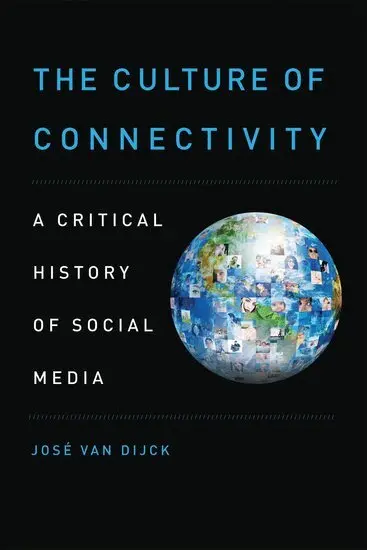
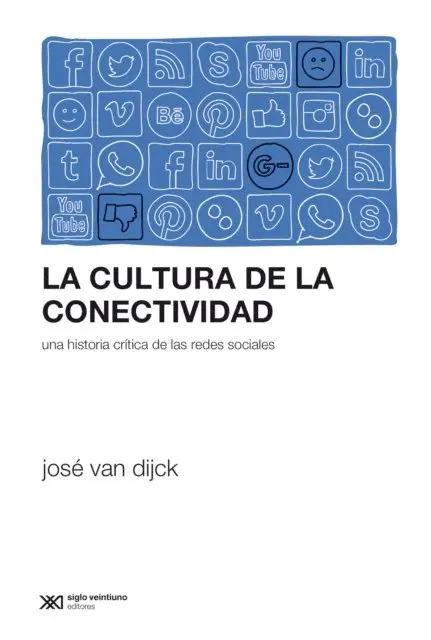
    The Culture of Connectivity

    A Critical History of Social Media

    AvJosé van Dijck

    Häftad, Engelska, 2013

    633 kr

    Beställningsvara. Skickas inom 5-8 vardagar. Fri frakt över 249 kr.

    Fler format och utgåvor

    Inbunden

    2 300 kr

    Beskrivning

    Social media has come to deeply penetrate our lives: Facebook, YouTube, Twitter and many other platforms define many of our daily habits of communication and creative production. The Culture of Connectivity studies the rise of social media in the first decade of the twenty-first century up until 2012, providing both a historical and a critical analysis of the emergence of major platforms in the context of a rapidly changing ecosystem of connective media. Such history is needed to understand how these media have come to profoundly affect our experience of online sociality. The first stage of their development shows a fundamental shift. While most sites started out as amateur-driven community platforms, half a decade later they have turned into large corporations that do not just facilitate user connectedness, but have become global information and data mining companies extracting and exploiting user connectivity. Author and media scholar José van Dijck offers an analytical prism to examine techno-cultural as well as socio-economic aspects of this transformation. She dissects five major platforms: Facebook, Twitter, Flickr, YouTube, and Wikipedia. Each of these microsystems occupies a distinct position in the larger ecology of connective media, and yet, their underlying mechanisms for coding interfaces, steering users, and filtering content rely on shared ideological principles. At the level of management and organization, we can also observe striking similarities between these platforms' shifting ownership status, governance strategies, and business models.Reconstructing the premises on which these platforms are built, this study highlights how norms for online interaction and communication gradually changed. "Sharing," "friending," "liking," "following," "trending," and "favoriting" have come to denote online practices imbued with specific technological and economic meanings. This process of normalization, the author argues, is part of a larger political and ideological battle over information control in an online world where everything is bound to become social. Crossing lines of technological, historical, sociological, and cultural inquiry, The Culture of Connectivity will reshape the way we think about interpersonal connection in the digital age.

    Produktinformation

    • Utgivningsdatum:2013-03-21
    • Mått:156 x 234 x 14 mm
    • Vikt:372 g
    • Format:Häftad
    • Språk:Engelska
    • Antal sidor:240
    • Förlag:OUP USA
    • ISBN:9780199970780

    Utforska kategorier

    • Kulturvetenskap inom Samhälle och politik
    • Medievetenskap inom Samhälle och politik
    • Media och underhållning inom Ekonomi och Ledarskap

    Mer om författaren

    José van Dijck is a professor of Comparative Media Studies at the University of Amsterdam, where she also served as the Dean of Humanities. She has a PhD from the University of California, San Diego (UCSD) and previously taught at the Universities of Groningen and Maastricht. Her work covers a wide range of topics in media theory, media technologies, social media, television and culture. She is the author of five books, three co-edited volumes and many journal articles.

    Recensioner i media

    The Culture of Connectivity perhaps stands out most for the ways it attends to microhistorical changes that are often difficult to track given our increasing embeddedness in social media networks and their frequent multilevel updates.

    Innehållsförteckning

    • Table of Contents ; Acknowledgments ; Chapter 1: Engineering Sociality in a Culture of Connectivity ; 1.1 Introduction ; 1.2 From Networked Communication to Platformed Sociality ; 1.3 Making the Web Social: Coding Human Connections. ; 1.4 Making Sociality Saleable: Connectivity as a Resource ; 1.5 The Ecosystem of Connective Media in a Culture of Connectivity ; Chapter 2: Disassembling Platforms, Reassembling Sociality ; 2.1 Introduction ; 2.2 Combining Two Approaches ; 2.3 Platforms as Techno-cultural Constructs ; 2.4 Platforms as Socio-economic Structures ; 2.5 Connecting Platforms, Reassembling Sociality ; Chapter 3: Facebook and the Imperative of Sharing ; 3.1 Introduction ; 3.2 Coding Facebook: The Devil is in the Default ; 3.3 Branding Facebook: What You Share Is What You Get ; 3.4 Shared norms in the Ecosystem of Connective Media ; Chapter 4: Twitter and the Paradox of Following and Trending ; 4.1 Introduction ; 4.2 Asking the Existential Question: What is Twitter? ; 4.3 Asking the Strategic Question: What Does Twitter Want? ; 4.4 Asking the Ecological Question: What Will Twitter Be? ; Chapter 5: Flickr between Communities and Commerce ; 5.1 Introduction ; 5.2 Flickr Between Connedtedness and Connectivity ; 5.3 Flickr Between Commons and Commerce ; 5.4 Flickr Between Participatory and Connective Culture ; Chapter 6: YouTube: The Intimate Connection between Television and Video-sharing ; 6.1 Introduction 179-215 ; 6.2 Out of the Box: Video-sharing Challenges Television ; 6.3 Boxed In: Channeling Television into the Connective Flow ; 6.4 YouTube as A Gateway to Connective Culture ; Chapter 7: Wikipedia and the Principle of Neutrality ; 7.1 Introduction ; 7.2 The Techno-cultural Construction of Consensus ; 7.3 A Consensual Apparatus between Democracy and Bureaucracy ; 7.4 A Nonmarket Space in the Ecosystem? ; Chapter 8: The Ecosystem of Connective Media: Locked In, Fenced Off, Opt Out? ; 8.1 Introduction ; 8.2 Locked In: The Algorithmic Basis of Sociality ; 8.3 Fenced Off: Vertical Integration and Interoperability ; 8.4 Opt Out? Connectivity as Ideology ; Bibliography ; Index

    Betyg & recensioner

    3/5