• Fri frakt över 249 kr
  • •
  • Snabba leveranser
  • •
  • Billiga böcker
Kundservice

Du är på sajten för privatpersoner.

Företag, bibliotek eller offentlig verksamhet?

Du handlar på classic.bokus.com, där alla dina funktioner finns intakta.
Till classic.bokus.com
Bokus logotyp. Gå till startsidan.
  • Erbjudanden
  • Nyheter
  • Student
  • Topplistor
  • Barn & ungdom
  • Bokus Play
  • E-böcker
  • Pocketböcker
  • Spel & pussel

10% rabatt på allt med kod: NYSTART10 →

Sidfot

Mina sidor

    Hjälp

    • Kundservice
    • Vanliga frågor och svar
    • Frakt och leverans
    • Retur vid ångerrätt
    • Reklamera vara
    • Betalning
    • Köpvillkor
    • Allmänna villkor
    • Information om webbplatsens tillgänglighet

    Om Bokus

    • Om oss
    • Pressrum
    • För studenter
    • För företag
    • För bibliotek och offentlig verksamhet
    • För leverantörer
    • Hållbarhet

    Populärt

    • Aktuella erbjudanden
    • Presentkort
    • Studentlitteratur
    • Nya böcker
    • Topplistor
    • Signerade böcker
    • Engelska böcker

    Inspiration

    • Boktips
    • BookTok
    • Populära bokserier
    • Barnbokskaraktärer
    • Populära författare
    Logotyp för Bokus
    Följ oss på Facebook (extern länk)Följ oss på Instagram (extern länk)Följ oss på YouTube (extern länk)Följ oss på TikTok (extern länk)
    bokus @ CookiesAnpassa cookiesIntegritetspolicyKöpvillkor
    Till Citymail hemsida (extern länk)Till Budbee hemsida (extern länk)Till Postnord hemsida (extern länk)Till Schenker hemsida (extern länk)Till Early Bird hemsida (extern länk)Till Walleys hemsida (extern länk)
    1. Samhälle och politik
    2. Samhälle och kultur
    3. Kultur och medier
    4. Kulturvetenskap

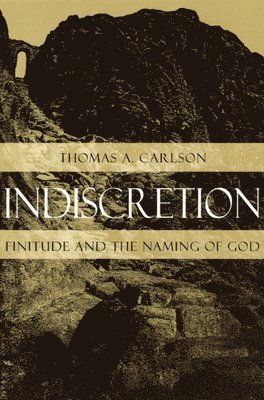
    Indiscretion

    Finitude and the Naming of God

    AvThomas A. Carlson

    Inbunden, Engelska, 1999

    Del i serien Religion and Postmodernism Series

    763 kr

    Tillfälligt slut

    Fler format och utgåvor

    Häftad

    624 kr

    Beskrivning

    How can one think and name an inconceivable and ineffable God? Christian mystics have approached the problem by speaking of God using "negative" language - devices such as grammatical negation and the rhetoric of "darkness" or "unknowing" - and their efforts have fascinated contemporary scholars. In this text, Thomas A. Carlson reinterprets premodern approaches to God's ineffability and postmodern approaches to the mystery of the human subject in light of one another. The recent interest in mystical theological traditions, Carlson argues, is best understood in relation to contemporary philosophy's emphasis on the idea of human finitude and mortality. Combining both historical research in theology (from Pseudo-Dionysius to Aquinas to Eckhart) and contemporary philosophical analysis (from Hegel and Nietzsche to Heidegger, Derrida, and Marion), this text should interest philosophers, theologians, and other scholars concerned with the possibilities and limits of language surrounding both God and human subjectivity.

    Produktinformation

    • Utgivningsdatum:1999-02-01
    • Mått:16 x 23 x 3 mm
    • Vikt:567 g
    • Format:Inbunden
    • Språk:Engelska
    • Serie:Religion and Postmodernism Series
    • Antal sidor:322
    • Förlag:The University of Chicago Press
    • ISBN:9780226092935

    Utforska kategorier

    • Kulturvetenskap inom Samhälle och politik
    • Religion: allmänt inom Filosofi och religion

    Innehållsförteckning

    • Acknowledgments Abbreviations of Main Texts Cited Introduction: Finitude and the Naming of God 1: The Deaths of God in Hegel: Overcoming Finitude and Religious Representation 2: The Temporal Experience of Consciousness: Hegel's Difference of Consciousness and Heidegger's Ontological Difference 3: The Naming of God in Hegel's Speculative Proposition: The Circle of Language and Annulment of the Singular 4: The Mortal Difference: Death and the Possibility of Existence in Heidegger 5: Transcending Negation: The Causal Nothing and Ecstatic Being in Pseudo-Dionysius's Theology 6: The Naming of God and the Possibility of Impossibility: Marion and Derrida between the Theology and Phenomenology of the Gift Conclusion: The Apophatic Analogy Bibliography Index