• Fri frakt över 249 kr
  • •
  • Snabba leveranser
  • •
  • Billiga böcker
Kundservice

Du är på sajten för privatpersoner.

Företag, bibliotek eller offentlig verksamhet?

Du handlar på classic.bokus.com, där alla dina funktioner finns intakta.
Till classic.bokus.com
Bokus logotyp. Gå till startsidan.
  • Erbjudanden
  • Nyheter
  • Student
  • Topplistor
  • Barn & ungdom
  • Bokus Play
  • E-böcker
  • Pocketböcker
  • Spel & pussel

10% rabatt på allt med kod NYSTART10 →

Sidfot

Mina sidor

    Hjälp

    • Kundservice
    • Vanliga frågor och svar
    • Frakt och leverans
    • Retur vid ångerrätt
    • Reklamera vara
    • Betalning
    • Köpvillkor
    • Allmänna villkor
    • Information om webbplatsens tillgänglighet

    Om Bokus

    • Om oss
    • Pressrum
    • För studenter
    • För företag
    • För bibliotek och offentlig verksamhet
    • För leverantörer
    • Hållbarhet

    Populärt

    • Aktuella erbjudanden
    • Presentkort
    • Studentlitteratur
    • Nya böcker
    • Topplistor
    • Signerade böcker
    • Engelska böcker

    Inspiration

    • Boktips
    • BookTok
    • Populära bokserier
    • Barnbokskaraktärer
    • Populära författare
    Logotyp för Bokus
    Följ oss på Facebook (extern länk)Följ oss på Instagram (extern länk)Följ oss på YouTube (extern länk)Följ oss på TikTok (extern länk)
    bokus @ CookiesAnpassa cookiesIntegritetspolicyKöpvillkor
    Till Citymail hemsida (extern länk)Till Budbee hemsida (extern länk)Till Postnord hemsida (extern länk)Till Schenker hemsida (extern länk)Till Early Bird hemsida (extern länk)Till Walleys hemsida (extern länk)
    1. Samhälle och politik
    2. Samhälle och kultur
    3. Sociala och etiska frågor

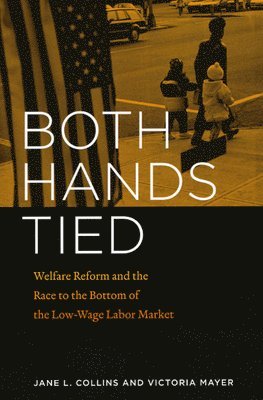
    Both Hands Tied

    Welfare Reform and the Race to the Bottom in the Low-Wage Labor Market

    AvJane L. Collins,Victoria Mayer

    Häftad, Engelska, 2010

    267 kr

    Beställningsvara. Skickas inom 5-8 vardagar. Fri frakt över 249 kr.

    Beskrivning

    "Both Hands Tied" studies the working poor in the United States, focusing in particular on the relation between welfare and low-wage earnings among working mothers. Grounded in the experience of thirty-three women living in Milwaukee and Racine, Wisconsin, it tells the story of their struggle to balance child care and wage-earning in poorly paying and often state-funded jobs with inflexible schedules - and the moments when these jobs failed them and they turned to the state for additional aid. Jane L. Collins and Victoria Mayer here examine the situations of these women in light of the 1996 national Personal Responsibility and Work Opportunity Reconciliation Act and other like-minded reforms - laws that ended the entitlement to welfare for those in need and provided an incentive for them to return to work.Arguing that this reform came at a time of gendered change in the labor force and profound shifts in the responsibilities of family, firms, and the state, "Both Hands Tied" provides a stark but poignant portrait of how welfare reform afflicted poor, single-parent families, ultimately eroding the participants' economic rights and affecting their ability to care for themselves and their children.

    Produktinformation

    • Utgivningsdatum:2010-05-01
    • Mått:15 x 23 x 1 mm
    • Vikt:369 g
    • Format:Häftad
    • Språk:Engelska
    • Antal sidor:264
    • Förlag:The University of Chicago Press
    • ISBN:9780226114064

    Utforska kategorier

    • Sociala och etiska frågor inom Samhälle och politik
    • Genusvetenskap inom Samhälle och politik
    • Socialt arbete och välfärd inom Samhälle och politik

    Mer om författaren

    Jane L. Collins is the Evjue Bascom Professor of Community and Environmental Sociology and Gender and Women's Studies at the University of Wisconsin - Madison and the author of Threads: Gender, Labor, and Power in the Global Apparel Industry, among other titles. Victoria Mayer is assistant professor of sociology at Colby College.

    Recensioner i media

    "The originality of Both Hands Tied lies not just in its rich case study interview materials - in poor women's voices and the trajectories of their work and home lives - but in its careful tying of those materials to shifting national, state, and local economic policies." - Micaela di Leonardo, Northwestern University"