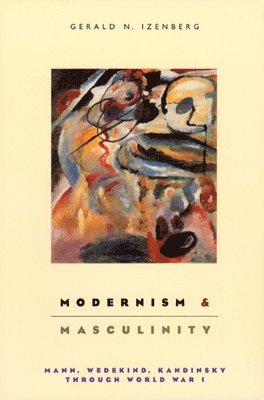
In this, one of the first serious, penetrating considerations of the modernist construction of masculinity, Gerald N. Izenberg examines the lives of Thomas Mann, Frank Wedekind, and Wassily Kandinsky, tracing their erotic and romantic lives and discovering how their personal constructions of masculinity - and reactions to femininity - were reflected in their art.
Gerald N. Izenberg is professor of history at Washington University. He is the author of The Existentialist Critique of Freud: The Crisis of Autonomy and Impossible Individuality: Romanticism, Revolution, and the Origins of Modern Selfhood, 1787-1802.
Recensioner i media
"The skill, sympathy, and percipience with which Izenberg analyzes the lives and contexts of his subjects are simply outstanding." - Chandak Sengoopta, American Historical Review "This consistently perceptive and thoughtful book both deepens and recasts our understanding of the pre-World War I crisis of masculinity, while simultaneously showing how powerfully that crisis affected the lives and work of three exemplary modernists. Izenberg makes a significant contribution to both cultural history and the history of gender relations." - Jerrold Seigel, author of Bohemian Paris and The Private Worlds of Marcel Duchamp
In this, one of the first serious, penetrating considerations of the modernist construction of masculinity, Gerald N. Izenberg examines the lives of Thomas Mann, Frank Wedekind, and Wassily Kandinsky, tracing their erotic and romantic lives and discovering how their personal constructions of masculinity - and reactions to femininity - were reflected in their art.
Gerald N. Izenberg is professor of history at Washington University. He is the author of The Existentialist Critique of Freud: The Crisis of Autonomy and Impossible Individuality: Romanticism, Revolution, and the Origins of Modern Selfhood, 1787-1802.
Recensioner i media
"The skill, sympathy, and percipience with which Izenberg analyzes the lives and contexts of his subjects are simply outstanding." - Chandak Sengoopta, American Historical Review "This consistently perceptive and thoughtful book both deepens and recasts our understanding of the pre-World War I crisis of masculinity, while simultaneously showing how powerfully that crisis affected the lives and work of three exemplary modernists. Izenberg makes a significant contribution to both cultural history and the history of gender relations." - Jerrold Seigel, author of Bohemian Paris and The Private Worlds of Marcel Duchamp