• Fri frakt över 249 kr
  • •
  • Snabba leveranser
  • •
  • Billiga böcker
Kundservice

Du är på sajten för privatpersoner.

Företag, bibliotek eller offentlig verksamhet?

Du handlar på classic.bokus.com, där alla dina funktioner finns intakta.
Till classic.bokus.com
Bokus logotyp. Gå till startsidan.
  • Erbjudanden
  • Nyheter
  • Student
  • Topplistor
  • Barn & ungdom
  • Bokus Play
  • E-böcker
  • Pocketböcker
  • Spel & pussel

10% rabatt på allt med kod NYSTART10 →

Sidfot

Mina sidor

    Hjälp

    • Kundservice
    • Vanliga frågor och svar
    • Frakt och leverans
    • Retur vid ångerrätt
    • Reklamera vara
    • Betalning
    • Köpvillkor
    • Allmänna villkor
    • Information om webbplatsens tillgänglighet

    Om Bokus

    • Om oss
    • Pressrum
    • För studenter
    • För företag
    • För bibliotek och offentlig verksamhet
    • För leverantörer
    • Hållbarhet

    Populärt

    • Aktuella erbjudanden
    • Presentkort
    • Studentlitteratur
    • Nya böcker
    • Topplistor
    • Signerade böcker
    • Engelska böcker

    Inspiration

    • Boktips
    • BookTok
    • Populära bokserier
    • Barnbokskaraktärer
    • Populära författare
    Logotyp för Bokus
    Följ oss på Facebook (extern länk)Följ oss på Instagram (extern länk)Följ oss på YouTube (extern länk)Följ oss på TikTok (extern länk)
    bokus @ CookiesAnpassa cookiesIntegritetspolicyKöpvillkor
    Till Citymail hemsida (extern länk)Till Budbee hemsida (extern länk)Till Postnord hemsida (extern länk)Till Schenker hemsida (extern länk)Till Early Bird hemsida (extern länk)Till Walleys hemsida (extern länk)
    1. Samhälle och politik
    2. Sociologi och antropologi
    3. Antropologi

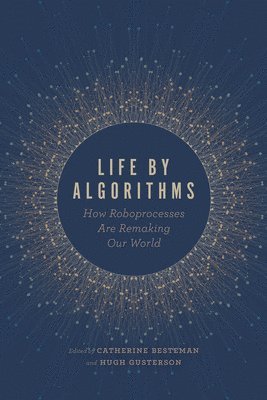
    Life by Algorithms

    How Roboprocesses Are Remaking Our World

    AvCatherine Besteman,Hugh Gusterson

    Häftad, Engelska, 2019

    362 kr

    Skickas . Fri frakt över 249 kr.

    Beskrivning

    Computerized processes are everywhere in our society. They are the automated phone messaging systems that businesses use to screen calls; the link between student standardized test scores and public schools' access to resources; the algorithms that regulate patient diagnoses and reimbursements to doctors. The storage, sorting, and analysis of massive amounts of information have enabled the automation of decision-making at an unprecedented level. Meanwhile, computers have offered a model of cognition that increasingly shapes our approach to the world. The proliferation of "roboprocesses" is the result, as editors Catherine Besteman and Hugh Gusterson observe in this rich and wide-ranging volume, which features contributions from a distinguished cast of scholars in anthropology, communications, international studies, and political science. Although automatic processes are designed to be engines of rational systems, the stories in Life by Algorithms reveal how they can in fact produce absurd, inflexible, or even dangerous outcomes. Joining the call for "algorithmic transparency," the contributors bring exceptional sensitivity to everyday sociality into their critique to better understand how the perils of modern technology affect finance, medicine, education, housing, the workplace, food production, public space, and emotions--not as separate problems but as linked manifestations of a deeper defect in the fundamental ordering of our society.

    Produktinformation

    • Utgivningsdatum:2019-06-05
    • Mått:152 x 229 x 13 mm
    • Vikt:344 g
    • Format:Häftad
    • Språk:Engelska
    • Antal sidor:224
    • Förlag:The University of Chicago Press
    • ISBN:9780226627564

    Utforska kategorier

    • Antropologi inom Samhälle och politik
    • Medievetenskap inom Samhälle och politik
    • Artificiell intelligens inom Data och IT

    Mer om författaren

    Catherine Besteman is the Francis F. Bartlett and Ruth K. Bartlett Professor of Anthropology at Colby College. Hugh Gusterson is professor of international affairs and anthropology at the George Washington University.

    Recensioner i media

    "A fine array of instructive studies that amount to a beneficent algorithm for understanding our times."--Marshall Sahlins, emeritus, University of Chicago "'The Machine Stops, ' E. M. Forster's 1909 science fiction story, tells the tale of a human society collapsing when the technology upon which it has become dependent fails. Think of Gusterson and Besteman's volume as 'The Machine Starts, ' a collection of unsettling ethnographic accounts of the rise of algorithmic governance, of a world in which machines automate structures of social inequality in the service of distracted corporate profit, overreaching militarism, and a globally attenuating commitment to democracy. A necessary and sobering call to arms."--Stefan Helmreich, Massachusetts Institute of Technology "Life by Algorithms brings together a number of excellent scholars who study the growing impact of computerized algorithms on our lives. For anyone interested in computerized algorithms, this volume is a welcome and timely contribution to an important emerging field."--Eitan Y. Wilf, author of Creativity on Demand "What can anthropology offer to contemporary debates about algorithms? Tackling the term in its broadest sense, this wide-ranging collection provides one answer: from finance to farming, from classrooms to courthouses, algorithms dehumanize, damage, and deskill the practices of everyday life. Life by Algorithms documents the calculative violence of bureaucratic rationality in its most recent computational form. For anthropological scholars of algorithmic systems, this book is sure to become an obligatory reference."--Nick Seaver, Tufts University "Compelling and original, this book examines several key issues that have previously failed to receive the serious intellectual rigor that they deserve. By focusing on many diverse domains of algorithmic implementation--from education to prisons, from the border to factory farming--Life by Algorithms gives readers an excellent and accessible overview of how the 'algorithmic turn' challenges many of our current understandings of the world."--John Cheney-Lippold, University of Michigan