Inbunden, Engelska, 2023
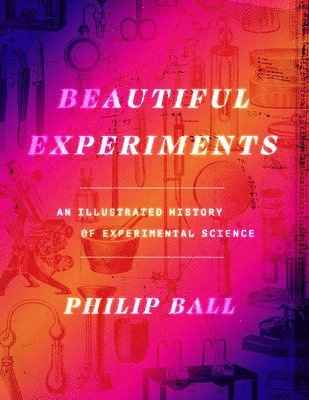
Beautiful Experiments
An Illustrated History of Experimental Science
Av Philip Ball
293 kr
Beställningsvara. Skickas inom 7-10 vardagar. Fri frakt över 249 kr.
Beskrivning
Produktinformation
- Utgivningsdatum: 2023-09-15
- Mått: 191 x 248 x 33 mm
- Vikt: 966 g
- Format: Inbunden
- Språk: Engelska
- Antal sidor: 240
- Förlag: The University of Chicago Press
- ISBN: 9780226825823
Utforska kategorier
Mer om författaren
Philip Ball is a freelance writer and broadcaster whose many books on the interactions of the sciences, the arts, and the wider culture include Bright Earth, Curiosity, Patterns in Nature, How to Grow a Human, The Modern Myths, The Elements, and, most recently, The Book of Minds, all also published by the University of Chicago Press. His book Critical Mass won the 2005 Aventis Prize for Science Books. Ball is also the 2022 recipient of the Royal Society’s Wilkins-Bernal-Medawar Medal for contributions to the history, philosophy, or social roles of science. He trained as a chemist at the University of Oxford and as a physicist at the University of Bristol, and he was an editor at Nature for more than twenty years. He lives in London.
Recensioner i media
“Beauty may be in the eye of the beholder, but for the science writer Ball it emerges from within. In Beautiful Experiments: An Illustrated History of Experimental Science Ball argues that the beauty of an experiment resides in the ‘design and logic embodied in the procedure’—like a masterfully played game of chess—rather than a quality relating to physical appearance. . . . The scientific and anecdotal detail in each account is enough to satisfy the curious reader while entertaining the novice one. Interspersed with explanations of electromagnetism and refraction are notes about which scientist was a poor singer (Ernest Rutherford), which scientist didn’t like that one (Robert Hooke and Isaac Newton), and which scientist felt threatened by his protégé (Humphry Davy and Michael Faraday). Each experiment is numbered, which makes for easy flipping. One can choose to read the book sequentially or to skip from, say, electric fish (Experiment 55) to spontaneous generation (46) to X-ray diffraction (37). That said, there is a certain degree of satisfaction (and frustration) in reading the book in order. One scientist’s work provides an exciting theoretical breakthrough—only to be disproven on the next page. Nearly any failed experiment can become the foundation for another’s success.”
Betyg & recensioner
0 recensioner
Inga recensioner tillgängliga.