• Fri frakt över 249 kr
  • •
  • Snabba leveranser
  • •
  • Billiga böcker
Kundservice

Du är på sajten för privatpersoner.

Företag, bibliotek eller offentlig verksamhet?

Du handlar på classic.bokus.com, där alla dina funktioner finns intakta.
Till classic.bokus.com
Bokus logotyp. Gå till startsidan.
  • Erbjudanden
  • Nyheter
  • Student
  • Topplistor
  • Barn & ungdom
  • Bokus Play
  • E-böcker
  • Pocketböcker
  • Spel & pussel

10% rabatt på allt med kod: NYSTART10 →

Sidfot

Mina sidor

    Hjälp

    • Kundservice
    • Vanliga frågor och svar
    • Frakt och leverans
    • Retur vid ångerrätt
    • Reklamera vara
    • Betalning
    • Köpvillkor
    • Allmänna villkor
    • Information om webbplatsens tillgänglighet

    Om Bokus

    • Om oss
    • Pressrum
    • För studenter
    • För företag
    • För bibliotek och offentlig verksamhet
    • För leverantörer
    • Hållbarhet

    Populärt

    • Aktuella erbjudanden
    • Presentkort
    • Studentlitteratur
    • Nya böcker
    • Topplistor
    • Signerade böcker
    • Engelska böcker

    Inspiration

    • Boktips
    • BookTok
    • Populära bokserier
    • Barnbokskaraktärer
    • Populära författare
    Logotyp för Bokus
    Följ oss på Facebook (extern länk)Följ oss på Instagram (extern länk)Följ oss på YouTube (extern länk)Följ oss på TikTok (extern länk)
    bokus @ CookiesAnpassa cookiesIntegritetspolicyKöpvillkor
    Till Citymail hemsida (extern länk)Till Budbee hemsida (extern länk)Till Postnord hemsida (extern länk)Till Schenker hemsida (extern länk)Till Early Bird hemsida (extern länk)Till Walleys hemsida (extern länk)
    1. Naturvetenskap och teknik
    2. Matematik och naturvetenskap
    3. Kemi

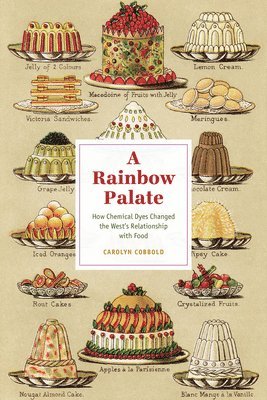
    Rainbow Palate

    How Chemical Dyes Changed the West's Relationship with Food

    AvCarolyn Cobbold

    Häftad, Engelska, 2025

    Del i serien Synthesis

    284 kr

    Beställningsvara. Skickas inom 5-8 vardagar. Fri frakt över 249 kr.

    Fler format och utgåvor

    Inbunden

    357 kr

    E-bok

    557 kr

    Beskrivning

    Shows how the widespread use of food dyes influenced understanding of food, science, and technology, as well as trust in science.We live in a world saturated by chemicals—our food, our clothes, and even our bodies play host to hundreds of synthetic chemicals that did not exist before the nineteenth century. By the 1900s, a wave of bright coal tar dyes had begun to transform the Western world. Originally intended for textiles, the new dyes soon permeated daily life in unexpected ways, and by the time the risks and uncertainties surrounding the synthesized chemicals began to surface, they were being used in everything from clothes and home furnishings to cookware and food.In A Rainbow Palate, Carolyn Cobbold explores how the widespread use of new chemical substances influenced perceptions and understanding of food, science, and technology, as well as trust in science and scientists. Because the new dyes were among the earliest contested chemical additives in food, the battles over their use offer striking insights and parallels into today’s international struggles surrounding chemical, food, and trade regulation.

    Produktinformation

    • Utgivningsdatum:2025-12-05
    • Mått:152 x 229 x 20 mm
    • Vikt:399 g
    • Format:Häftad
    • Språk:Engelska
    • Serie:Synthesis
    • Antal sidor:288
    • Förlag:The University of Chicago Press
    • ISBN:9780226845531

    Utforska kategorier

    • Kemi inom Naturvetenskap och teknik
    • Naturvetenskapens historia inom Naturvetenskap och teknik
    • Tillverkningsindustri inom Ekonomi och Ledarskap

    Mer om författaren

    Carolyn Cobbold is a research fellow at the University of Cambridge, where she investigates the history of food and science. Her work has been published in Annals of Science, Osiris, Ambix, and Business Insurance, among others.

    Recensioner i media

    "Elegant and insightful. . . . What is stunning is how pertinent the book is to our own times. You will find here a rehearsal for everything we are facing today—the fads, the fears, the government interventions that are either too late or too rushed, and the nagging sense that the food that most delights the eye may not always be the food that serves us best."

    Innehållsförteckning

    • PrefaceIntroduction1 Food adulteration and the rise of the food chemist2 The wonder of coal tar dyes3 From dye manufacturer to food manufacturer4 The struggle to devise tests to detect dyes and assess their toxicity5 The appointment of public food analysts in Britain6 How British food chemists responded to the use of coal tar dyes7 French and German chemists seek to arbitrate the use of synthetic chemicals in food8 The US government acts against chemical dyes in foodConclusionAcknowledgmentsNotesBibliographyIndex