• Fri frakt över 249 kr
  • •
  • Snabba leveranser
  • •
  • Billiga böcker
Kundservice

Du är på sajten för privatpersoner.

Företag, bibliotek eller offentlig verksamhet?

Du handlar på classic.bokus.com, där alla dina funktioner finns intakta.
Till classic.bokus.com
Bokus logotyp. Gå till startsidan.
  • Erbjudanden
  • Nyheter
  • Student
  • Topplistor
  • Barn & ungdom
  • Bokus Play
  • E-böcker
  • Pocketböcker
  • Spel & pussel

10% rabatt på allt med kod NYSTART10 →

Sidfot

Mina sidor

    Hjälp

    • Kundservice
    • Vanliga frågor och svar
    • Frakt och leverans
    • Retur vid ångerrätt
    • Reklamera vara
    • Betalning
    • Köpvillkor
    • Allmänna villkor
    • Information om webbplatsens tillgänglighet

    Om Bokus

    • Om oss
    • Pressrum
    • För studenter
    • För företag
    • För bibliotek och offentlig verksamhet
    • För leverantörer
    • Hållbarhet

    Populärt

    • Aktuella erbjudanden
    • Presentkort
    • Studentlitteratur
    • Nya böcker
    • Topplistor
    • Signerade böcker
    • Engelska böcker

    Inspiration

    • Boktips
    • BookTok
    • Populära bokserier
    • Barnbokskaraktärer
    • Populära författare
    Logotyp för Bokus
    Följ oss på Facebook (extern länk)Följ oss på Instagram (extern länk)Följ oss på YouTube (extern länk)Följ oss på TikTok (extern länk)
    bokus @ CookiesAnpassa cookiesIntegritetspolicyKöpvillkor
    Till Citymail hemsida (extern länk)Till Budbee hemsida (extern länk)Till Postnord hemsida (extern länk)Till Schenker hemsida (extern länk)Till Early Bird hemsida (extern länk)Till Walleys hemsida (extern länk)
    1. Samhälle och politik
    2. Samhälle och kultur
    3. Kultur och medier
    4. Medievetenskap

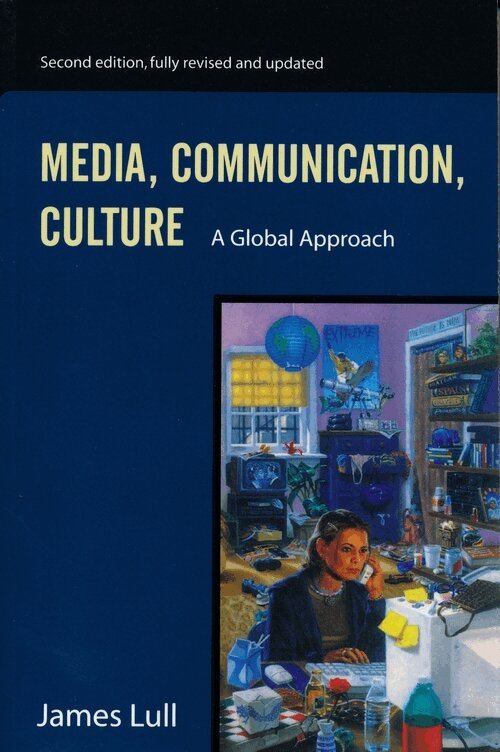
    Media, Communication, Culture

    A Global Approach

    AvJames Lull

    Inbunden, Engelska, 1995

    2 138 kr

    Beställningsvara. Skickas inom 3-6 vardagar. Fri frakt över 249 kr.

    Fler format och utgåvor

    Häftad

    253 kr

    E-bok

    284 kr

    Beskrivning

    Over the past century and with varying degrees of success, China has tried to integrate Tibet into the modern Chinese nation-state. In this groundbreaking work, Gray Tuttle reveals the surprising role Buddhism and Buddhist leaders played in the development of the modern Chinese state and in fostering relations between Tibet and China from the Republican period (1912-1949) to the early years of Communist rule. Beyond exploring interactions between Buddhists and politicians in Tibet and China, Tuttle offers new insights on the impact of modern ideas of nationalism, race, and religion in East Asia.After the fall of the Qing dynasty in 1911, the Chinese Nationalists, without the traditional religious authority of the Manchu Emperor, promoted nationalism and racial unity in an effort to win support among Tibetans. Once this failed, Chinese politicians appealed to a shared Buddhist heritage. This shift in policy reflected the late-nineteenth-century academic notion of Buddhism as a unified world religion, rather than a set of competing and diverse Asian religious practices.While Chinese politicians hoped to gain Tibetan loyalty through religion, the promotion of a shared Buddhist heritage allowed Chinese Buddhists and Tibetan political and religious leaders to pursue their goals. During the 1930s and 1940s, Tibetan Buddhist ideas and teachers enjoyed tremendous popularity within a broad spectrum of Chinese society and especially among marginalized Chinese Buddhists. Even when relationships between the elite leadership between the two nations broke down, religious and cultural connections remained strong. After the Communists seized control, they continued to exploit this link when exerting control over Tibet by force in the 1950s. And despite being an avowedly atheist regime, with the exception of the Cultural Revolution, the Chinese communist government has continued to recognize and support many elements of Tibetan religious, if not political, culture.Tuttle's study explores the role of Buddhism in the formation of modern China and its relationship to Tibet through the lives of Tibetan and Chinese Buddhists and politicians and by drawing on previously unexamined archival and governmental materials, as well as personal memoirs of Chinese politicians and Buddhist monks, and ephemera from religious ceremonies.

    Produktinformation

    • Utgivningsdatum:1995-03-16
    • Format:Inbunden
    • Språk:Engelska
    • Antal sidor:551
    • Förlag:Columbia University Press
    • ISBN:9780231102643

    Utforska kategorier

    • Medievetenskap inom Samhälle och politik
    • Kulturvetenskap inom Samhälle och politik

    Mer om författaren

    Gray Tuttle is Leila Hadley Luce Assistant Professor of Modern Tibetan Studies in the Department of East Asian Languages and Cultures at Columbia University.

    Recensioner i media

    "Tuttle's extensive original research lends itself to a lively and detailed account... Essential Reading." -- Benjamin Bogin, BUDDHADHARMA "This book offers a nuanced examination of a complicated relationship... Recommended." -- Choice "Tuttle approaches this complicated history with courage and clarity of perspective... Tuttle has done us a great service." -- Zvi Ben-Dor Benite, American Historical Review "Gray Tuttle's scholarship is of the first order, and he provides a model other historians of the region would do well to emulate." -- Derek F. Maher, East Carolina University, Journal of Chinese Religions "A welcome addition... [that] will serve as an important reference in the related fields for some time to come." -- Hsiao-Ting Lin, China Information "A scrupulous piece of historical scholarship... [that] should be compulsory reading for every journalist or academic working in this area." -- Timothy Barrett, Asian Affairs "An excellent piece of scholarship that definitely deserves reading by anyone interested in the history of either Tibet or China." -- Andrew Fischer, Nations & Nationalism "[A] stimulating and rich book... an important landmark in the field of both Tibetan and Chinese studies." -- Margherita Zanasi, Journal of the American Academy of Religion "As the vanguard of a coming wave of new research, Tuttle's work raises the bar for a reinvigorated field of inquiry." -- Charlene Makley, Journal of Asian History "[An] excellent and important contribution to the history of the religious -- and therefore political -- relationship between Tibet and modern China." -- Eric D. Mortensen, Religious Studies Review

    Innehållsförteckning

    • Map: Tibet and Tibetan Buddhist Activity in China Introduction Countering Nationalist Historiography Transitions: Making National, Going Global 1. Imperial Traditions Traditions Linking Tibetan Buddhists and Dynastic Rulers Tibetan Buddhist Intermediaries at the Qing Court Traditions That Divided Tibet from China Proper 2. Global Forces in Asia (1870s-1910s) Western Imperialist Commercial Interests in Tibet Chinese Nationalist Strategies: Designs on Tibet and the Tibetan Response Racial Ideology in China 3. Buddhism as a Pan-Asian Religion (1890s-1928) The Shared Interests of Chinese and Tibetan Buddhists The Origins of Chinese Interest in Tibetan Buddhist Teachers and Practices Tibetan Lamas Teach in China Chinese Monks Study in Tibet 4. Overcoming Barriers Between China and Tibet (1929-1931) Barriers to Chinese Studying Tibetan Buddhism Forging New Links: Lamas Assist Chinese Monks Sichuan Laity Elicits Government Involvement The Political Monk: Taixu 5. The Failure of Racial and Nationalist Ideologies (1928-1932) The Politicization of Lamasi Roles in China Secular Educational Institutions Sino-Tibetan Secular Dialogue on Chinese Terms Failed Rhetoric: Tibetan Autonomy Denied 6. The Merging of Secular and Religious Systems (1931-1935) Renewed Sino-Tibetan Dialogue on Tibetan Terms The Zenith of Tibetan Buddhist Activity in China Political Propaganda Missions by Lamas 7. Linking Chinese and Tibetan Cultures (1934-1950s) Hybridized Educational Institutions The Indigenization of Tibetan Buddhism among the Chinese Postscript: Thoughts on the Present and the Legacy of the Past The Legacy of the Past Echoes of Imperialism Appendix 1: Institutions Associated with Tibetan Buddhism in China Appendix 2: Correct Tibetan Spellings