• Fri frakt över 249 kr
  • •
  • Snabba leveranser
  • •
  • Billiga böcker
Kundservice

Du är på sajten för privatpersoner.

Företag, bibliotek eller offentlig verksamhet?

Du handlar på classic.bokus.com, där alla dina funktioner finns intakta.
Till classic.bokus.com
Bokus logotyp. Gå till startsidan.
  • Erbjudanden
  • Nyheter
  • Student
  • Topplistor
  • Barn & ungdom
  • Bokus Play
  • E-böcker
  • Pocketböcker
  • Spel & pussel

10% rabatt på allt med kod: NYSTART10 →

Sidfot

Mina sidor

    Hjälp

    • Kundservice
    • Vanliga frågor och svar
    • Frakt och leverans
    • Retur vid ångerrätt
    • Reklamera vara
    • Betalning
    • Köpvillkor
    • Allmänna villkor
    • Information om webbplatsens tillgänglighet

    Om Bokus

    • Om oss
    • Pressrum
    • För studenter
    • För företag
    • För bibliotek och offentlig verksamhet
    • För leverantörer
    • Hållbarhet

    Populärt

    • Aktuella erbjudanden
    • Presentkort
    • Studentlitteratur
    • Nya böcker
    • Topplistor
    • Signerade böcker
    • Engelska böcker

    Inspiration

    • Boktips
    • BookTok
    • Populära bokserier
    • Barnbokskaraktärer
    • Populära författare
    Logotyp för Bokus
    Följ oss på Facebook (extern länk)Följ oss på Instagram (extern länk)Följ oss på YouTube (extern länk)Följ oss på TikTok (extern länk)
    bokus @ CookiesAnpassa cookiesIntegritetspolicyKöpvillkor
    Till Citymail hemsida (extern länk)Till Budbee hemsida (extern länk)Till Postnord hemsida (extern länk)Till Schenker hemsida (extern länk)Till Early Bird hemsida (extern länk)Till Walleys hemsida (extern länk)
    1. Samhälle och politik
    2. Samhälle och kultur
    3. Kultur och medier
    4. Medievetenskap

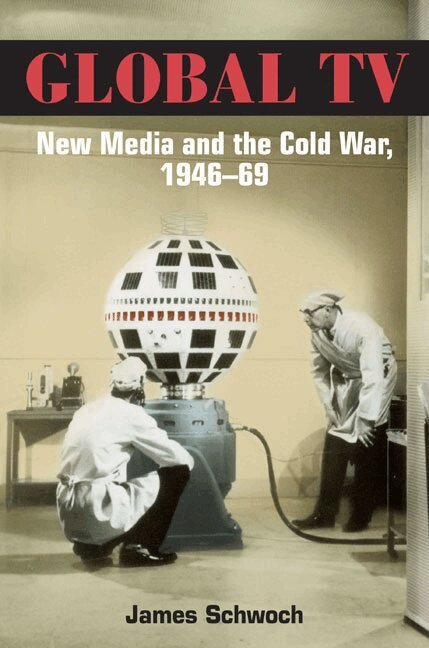
    Global TV

    New Media and the Cold War, 1946-69

    AvJames Schwoch

    Häftad, Engelska, 2008

    304 kr

    Beställningsvara. Skickas inom 5-8 vardagar. Fri frakt över 249 kr.

    Fler format och utgåvor

    Inbunden

    1 247 kr

    Beskrivning

    James Schwoch presents a unique retelling of the Cold War period by examining the relationship of global television, diplomacy, and new electronic communications media. Beginning with the Allied occupation of Germany in 1946 and ending with the 1969 Apollo moon landing, this book explores major developments in global media, including the postwar absorption of the International Telecommunications Union into the United Nations and its impact on both television and international policy; the rise of psychological warfare and its relations to new electronic media of the 1950s; and the role of the Ford Foundation in shaping global communication research concepts. Drawing on work in media studies, diplomatic history, and science and technology studies, Schwoch analyzes the way in which global media has been characterized, emphasizing a discursive shift away from a framework of east-west security and, by the 1960s, toward a framework of world citizenship and globalization. The global growth of television and other new electronic media occurred in conjunction with the ongoing tensions of the Cold War, as superpowers searched for ways to extend their influence beyond traditional borders of nation-states and into the extraterritorialities of planet Earth.

    Produktinformation

    • Utgivningsdatum:2008-12-12
    • Mått:152 x 229 x 15 mm
    • Vikt:399 g
    • Format:Häftad
    • Språk:Engelska
    • Antal sidor:256
    • Förlag:University of Illinois Press
    • ISBN:9780252075698

    Utforska kategorier

    • Medievetenskap inom Samhälle och politik
    • Kalla krig och ombudskrig inom Historia och arkeologi

    Mer om författaren

    James Schwoch is an associate professor of communication studies at Northwestern University and the coeditor, with Mimi White, of Questions of Method in Cultural Studies.

    Recensioner i media

    “The historical background Schwoch provides is certainly relevant as a backdrop to the US’s involvement with electronic information networks in the 21st century . . . . This is a readable, well-researched study.”--Choice "Vital to our understanding of global media."--Cinema Journal"An ambitious and informative study."--American Historical Review “A wholly original, well-researched, and superbly written account of the development of global television set within the intertwined contexts of American foreign policy, psychological warfare, and information diplomacy during the years 1946–69. Stimulating and enjoyable.”--John T. Caldwell, author of Production Culture: Industrial Reflexivity and Critical Practice in Film and Television “The sheer joy that Schwoch takes in hauling curiosities out of the archives is contagious. The result is a portrait that brings forth many treasures, some comic, some poignant, from the Cold War era, and also provides some serious food for thought in considering current U.S. policy about international media and goodwill building.”--John Durham Peters, author of Courting the Abyss: Free Speech and the Liberal Tradition

    Innehållsförteckning

    • Acknowledgments   xiAbbreviations   xiiiIntroduction   1PART 1: THE FIRST STRAND1. "A Facet of East-West Problems"   172. "A Western Mind Would Consider This Kind of Spectacle as Stupid"   313. "The Key to Many of These Countries Is Not the Mud Hut Population"   434. "A Group of Angry Young Intellectuals"   61PART 2: THE SECOND STRAND5. "We Can Give the World a Vision of America"   796. "A Record of Some Kind in the History of International Communication"   947. "Something of That Sense of World Citizenship"   1188. "A New Idea Capable of Uniting the Thoughts of People All Over the Earth"   139Epilogue: "To Speak with a Single Voice Abroad"   157Notes   175Selected Bibliography   207Index   213Illustrations follow pages 76 and 138