• Fri frakt över 249 kr
  • •
  • Snabba leveranser
  • •
  • Billiga böcker
Kundservice

Du är på sajten för privatpersoner.

Företag, bibliotek eller offentlig verksamhet?

Du handlar på classic.bokus.com, där alla dina funktioner finns intakta.
Till classic.bokus.com
Bokus logotyp. Gå till startsidan.
  • Erbjudanden
  • Nyheter
  • Student
  • Topplistor
  • Barn & ungdom
  • Bokus Play
  • E-böcker
  • Pocketböcker
  • Spel & pussel

10% rabatt på allt med kod NYSTART10 →

Sidfot

Mina sidor

    Hjälp

    • Kundservice
    • Vanliga frågor och svar
    • Frakt och leverans
    • Retur vid ångerrätt
    • Reklamera vara
    • Betalning
    • Köpvillkor
    • Allmänna villkor
    • Information om webbplatsens tillgänglighet

    Om Bokus

    • Om oss
    • Pressrum
    • För studenter
    • För företag
    • För bibliotek och offentlig verksamhet
    • För leverantörer
    • Hållbarhet

    Populärt

    • Aktuella erbjudanden
    • Presentkort
    • Studentlitteratur
    • Nya böcker
    • Topplistor
    • Signerade böcker
    • Engelska böcker

    Inspiration

    • Boktips
    • BookTok
    • Populära bokserier
    • Barnbokskaraktärer
    • Populära författare
    Logotyp för Bokus
    Följ oss på Facebook (extern länk)Följ oss på Instagram (extern länk)Följ oss på YouTube (extern länk)Följ oss på TikTok (extern länk)
    bokus @ CookiesAnpassa cookiesIntegritetspolicyKöpvillkor
    Till Citymail hemsida (extern länk)Till Budbee hemsida (extern länk)Till Postnord hemsida (extern länk)Till Schenker hemsida (extern länk)Till Early Bird hemsida (extern länk)Till Walleys hemsida (extern länk)
    1. Samhälle och politik
    2. Samhälle och kultur
    3. Kultur och medier
    4. Kulturvetenskap

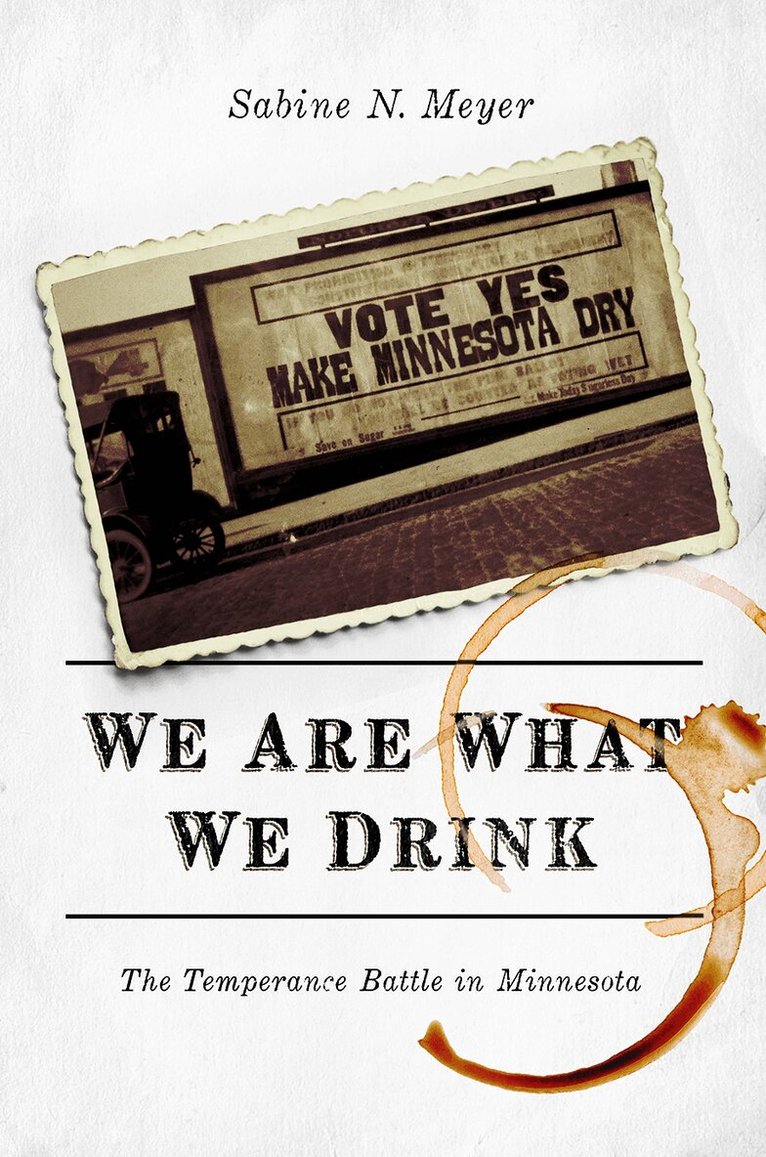
    We Are What We Drink

    The Temperance Battle in Minnesota

    AvSabine N Meyer

    E-bok
    Engelska, 2015

    566 kr

    Läs direkt i Bokus Reader – eller ladda ned till din enhet

    Fler format och utgåvor

    Häftad

    304 kr

    Beskrivning

    Sabine N. Meyer eschews the generalities of other temperance histories to provide a close-grained story about the connections between alcohol consumption and identity in the upper Midwest.
     
    Meyer examines the ever-shifting ways that ethnicity, gender, class, religion, and place interacted with each other during the long temperance battle in Minnesota. Her deconstruction of Irish and German ethnic positioning with respect to temperance activism provides a rare interethnic history of the movement. At the same time, she shows how women engaged in temperance work as a way to form public identities and reforges the largely neglected, yet vital link between female temperance and suffrage activism. Relatedly, Meyer reflects on the continuities and changes between how the movement functioned to construct identity in the heartland versus the movement''s more often studied roles in the East. She also gives a nuanced portrait of the culture clash between a comparatively reform-minded Minneapolis and dynamic anti-temperance forces in whiskey-soaked St. Paul--forces supported by government, community, and business institutions heavily invested in keeping the city wet.

    Produktinformation

    • Utgivningsdatum:2015-07-15
    • Språk:Engelska
    • Antal sidor:288
    • Filformat:EPUB
    • Kopieringsskydd:LCP
    • ISBN:9780252097409
    • Förlag:University of Illinois Press

    Utforska kategorier

    • Kulturvetenskap inom Samhälle och politik
    • Socialhistoria och kulturhistoria inom Historia och arkeologi

    Mer om författaren

    Sabine N. Meyer is an assistant professor of American studies at the Institute of English and American Studies at the University of Osnabrück.

    Recensioner i media

    "[Sabine N. Meyer] offers a fresh perspective that describes the temperance movement as a struggle  among competing groups with distinct identities based on civic loyalty, religious affiliation, ethnicity, and different conceptions of women's roles. . . . A remarkable accomplishment by a young scholar who brings empathy and a clear-eyed analysis to a distinctly American phenomenon."--American Historical Review"Sabine Meyer's We Are What We Drink: The Temperance Battle in Minnesota challenges this surface understanding of the era, and evaluates the temperance movement as a social movement that resulted in American identity formation and reconfiguration… Any scholar of American social movements, social history, or culture studies will find this book essential reading."--Journalism History"A major contribution to temperance and ethnic history. . . . Meyer combines theoretical awareness with massive archival research. Her chief interest is identity. She is critical of earlier temperance histories that describe a moral crusade by Protestant, middle-class, Anglo-Americans and privilege class and religion at the expense of ethnicity, gender, and place. Her local study offers a corrective. Recommended."--Choice"A fascinating volume that explores temperance through multiple lenses of ethnicity, gender, class, religion, and place."--Minnesota History  "Meyer performed extensive research in the archives of many of the temperance organizations, government records, and contemporary newspapers and other publications… Meyer blends clear explanations with well-chosen examples to show how the world the German brewers knew was changing… A compelling case that food and drink is an important subject for historical analysis, and it is a cultural expression just as significant as any other."--On the Bookshelf"A major contribution to temperance and ethnic history."--Journal of American Ethnic History

    Innehållsförteckning

    • CoverTitleCopyrightContentsAcknowledgmentsAbbreviationsIntroduction1. "Westward the Jug of Empire": The Emergence of a Temperance Movement in Minnesota (1819–1865)2. Organizing into Blocs: The Fight for or against Personal Liberty (1866–1887)3. "Talking against a Stonewall": The High License Consensus (1888–1897)4. "Putting on the Lid": The Anti-Saloon League and Its Impact on the Dry Movement (1898–1915)5. Equating Temperance with Patriotism: The Great War and the Liquor Question (1916–1919)ConclusionNotesBibliographyIndex