• Fri frakt över 249 kr
  • •
  • Snabba leveranser
  • •
  • Billiga böcker
Kundservice

Du är på sajten för privatpersoner.

Företag, bibliotek eller offentlig verksamhet?

Du handlar på classic.bokus.com, där alla dina funktioner finns intakta.
Till classic.bokus.com
Bokus logotyp. Gå till startsidan.
  • Erbjudanden
  • Nyheter
  • Student
  • Topplistor
  • Barn & ungdom
  • Bokus Play
  • E-böcker
  • Pocketböcker
  • Spel & pussel

10% rabatt på allt med kod: NYSTART10 →

Sidfot

Mina sidor

    Hjälp

    • Kundservice
    • Vanliga frågor och svar
    • Frakt och leverans
    • Retur vid ångerrätt
    • Reklamera vara
    • Betalning
    • Köpvillkor
    • Allmänna villkor
    • Information om webbplatsens tillgänglighet

    Om Bokus

    • Om oss
    • Pressrum
    • För studenter
    • För företag
    • För bibliotek och offentlig verksamhet
    • För leverantörer
    • Hållbarhet

    Populärt

    • Aktuella erbjudanden
    • Presentkort
    • Studentlitteratur
    • Nya böcker
    • Topplistor
    • Signerade böcker
    • Engelska böcker

    Inspiration

    • Boktips
    • BookTok
    • Populära bokserier
    • Barnbokskaraktärer
    • Populära författare
    Logotyp för Bokus
    Följ oss på Facebook (extern länk)Följ oss på Instagram (extern länk)Följ oss på YouTube (extern länk)Följ oss på TikTok (extern länk)
    bokus @ CookiesAnpassa cookiesIntegritetspolicyKöpvillkor
    Till Citymail hemsida (extern länk)Till Budbee hemsida (extern länk)Till Postnord hemsida (extern länk)Till Schenker hemsida (extern länk)Till Early Bird hemsida (extern länk)Till Walleys hemsida (extern länk)
    1. Historia och arkeologi
    2. Historia
    3. Historia: särskilda händelser och ämnen
    4. Socialhistoria och kulturhistoria

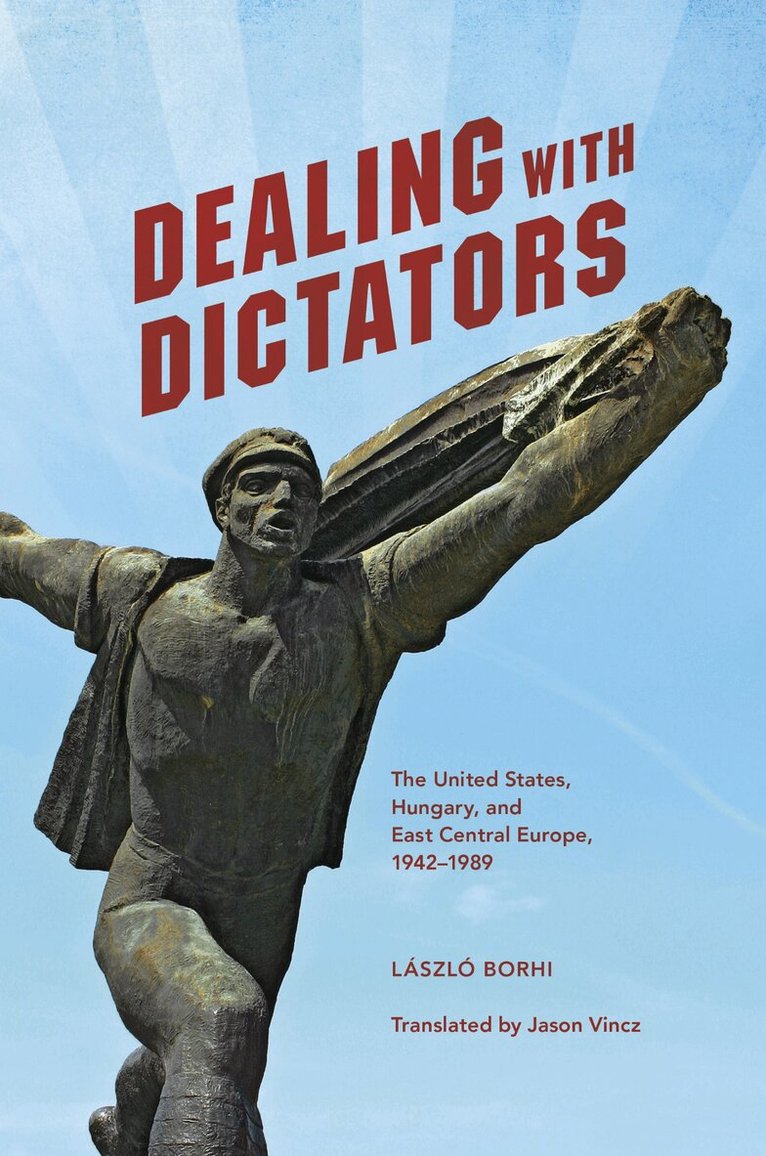
    Dealing with Dictators

    The United States, Hungary, and East Central Europe, 1942-1989

    AvLászló Borhi

    Inbunden, Engelska, 2016

    Del i serien Indiana University Press (IPS)

    782 kr

    Beställningsvara. Skickas inom 5-8 vardagar. Fri frakt över 249 kr.

    Fler format och utgåvor

    E-bok

    100 kr

    Häftad

    394 kr

    Beskrivning

    Dealing with Dictators explores America's Cold War efforts to make the dictatorships of Eastern Europe less tyrannical and more responsive to the country's international interests. During this period, US policies were a mix of economic and psychological warfare, subversion, cultural and economic penetration, and coercive diplomacy. Through careful examination of American and Hungarian sources, László Borhi assesses why some policies toward Hungary achieved their goals while others were not successful. When George H. W. Bush exclaimed to Mikhail Gorbachev on the day the Soviet Union collapsed, "Together we liberated Eastern Europe and unified Germany," he was hardly doing justice to the complicated history of the era. The story of the process by which the transition from Soviet satellite to independent state occurred in Hungary sheds light on the dynamics of systemic change in international politics at the end of the Cold War.

    Produktinformation

    • Utgivningsdatum:2016-06-27
    • Mått:152 x 229 x 37 mm
    • Vikt:930 g
    • Format:Inbunden
    • Språk:Engelska
    • Serie:Indiana University Press (IPS)
    • Antal sidor:564
    • Förlag:Indiana University Press
    • ISBN:9780253019394
    • Översättare:Jason Vincz

    Utforska kategorier

    • Socialhistoria och kulturhistoria inom Historia och arkeologi
    • Europas historia inom Historia och arkeologi
    • Internationella relationer inom Samhälle och politik

    Mer om författaren

    László Borhi is Peter A. Kadas Associate Chair and Professor of Central European History at Indiana University and Scientific Counsellor of the Institute of History Center for Humanities of the Hungarian Academy. He is the author of Hungary in the Cold War, 1945–1956: Between the United States and the Soviet Union (2004) and the co-author and co-editor of Soviet Occupation of Romania, Hungary and Austria, 1944–1948 (forthcoming). He is the recipient of the Gold Cross of Merit of the Hungarian Republic (2006), the Zoltán Bezerédj Prize of the Ministry of National Cultural Heritage of Hungary (2006), and the György Ránki Prize of the Hungarian Historical Association (1995).Translator Jason Vincz, a specialist in Anglo-American and Eastern European literature, holds degrees from Harvard College, the University of Iowa Writers' Workshop, and the Russian and East European Institute at Indiana University.

    Recensioner i media

    [T]his invaluable reference work belongs on the library shelf of any Cold War scholar.(Slavic Review) László Borhi's Dealing with Dictators makes a valuable contribution from both a theoretical and empirical point of view to the history of communist regimes leading up to the end of the Cold War. . . . It is meticulously documented, drawing from Hungarian archives, US State Department archives, and US presidential libraries.(H-Diplo) "A tour de force of research and analysis, László Borhi's Dealing With Dictators has revived and reoriented our understanding of the import of United States foreign policies toward Hungary and East Central Europe during the Cold War."- Martin J. Sherwin,Professor of History at George Mason University (author (with Kai Bird) of the Pulitzer Prize biography, American Prometheus: The Triumph and Tragedy) There are rare books that define an era. Borhi's Dealing with Dictators is second to none in helping us comprehend the difficult ups and downs of the U.S. – Hungarian bilateral relationship within the larger context of Cold War Central Europe. When it comes to the origins of the Cold War, Borhi is relentlessly anti-revisionist – it was the Soviets who built an empire in Eastern Europe to ruthlessly exploit the satellite economies. Dealing with Dictators concludes with an exhaustive chapter on Hungary's crucial role in ending the Cold War. This is international history writing at its best.- Gunter Bischof, Marshall Plan Professor of History (University of New Orleans)

    Innehållsförteckning

    • Introduction1. Peace Overtures, the Allies, and the Holocaust, 1942-19452. Cuius Regio, Eius Religio: The United States and the Soviet Seizure of Power3. Rollback4. 1956: Self-Liberation5. Reprisals and Bridge-Building6. The Dilemmas of External Transformation7. "The Status Quo is Not So Bad": Détente8. Nixon, Carter, and the Kádár Regime9. "Love Towards Kádár": Reagan and the Myth of Liberation10. 1989: "Together We Liberated Eastern Europe"ConclusionBibliographyIndex