• Fri frakt över 249 kr
  • •
  • Snabba leveranser
  • •
  • Billiga böcker
Kundservice

Du är på sajten för privatpersoner.

Företag, bibliotek eller offentlig verksamhet?

Du handlar på classic.bokus.com, där alla dina funktioner finns intakta.
Till classic.bokus.com
Bokus logotyp. Gå till startsidan.
  • Erbjudanden
  • Nyheter
  • Student
  • Topplistor
  • Barn & ungdom
  • Bokus Play
  • E-böcker
  • Pocketböcker
  • Spel & pussel

10% rabatt på allt med kod NYSTART10 →

Sidfot

Mina sidor

    Hjälp

    • Kundservice
    • Vanliga frågor och svar
    • Frakt och leverans
    • Retur vid ångerrätt
    • Reklamera vara
    • Betalning
    • Köpvillkor
    • Allmänna villkor
    • Information om webbplatsens tillgänglighet

    Om Bokus

    • Om oss
    • Pressrum
    • För studenter
    • För företag
    • För bibliotek och offentlig verksamhet
    • För leverantörer
    • Hållbarhet

    Populärt

    • Aktuella erbjudanden
    • Presentkort
    • Studentlitteratur
    • Nya böcker
    • Topplistor
    • Signerade böcker
    • Engelska böcker

    Inspiration

    • Boktips
    • BookTok
    • Populära bokserier
    • Barnbokskaraktärer
    • Populära författare
    Logotyp för Bokus
    Följ oss på Facebook (extern länk)Följ oss på Instagram (extern länk)Följ oss på YouTube (extern länk)Följ oss på TikTok (extern länk)
    bokus @ CookiesAnpassa cookiesIntegritetspolicyKöpvillkor
    Till Citymail hemsida (extern länk)Till Budbee hemsida (extern länk)Till Postnord hemsida (extern länk)Till Schenker hemsida (extern länk)Till Early Bird hemsida (extern länk)Till Walleys hemsida (extern länk)
    1. Samhälle och politik
    2. Samhälle och kultur
    3. Sociala grupper och identitet

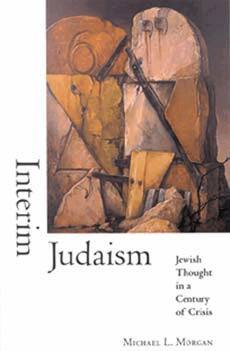
    Interim Judaism

    Jewish Thought in a Century of Crisis

    AvMichael L. Morgan

    Häftad, Engelska, 2001

    Del i serien Indiana University Press (IPS)

    188 kr

    Beställningsvara. Skickas inom 10-15 vardagar. Fri frakt över 249 kr.

    Beskrivning

    Confronting the challenges of the 20th century, from modernity and the Great War to the Holocaust and postmodern culture, Jewish thinkers have wrestled with such fundamental issues as redemption and revelation, eternity and history, messianism and politics. From the turn of the century through the 1920s, European Jewish intellectuals confronted alienation and the challenges of modernity by seeking secure grounds for a meaningful life. After the Holocaust and the fall of Nazism, the rich results of their thinking—on topics such as transcendence, redemption, revelation, and politics—were reinterpreted in an atmosphere of increasing disillusion and fragmentation. In Interim Judaism, Michael L. Morgan traces the evolution of this shift in values, as expressed in the work of social thinkers, novelists, artists, and poets as well as philosophers and theologians at the beginning and end of the century. Focusing on the problem of objectivity, the experience of the transcendent, and the relationship between redemption and politics, he argues that the outcome for contemporary Jews is a pragmatic style of religiosity that has abandoned traditional conceptions of Judaism and is searching and waiting for new ones, a condition that he describes as "interim Judaism."Published with the generous support of Hebrew Union College–Jewish Institute of Religion, Cincinnati

    Produktinformation

    • Utgivningsdatum:2001-06-22
    • Mått:140 x 210 x 14 mm
    • Vikt:227 g
    • Format:Häftad
    • Språk:Engelska
    • Serie:Indiana University Press (IPS)
    • Antal sidor:168
    • Förlag:Indiana University Press
    • ISBN:9780253214416

    Utforska kategorier

    • Sociala grupper och identitet inom Samhälle och politik
    • Filosofiska discipliner inom Filosofi och religion
    • Judendom inom Filosofi och religion

    Mer om författaren

    Michael L. Morgan is Professor of Philosophy and Jewish Studies at Indiana University, Bloomington. He is author of Platonic Piety and Dilemmas in Modern Jewish Thought. He has edited The Jewish Thought of Emil Fackenheim, Classics in Moral and Political Theory, Jewish Philosophers and Jewish Philosophy, and A Holocaust Reader: Responses to the Nazi Extermination. With Paul Franks, he has translated and edited Franz Rosenzweig: Philosophical and Theological Writings.

    Recensioner i media

    "The three chapters in this book—the 1999 Samuel Goldenson Lectures delivered at Hebrew Union College—reveal the cumulative knowledge of a core debate in Judaism on the dilemma between reason and revelation and its effect on contemporary American Jewish life and thought. Morgan (philosophy and Jewish studies, Indiana Univ.) focuses on three strands of intellectual fabric, namely, the problem of objectivity, the question of transcendence in the human experience, and the view of redemption in historical life, which he calls the problem of messianism and politics. Through a variety of sources and spokespeople, Jew and non-Jew, he stitches religious, political, and philosophical thinking through patches of history and eternity, but there is no clear pattern showing whether the religionist (fundamentalist, existentialist) or the modernist (humanist, naturalist, secularist) patch came from the original cloth. The hand that weaves Jewish civilization, is it divine or human or both? What is seen in American Judaism at the start of a new century is a pragmatic Judaism less of rationalism and more of spirituality without clear concepts of redemption and revelation, made necessary by Auschwitz and Zion. Why? The former eclipsed biblical monotheism and rabbinic Geistesgeschichte, and the latter provided a legitimate and justified Jewish return to history. Upper-division undergraduates through faculty and researchers."—Z. Garber, Los Angeles Valley College, Choice, December 2001". . . this book . . . reveal[s] the cumulative knowledge of a core debate in Judaism on the dilemma between reason and revelation and its effect on contemporary American Jewish life and thought.December 2001"—Choice

    Innehållsförteckning

    • Preliminary Table of Contents: Introduction1. The Problem of Objectivity Before and After Auschwitz2. Revelation, Language, and the Search for Transcendence3. Messianism and Politics: Incremental RedemptionConclusion: Judaism Before TheoryNotesIndex