• Fri frakt över 249 kr
  • •
  • Snabba leveranser
  • •
  • Billiga böcker
Kundservice

Du är på sajten för privatpersoner.

Företag, bibliotek eller offentlig verksamhet?

Du handlar på classic.bokus.com, där alla dina funktioner finns intakta.
Till classic.bokus.com
Bokus logotyp. Gå till startsidan.
  • Erbjudanden
  • Nyheter
  • Student
  • Topplistor
  • Barn & ungdom
  • Bokus Play
  • E-böcker
  • Pocketböcker
  • Spel & pussel

10% rabatt på allt med kod NYSTART10 →

Sidfot

Mina sidor

    Hjälp

    • Kundservice
    • Vanliga frågor och svar
    • Frakt och leverans
    • Retur vid ångerrätt
    • Reklamera vara
    • Betalning
    • Köpvillkor
    • Allmänna villkor
    • Information om webbplatsens tillgänglighet

    Om Bokus

    • Om oss
    • Pressrum
    • För studenter
    • För företag
    • För bibliotek och offentlig verksamhet
    • För leverantörer
    • Hållbarhet

    Populärt

    • Aktuella erbjudanden
    • Presentkort
    • Studentlitteratur
    • Nya böcker
    • Topplistor
    • Signerade böcker
    • Engelska böcker

    Inspiration

    • Boktips
    • BookTok
    • Populära bokserier
    • Barnbokskaraktärer
    • Populära författare
    Logotyp för Bokus
    Följ oss på Facebook (extern länk)Följ oss på Instagram (extern länk)Följ oss på YouTube (extern länk)Följ oss på TikTok (extern länk)
    bokus @ CookiesAnpassa cookiesIntegritetspolicyKöpvillkor
    Till Citymail hemsida (extern länk)Till Budbee hemsida (extern länk)Till Postnord hemsida (extern länk)Till Schenker hemsida (extern länk)Till Early Bird hemsida (extern länk)Till Walleys hemsida (extern länk)
    1. Kultur
    2. Musikböcker
    3. Musikvetenskap

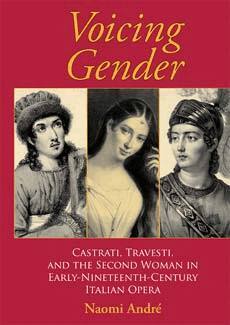
    Voicing Gender

    Castrati, Travesti, and the Second Woman in Early-Nineteenth-Century Italian Opera

    AvNaomi André

    Häftad, Engelska, 2006

    Del i serien Musical Meaning and Interpretation

    271 kr

    Skickas . Fri frakt över 249 kr.

    Beskrivning

    The early 19th century was a period of acute transition in operatic tradition and style, when time-honored practices gave way to the developing aesthetics of Romanticism, the rise of the tenor overtook the falling stars of the castrati, and the heroic, the masculine, and the feminine were profoundly reconfigured. These transformations resounded in operatic plot structures as well; the happy resolution of the 18th century twisted into a tragic 19th-century finale with the death of the helpless and innocent heroine—and frequently her tenor hero along with her. Female voices which formerly had sung en travesti, or basically in male drag, opposite their female character counterparts then took on roles of the second woman, a companion and foil to the death-bound heroine rather than her romantic partner. In Voicing Gender, Naomi André skillfully traces the development of female characters in these first decades of the century, weaving in and around these changes in voicings and plot lines, to define an emergent legacy in operatic roles.

    Produktinformation

    • Utgivningsdatum:2006-02-13
    • Mått:155 x 235 x 13 mm
    • Vikt:354 g
    • Format:Häftad
    • Språk:Engelska
    • Serie:Musical Meaning and Interpretation
    • Antal sidor:248
    • Förlag:Indiana University Press
    • ISBN:9780253217899

    Utforska kategorier

    • Musikvetenskap inom Kultur
    • Genusvetenskap inom Samhälle och politik

    Mer om författaren

    Naomi André is Associate Professor in the School of Music at the University of Michigan.

    Recensioner i media

    "In presenting the concept of the period ear as a way for today's audiences to hear the voices of the primo ottocento, André (Andre) (Univ. of Michigan) offers a solution to the problematic study of historical performance. The author differentiates between the various onstage female types and traces how a woman's voice represent[ed] both male and female characters during the time that opera diverged from supreme castrati reign and moved toward the era of the Romantic heroine. The opening chapters illustrate the prevailing fashion for castrati versus travesti (males in drag) early in the century, with some reference to more familiar pants role territory and a close study of how opera characters hear female voices onstage and how they respond musically, textually, and dramatically. A short interlude adopts the Bakhtinian hybrid as a model for understanding the 19th—century audience's approach to hearing gender. The first hint of self—confessed diva worship also appears here, in the form and voice of Maria Malibran. This widens in the final chapter to an in—depth study of soprano Giuditta Pasta, specifically of the title roles she created in Medea in Corinto, Norma, and Anna Bolena. Summing Up: Recommended. Graduate students, researchers, and faculty."—V. Vaughan, formerly, Oberlin College, Choice, February 2007"Voicing Gender is essential reading for those hoping to gain a deeper understanding of the bel canto tradition. André's meticulous research, clear prose, and insightful commentary will increase our appreciation of a wide variety of works."—OPERA JOURNAL"André's study provides an exciting new perspective on the Romantic heroine's relationship to her operatic ancestors. Unwilling to cast a diva as devoid of agency and a mere product of growing misogyny among composers and librettists, André weaves a fresh historical narrative that makes sense of women's role as interpreter of primo ottocento opera. . . . As Irigaray might implore, Open your ears—don't open them simply.Vol. 13 2009"—STEPHANIE JENSEN-Moulton, Women & Music"In presenting the concept of 'the period ear' as a way for today's audiences to 'hear' the voices of the primo ottocento, André . . . offers a solution to the problematic study of historical performance. The author differentiates between the various onstage female types and traces 'how a woman's voice represent[ed] both male and female characters' during the time that opera diverged from supreme castrati reign and moved toward the era of the Romantic heroine. . . . Recommended."—Choice

    Innehållsförteckning

    • AcknowledgmentsIntroduction: Hearing Voices1. Sounding Voices: Modeling Voice and the Period Ear2. Haunting Legacies: The Castrato in the Nineteenth Century3. Meyerbeer in Italy: The Crusader, the Castrato, and the Disguised Second WomanInterlude: Queens, Hybridity, and the Diva4. Taming Women's Voices: From Hero to Pageboy5. Women's Voices in Motion: Voices behind the Romantic HeroineCoda: Looking Ahead to Risorgimento HeroismGlossaryNotesBibliographyIndex