• Fri frakt över 249 kr
  • •
  • Snabba leveranser
  • •
  • Billiga böcker
Kundservice

Du är på sajten för privatpersoner.

Företag, bibliotek eller offentlig verksamhet?

Du handlar på classic.bokus.com, där alla dina funktioner finns intakta.
Till classic.bokus.com
Bokus logotyp. Gå till startsidan.
  • Erbjudanden
  • Nyheter
  • Student
  • Topplistor
  • Barn & ungdom
  • Bokus Play
  • E-böcker
  • Pocketböcker
  • Spel & pussel

10% rabatt på allt med kod: NYSTART10 →

Sidfot

Mina sidor

    Hjälp

    • Kundservice
    • Vanliga frågor och svar
    • Frakt och leverans
    • Retur vid ångerrätt
    • Reklamera vara
    • Betalning
    • Köpvillkor
    • Allmänna villkor
    • Information om webbplatsens tillgänglighet

    Om Bokus

    • Om oss
    • Pressrum
    • För studenter
    • För företag
    • För bibliotek och offentlig verksamhet
    • För leverantörer
    • Hållbarhet

    Populärt

    • Aktuella erbjudanden
    • Presentkort
    • Studentlitteratur
    • Nya böcker
    • Topplistor
    • Signerade böcker
    • Engelska böcker

    Inspiration

    • Boktips
    • BookTok
    • Populära bokserier
    • Barnbokskaraktärer
    • Populära författare
    Logotyp för Bokus
    Följ oss på Facebook (extern länk)Följ oss på Instagram (extern länk)Följ oss på YouTube (extern länk)Följ oss på TikTok (extern länk)
    bokus @ CookiesAnpassa cookiesIntegritetspolicyKöpvillkor
    Till Citymail hemsida (extern länk)Till Budbee hemsida (extern länk)Till Postnord hemsida (extern länk)Till Schenker hemsida (extern länk)Till Early Bird hemsida (extern länk)Till Walleys hemsida (extern länk)
    1. Samhälle och politik
    2. Samhälle och kultur
    3. Kultur och medier
    4. Kulturvetenskap

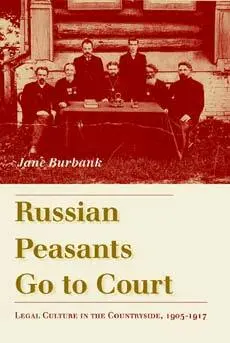
    Russian Peasants Go to Court

    Legal Culture in the Countryside, 1905-1917

    AvJane Burbank

    Inbunden, Engelska, 2004

    Del i serien Indiana University Press (IPS)

    579 kr

    Beställningsvara. Skickas inom 10-15 vardagar. Fri frakt över 249 kr.

    Beskrivning

    ". . . will challenge (and should transform) existing interpretations of late Imperial Russian governance, peasant studies, and Russian legal history." —Cathy A. Frierson". . . a major contribution to our understanding both of the dynamic of change within the peasantry and of legal development in late Imperial Russia." —William G. WagnerRussian Peasants Go to Court brings into focus the legal practice of Russian peasants in the township courts of the Russian empire from 1905 through 1917. Contrary to prevailing conceptions of peasants as backward, drunken, and ignorant, and as mistrustful of the state, Jane Burbank's study of court records reveals engaged rural citizens who valued order in their communities and made use of state courts to seek justice and to enforce and protect order. Through narrative studies of individual cases and statistical analysis of a large body of court records, Burbank demonstrates that Russian peasants made effective use of legal opportunities to settle disputes over economic resources, to assert personal dignity, and to address the bane of small crimes in their communities. The text is enhanced by contemporary photographs and lively accounts of individual court cases.

    Produktinformation

    • Utgivningsdatum:2004-09-16
    • Mått:156 x 235 x 26 mm
    • Vikt:735 g
    • Format:Inbunden
    • Språk:Engelska
    • Serie:Indiana University Press (IPS)
    • Antal sidor:400
    • Förlag:Indiana University Press
    • ISBN:9780253344267

    Utforska kategorier

    • Kulturvetenskap inom Samhälle och politik
    • Europas historia inom Historia och arkeologi
    • Lag och samhälle inom Juridik

    Mer om författaren

    Jane Burbank is Professor of History and Russian and Slavic Studies at New York University. She is author of Intelligentsia and Revolution: Russian Views of Bolshevism, 1917–1922 and co-editor (with David L. Ransel) of Imperial Russia: New Histories for the Empire (IUP, 1998).

    Recensioner i media

    "Using numerous case records from volost courts from 1905 to 1917, Burbank (New York Univ.) argues that the peasants who judged and were judged in these courts showed notable respect for law and legal procedure. The panel of judges, a small jury in the author's thinking, was guided by reason, a concern for documentary proof, and the evidence of witnesses, the hallmarks of the legal order that went unrecognized by contemporary educated society. Burbank believes that the disparagement of peasant justice as disorderly, corrupt, and ignorant was based on data from the 19th century. But she also disagrees with those who see peasant justice as a protest against the state and its laws. Her argument is persuasive, especially when she presents peasants as individuals rather than exemplars of a class. Only in passing does she suggest that her peasant actors may have been more enterprising than others. Although Burbank disagrees with critics of peasant justice, their data for the 19th century is also persuasive. Moreover, readers may not share the author's perplexity that her law-abiding, but admittedly uncivil, peasants made a revolution in 1917. But they should read her book. Summing Up: Recommended. Upper-division undergraduates and above."—D. Balmuth, emeritus, Skidmore College , 2005jun CHOICE.

    Innehållsförteckning

    • ContentsPrefaceAcknowledgments1. The Peasant Question and the Law2. A Litigious Person and Her Possibilities3. A Day at Court4. All Sorts of Suits and Disputes5. Small Crime and Punishment6. Peasant Jurisprudence7. Legal Recourse in a Time of Troubles8. How Different a Justice?Appendix 1: Information on Data Sets Appendix 2: Misdemeanors Adjudicable at Township CourtsGlossaryAbbreviationsNote on SourcesNotes BibliographyIndex