• Fri frakt över 249 kr
  • •
  • Snabba leveranser
  • •
  • Billiga böcker
Kundservice

Du är på sajten för privatpersoner.

Företag, bibliotek eller offentlig verksamhet?

Du handlar på classic.bokus.com, där alla dina funktioner finns intakta.
Till classic.bokus.com
Bokus logotyp. Gå till startsidan.
  • Erbjudanden
  • Nyheter
  • Student
  • Topplistor
  • Barn & ungdom
  • Bokus Play
  • E-böcker
  • Pocketböcker
  • Spel & pussel

10% rabatt på allt med kod: NYSTART10 →

Sidfot

Mina sidor

    Hjälp

    • Kundservice
    • Vanliga frågor och svar
    • Frakt och leverans
    • Retur vid ångerrätt
    • Reklamera vara
    • Betalning
    • Köpvillkor
    • Allmänna villkor
    • Information om webbplatsens tillgänglighet

    Om Bokus

    • Om oss
    • Pressrum
    • För studenter
    • För företag
    • För bibliotek och offentlig verksamhet
    • För leverantörer
    • Hållbarhet

    Populärt

    • Aktuella erbjudanden
    • Presentkort
    • Studentlitteratur
    • Nya böcker
    • Topplistor
    • Signerade böcker
    • Engelska böcker

    Inspiration

    • Boktips
    • BookTok
    • Populära bokserier
    • Barnbokskaraktärer
    • Populära författare
    Logotyp för Bokus
    Följ oss på Facebook (extern länk)Följ oss på Instagram (extern länk)Följ oss på YouTube (extern länk)Följ oss på TikTok (extern länk)
    bokus @ CookiesAnpassa cookiesIntegritetspolicyKöpvillkor
    Till Citymail hemsida (extern länk)Till Budbee hemsida (extern länk)Till Postnord hemsida (extern länk)Till Schenker hemsida (extern länk)Till Early Bird hemsida (extern länk)Till Walleys hemsida (extern länk)
    1. Kultur
    2. Musikböcker
    3. Tonsättare och låtskrivare

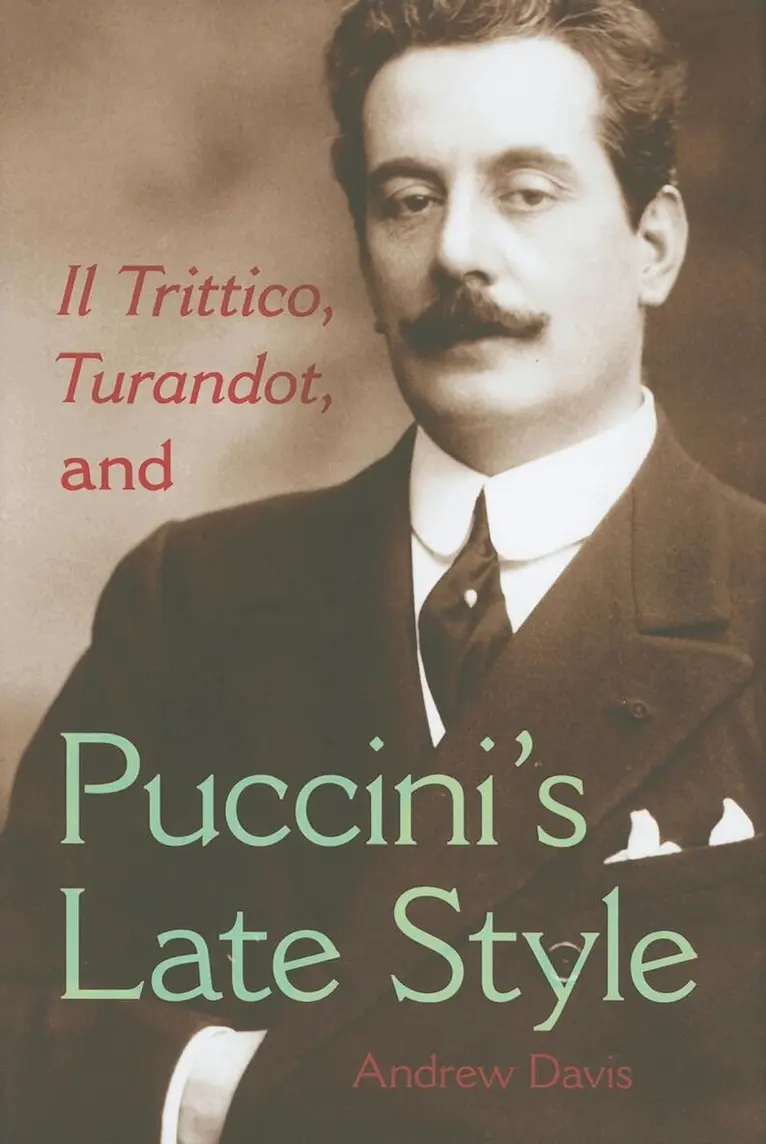
    Il Trittico, Turandot, and Puccini's Late Style

    AvAndrew Davis

    Inbunden, Engelska, 2010

    Del i serien Musical Meaning and Interpretation

    465 kr

    Beställningsvara. Skickas inom 10-15 vardagar. Fri frakt över 249 kr.

    Beskrivning

    Giacomo Puccini is one of the most frequently performed and best loved of all operatic composers. In Il Trittico, Turandot, and Puccini's Late Style, Andrew Davis takes on the subject of Puccini's last two works to better understand how the composer creates meaning through the juxtaposition of the conventional and the unfamiliar—situating Puccini in past operatic traditions and modern European musical theater. Davis asserts that hearing Puccini's late works within the context of la solita forma allows listeners to interpret the composer's expressive strategies. He examines Puccini's compositional language, with insightful analyses of melody, orchestration, harmony, voice-leading, and rhythm and meter.

    Produktinformation

    • Utgivningsdatum:2010-09-09
    • Mått:152 x 229 x 30 mm
    • Vikt:590 g
    • Format:Inbunden
    • Språk:Engelska
    • Serie:Musical Meaning and Interpretation
    • Antal sidor:328
    • Förlag:Indiana University Press
    • ISBN:9780253355140

    Utforska kategorier

    • Tonsättare och låtskrivare inom Kultur
    • Opera inom Kultur
    • Musiker, sångare och grupper inom Kultur

    Mer om författaren

    Andrew Davis is Associate Professor of Music Theory and Director of Graduate Studies at the University of Houston Moores School of Music.

    Recensioner i media

    "In this expertly written study, Davis defines the core quality of Giacomo Puccini's last four operas as a plurality of styles employed strategically toward formal and expressive ends. His conclusion—that Puccini's late style is essentially episodic, relying for its greatest impact on the juxtaposition of a traditional lyric, primarily vocal style (familiar to the audience of Puccini's day) and a more modern, international style—resonates in particular in reference to the organizing schemata of 19th-century Italian opera known as la solita forma. Davis lays out his theories in chapters devoted to each of Puccini's last four works. Absent an extensive knowledge of these operas, readers will want to have at hand a score to locate the many references cited in order to appreciate the full import and elegance of Davis's theories. Potentially contentious questions of composer's intent and audience reception are dealt with in sophisticated and convincing ways, as is the extent to which Puccini's personal life influenced his late style. Conversant in a wide range of disciplines, Davis has contributed an important addition to the field of Puccini studies and 19th-century Italian opera literature. Summing Up: Recommended. Upper-division undergraduates through faculty and professionals. — Choice"—S. C. Champagne, Oberlin College Conservatory of Music, May 2011"Conversant in a wide range of disciplines, Davis has contributed an important addition to the field of Puccini studies and 19th-century Italian opera literature. . . . Recommended."—Choice"[T]o undertake analyses of four operas in one book is no easy task, but [Davis] accomplishes it adeptly. Despite potential contradictions in the identification of his proposed style characteristics, his analyses are insightful, challenging the reader to hear these operas in new ways. He has made tangible aspects of Puccini's music dramas that we may take for granted as intuitive, illuminating how dramatic moments move us and interact with the work as a whole."—Music Theory Online"[I] applaud Davis for his close readings of this much-loved but insufficiently studied repertoire, and for the pluralism of his methodology, which is in keeping with Puccini's seemingly conscious exploration of multiple styles, formal traditions, and harmonic dialects. . . The book deserves a wide readership for the important questions it answers, and for the additional questions it raises that call for further research.Dec 2012"—Nineteenth-Century Music Review

    Innehållsförteckning

    • AcknowledgmentsNote on Scores, Librettos, and TranslationsIntroduction: Hearing Puccini1. Stylistic Plurality, Narrative, Levels of Discourse, and Voice2. The Romantic Style in Late Puccini3. Expressive Uses of Convention in Il tabarro4. Formal Multivalence in Suor Angelica5. Humor and Filmic Effects in the Structure of Gianni Schicchi6. Puccini's Solution: Integrating the Conventional and UnconventionalEpilogue: Late Style and PucciniNotesBibliographyIndex