• Fri frakt över 249 kr
  • •
  • Snabba leveranser
  • •
  • Billiga böcker
Kundservice

Du är på sajten för privatpersoner.

Företag, bibliotek eller offentlig verksamhet?

Du handlar på classic.bokus.com, där alla dina funktioner finns intakta.
Till classic.bokus.com
Bokus logotyp. Gå till startsidan.
  • Erbjudanden
  • Student
  • Topplistor
  • Barn & ungdom
  • Bokus Play
  • E-böcker
  • Ljudböcker
  • Pocketböcker
  • Spel och pussel

Pocketfynda! Hundratals böcker för 49 kr/st →

Sidfot

Mina sidor

    Hjälp

    • Kundservice
    • Vanliga frågor och svar
    • Frakt och leverans
    • Retur vid ångerrätt
    • Reklamera vara
    • Betalning
    • Köpvillkor
    • Allmänna villkor
    • Information om webbplatsens tillgänglighet

    Om Bokus

    • Om oss
    • Pressrum
    • För studenter
    • För företag
    • För bibliotek och offentlig verksamhet
    • För leverantörer
    • Hållbarhet

    Populärt

    • Aktuella erbjudanden
    • Presentkort
    • Studentlitteratur
    • Nya böcker
    • Topplistor
    • Signerade böcker
    • Engelska böcker

    Inspiration

    • Boktips
    • BookTok
    • Barnbokskaraktärer
    • Populära författare
    Logotyp för Bokus
    Följ oss på Facebook (extern länk)Följ oss på Instagram (extern länk)Följ oss på YouTube (extern länk)Följ oss på TikTok (extern länk)
    bokus @ CookiesAnpassa cookiesIntegritetspolicyKöpvillkor
    Till Citymail hemsida (extern länk)Till Budbee hemsida (extern länk)Till Postnord hemsida (extern länk)Till Schenker hemsida (extern länk)Till Early Bird hemsida (extern länk)Till Walleys hemsida (extern länk)
    1. Filosofi och religion
    2. Religion och tro
    3. Kristendom
    4. Biblar

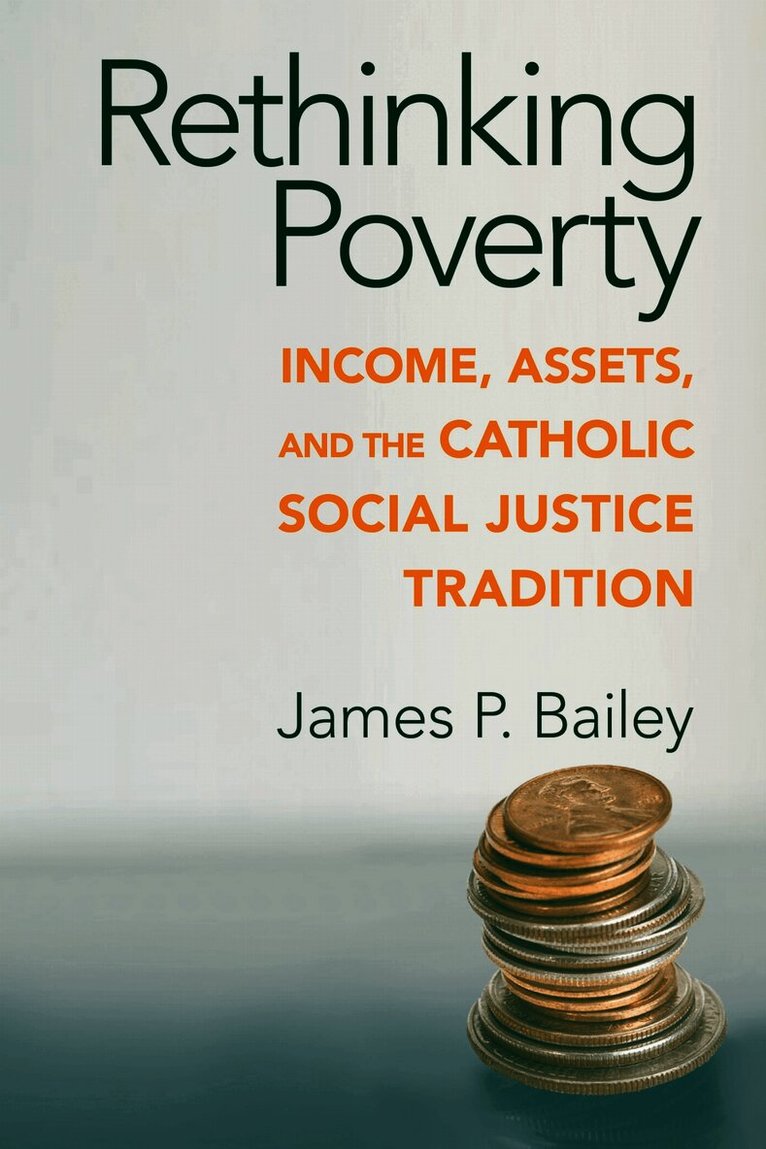
    Rethinking Poverty

    Income, Assets, and the Catholic Social Justice Tradition

    AvJames P. Bailey

    Häftad, Engelska, 2010

    Del i serien Catholic Social Tradition

    363 kr

    Beställningsvara. Skickas inom 5-8 vardagar. Fri frakt över 249 kr.

    Beskrivning

    In Rethinking Poverty, James P. Bailey argues that most contemporary policies aimed at reducing poverty in the United States are flawed because they focus solely on insufficient income. Bailey argues that traditional policies such as minimum wage laws, food stamps, housing subsidies, earned income tax credits, and other forms of cash and non-cash income supports need to be complemented by efforts that enable the poor to save and accumulate assets. Drawing on Michael Sherraden's work on asset building and scholarship by Melvin Oliver, Thomas Shapiro, and Dalton Conley on asset discrimination, Bailey presents us with a novel and promising way forward to combat persistent and morally unacceptable poverty in the United States and around the world. Rethinking Poverty makes use of a significant body of Catholic social teachings in its argument for an asset development strategy to reduce poverty. These Catholic teachings include, among others, principles of human dignity, the social nature of the person, the common good, and the preferential option for the poor. These principles and the related social analyses have not yet been brought to bear on the idea of asset-building for the poor by those working within the Catholic social justice tradition. This book redresses this shortcoming, and further, claims that a Catholic moral argument for asset-building for the poor can be complemented and enriched by Martha Nussbaum's "capabilities approach." This book will affect current debates and practical ways to reduce poverty, as well as the future direction of Catholic social teaching.

    Produktinformation

    • Utgivningsdatum:2010-09-14
    • Mått:152 x 229 x 10 mm
    • Vikt:262 g
    • Format:Häftad
    • Språk:Engelska
    • Serie:Catholic Social Tradition
    • Antal sidor:190
    • Förlag:University of Notre Dame Press
    • ISBN:9780268022235

    Utforska kategorier

    • Biblar inom Filosofi och religion
    • Religion: allmänt inom Filosofi och religion
    • Kristendom inom Filosofi och religion

    Mer om författaren

    James P. Bailey is associate professor of theology at Duquesne University.

    Recensioner i media

    "This book seeks to redress the lack of emphasis on the idea of asset building as a means of poverty relief in current debates . . . . Professor Bailey offers a very useful starting point for those interested in uplifting the poor in the name of human dignity and the common good." —The Review of Metaphysics"James P. Bailey's work, Rethinking Poverty: Income, Assets, and the Catholic Social Justice Tradition, is a direct interdisciplinary work with major implications for a reformation of modern social justice practices." —Dialogue"In Rethinking Poverty, James Bailey brings to the forefront an oft-forgotten aspect of Catholic social teaching: the pivotal role of private property in social development. This book is a timely reminder that the Church has much to offer in addressing the social question as it is experienced today, and it updates Catholic distributism for the twenty-first century." —Journal of Markets and Morality"James Bailey has written a superb, creative and timely book whose primary audience should be the U.S. Congress. . . . Bailey's work suggests that ethicists and economists can serve the country with concrete and specific budget proposals that might persuade, cajole or shame Congress to reform the tax code in a way that helps the poor instead of hurting them." —Christian Century"Bailey . . . suggests that reflection on the tenets of Catholic social teaching on matters of economic import ought to drive a more widespread and increasingly viable alternative to the current approaches to poverty alleviation. . . . Graduate students and their professors will be interested in Bailey's proposals, and perhaps diocesan justice and human development commissioners as well." —Catholic Library World"Bailey details how the poor can become self-sufficient upon elimination of discrimination in access to mortgages, insurance, fair credit, and more. He also describes a few innovative policies to facilitate assets, like individual development accounts. . . . Bailey finds many references to asset development or wealth creation for the poor in Catholic social thought." —Initiatives"In this brief, well-written work, Bailey offers a helpful look at the need for public policies that foster asset accumulation by the poor. The author argues that asset accumulation provides a wide array of benefits, including greater economic security, increased confidence concerning the future, and enhanced involvement in community and public life." —Choice"Poverty may be with us always; but seldom do we have such a wise and timely book. Drawing upon Catholic social teaching and Martha Nussbaum's capability theory, Bailey underscores the role of asset formation in understanding and alleviating poverty. Erudite, but never arid Rethinking Poverty is indispensable reading for students and scholars who would make the 'option for the poor' their own today." —William O'Neill, S.J., Jesuit School of Theology of Santa Clara University"Bailey combines his deep understanding of the Catholic social justice tradition, his firm grasp of contemporary moral philosophy, and his perceptive analysis of U.S. poverty debates and policies to forge something new and exciting for each. Bailey's most significant contribution is his compelling case for the Church to establish, or reestablish, asset and property ownership at the heart of its mission to reduce poverty, enhance human dignity, and achieve a more just society." —Ray Boshara, Vice President and Senior Research Fellow, New America Foundation"This book supplies the connections between prophetic but general calls for economic justice and participation, and the concrete policies and practices necessary to advance those ideals as reality. Bailey directly critiques discriminatory economic institutions in the U.S. but also implicitly critiques prior Catholic voices that have fallen far short of inspiring effective reform because they do not identify and attack underlying assumptions behind the 'personal responsibility' models of prosperity." —Lisa Sowle Cahill, Boston College