• Fri frakt över 249 kr
  • •
  • Snabba leveranser
  • •
  • Billiga böcker
Kundservice

Du är på sajten för privatpersoner.

Företag, bibliotek eller offentlig verksamhet?

Du handlar på classic.bokus.com, där alla dina funktioner finns intakta.
Till classic.bokus.com
Bokus logotyp. Gå till startsidan.
  • Erbjudanden
  • Nyheter
  • Student
  • Topplistor
  • Barn & ungdom
  • Bokus Play
  • E-böcker
  • Pocketböcker
  • Spel & pussel

10% rabatt på allt med kod: NYSTART10 →

Sidfot

Mina sidor

    Hjälp

    • Kundservice
    • Vanliga frågor och svar
    • Frakt och leverans
    • Retur vid ångerrätt
    • Reklamera vara
    • Betalning
    • Köpvillkor
    • Allmänna villkor
    • Information om webbplatsens tillgänglighet

    Om Bokus

    • Om oss
    • Pressrum
    • För studenter
    • För företag
    • För bibliotek och offentlig verksamhet
    • För leverantörer
    • Hållbarhet

    Populärt

    • Aktuella erbjudanden
    • Presentkort
    • Studentlitteratur
    • Nya böcker
    • Topplistor
    • Signerade böcker
    • Engelska böcker

    Inspiration

    • Boktips
    • BookTok
    • Populära bokserier
    • Barnbokskaraktärer
    • Populära författare
    Logotyp för Bokus
    Följ oss på Facebook (extern länk)Följ oss på Instagram (extern länk)Följ oss på YouTube (extern länk)Följ oss på TikTok (extern länk)
    bokus @ CookiesAnpassa cookiesIntegritetspolicyKöpvillkor
    Till Citymail hemsida (extern länk)Till Budbee hemsida (extern länk)Till Postnord hemsida (extern länk)Till Schenker hemsida (extern länk)Till Early Bird hemsida (extern länk)Till Walleys hemsida (extern länk)
    1. Historia och arkeologi
    2. Historia
    3. Europas historia

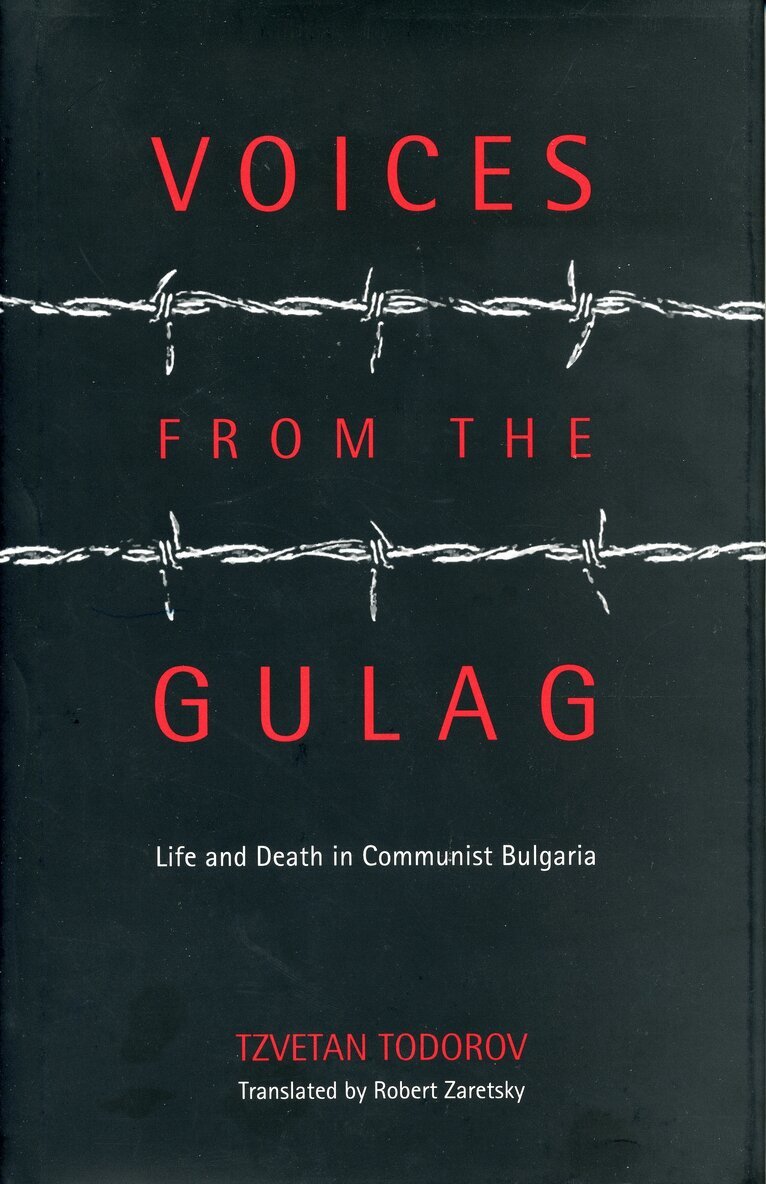
    Voices from the Gulag

    Life and Death in Communist Bulgaria

    AvTzvetan Todorov

    Inbunden, Engelska, 1999

    744 kr

    Beställningsvara. Skickas inom 11-20 vardagar. Fri frakt över 249 kr.

    Beskrivning

    One of the most terrible legacies of our century is the concentration camp. Countless men and women have passed through camps in Nazi Germany, Communist China, and the Soviet bloc countries. In Voices from the Gulag, Tzvetan Todorov singles out the experience of one country where the concentration camps were particularly brutal and emblematic of the horrors of totalitarianism—communist Bulgaria. The voices we hear in this book are mostly from Lovech, a rock quarry in Bulgaria that became the final destination for several thousand men and women during its years of operation from 1959 to 1962. The inmates, though drawn from various social, professional, and economic backgrounds, shared a common fate: they were torn from their homes by secret police, brutally beaten, charged with fictitious crimes, and shipped to Lovech. Once there, they were forced to endure backbreaking labor, inadequate clothing, shelter, and food, systematic beatings, and institutionalized torture.We also hear from guards, commandants, and bureaucrats whose lives were bound together with the inmates in an absurd drama. Regardless of their grade and duties, all agree that those responsible for these "excesses" were above or below them, yet never they themselves. Accountability is thereby diffused through the many strata of the state apparatus, providing legal defenses and "clear" consciences. Yet, as the concluding section of interviews—with the children and wives of the victims—reminds us, accountability is a moral and historical imperative.The testimonies in Voices from the Gulag were written specifically for this volume or have been published in the Bulgarian press or on Bulgarian television. Todorov compiled them for this book and has written an introductory essay—a lucid and troubling analysis of totalitarianism and the role that terror and the concentration camp play in such a world. He reflects upon his own experience living in Bulgaria during the years when Lovech was in operation. It is through that experience that Todorov has sought to understand the totalitarian horrors of our century.Although Lovech and the other camps of Soviet Russia and Eastern Europe have been closed down, concentration camps still exist in the countries whose communist regimes remain in power—Vietnam, China, North Korea, and Cuba. The voices in this book remind us that we are never completely safe from the threat of totalitarianism, a threat that we all must face. As Todorov writes, "I cannot say that these stories do not concern me."

    Produktinformation

    • Utgivningsdatum:1999-11-01
    • Mått:140 x 216 x 19 mm
    • Vikt:426 g
    • Format:Inbunden
    • Språk:Engelska
    • Antal sidor:192
    • Förlag:Pennsylvania State University Press
    • ISBN:9780271019611
    • Översättare:Robert Zaretsky

    Utforska kategorier

    • Europas historia inom Historia och arkeologi
    • Biografier inom Biografier
    • Politiskt förtryck inom Samhälle och politik

    Mer om författaren

    Born in Sofia, Tzvetan Todorov left Bulgaria in the early 1960s and moved to Paris, where he established himself as a literary theorist, historian of ideas, and world-renowned essayist. He is a director of research at the Centre National de la Recherche Scientifique (CNRS) and the author of numerous books. Several of these have been translated into English, including: Facing the Extreme (1996), A French Tragedy (1996), On Human Diversity (1993), and The Conquest of America (1984). Robert D. Zaretsky is an Associate Professor at the University of Houston where he holds a joint appointment in the Honors College and the Department of Modern and Classical Languages. He is the author of Nimes at War: Religion, Politics, and Public Opinion in the Department of the Gard, 1938–94 (Penn State, 1995), which won the 1997 Hans Rosenhaupt Memorial Book Award of the Woodrow Wilson Foundation.

    Recensioner i media

    “Tzvetan Todorov, a Bulgarian-born French philosopher, studied the phenomenon of the concentration camps in totalitarian societies from the detached point of view of the historian and social scientist he is, with as much objectivity as is possible for a normal mind. Taking for example the death camp in Lovech, he used personal accounts by former prisoners and guards in books and interviews published soon after the fall of Communist dictator Zhivkov, or included in the overwhelming 1990 documentary film The Survivors (Stories from the Camps) by director Atanas Kiryakov. The value of Todorov’s book is not so much as a sinister chronicle of atrocities by psychopaths empowered to dispose of their fellow men’s lives. What is impressive is his analysis of the reasons for and nature of such abominable practices. His chilling conclusion is that they were not an exception, not an aberration, but an inherent part of the entire system, a conditio sine qua non institutionalized by the regime.”—Stephane Groueff Boston Book Review