• Fri frakt över 249 kr
  • •
  • Snabba leveranser
  • •
  • Billiga böcker
Kundservice

Du är på sajten för privatpersoner.

Företag, bibliotek eller offentlig verksamhet?

Du handlar på classic.bokus.com, där alla dina funktioner finns intakta.
Till classic.bokus.com
Bokus logotyp. Gå till startsidan.
  • Erbjudanden
  • Nyheter
  • Student
  • Topplistor
  • Barn & ungdom
  • Bokus Play
  • E-böcker
  • Pocketböcker
  • Spel & pussel

10% studentrabatt med kod TERM26

Sidfot

Mina sidor

    Hjälp

    • Kundservice
    • Vanliga frågor och svar
    • Frakt och leverans
    • Retur vid ångerrätt
    • Reklamera vara
    • Betalning
    • Köpvillkor
    • Allmänna villkor
    • Information om webbplatsens tillgänglighet

    Om Bokus

    • Om oss
    • Pressrum
    • För studenter
    • För företag
    • För bibliotek och offentlig verksamhet
    • För leverantörer
    • Hållbarhet

    Populärt

    • Aktuella erbjudanden
    • Presentkort
    • Studentlitteratur
    • Nya böcker
    • Topplistor
    • Signerade böcker
    • Engelska böcker

    Inspiration

    • Boktips
    • BookTok
    • Populära bokserier
    • Barnbokskaraktärer
    • Populära författare
    Logotyp för Bokus
    Följ oss på Facebook (extern länk)Följ oss på Instagram (extern länk)Följ oss på YouTube (extern länk)Följ oss på TikTok (extern länk)
    bokus @ CookiesAnpassa cookiesIntegritetspolicyKöpvillkor
    Till Citymail hemsida (extern länk)Till Budbee hemsida (extern länk)Till Postnord hemsida (extern länk)Till Schenker hemsida (extern länk)Till Early Bird hemsida (extern länk)Till Walleys hemsida (extern länk)
    1. Historia och arkeologi
    2. Historia
    3. Europas historia

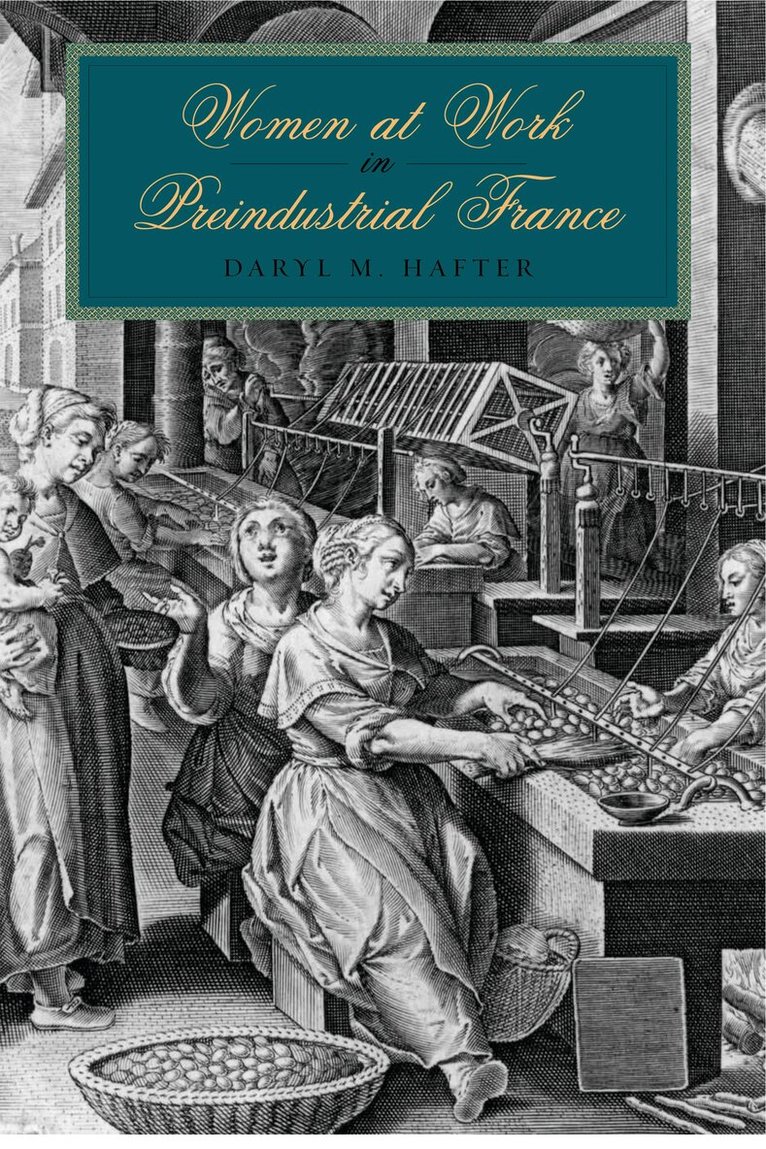
    Women at Work in Preindustrial France

    AvDaryl M. Hafter

    Häftad, Engelska, 2012

    526 kr

    Beställningsvara. Skickas inom 5-8 vardagar. Fri frakt över 249 kr.

    Beskrivning

    The subject of women as skilled workers in the eighteenth century is central to our understanding of the history of work and technology in the preindustrial age. While recent scholarship has dispelled the notion that women did not enter the workforce until the Industrial Revolution, debate continues as to the extent to which women actually participated in skilled work in the preceding decades. This book draws upon substantial archival research in Rouen, Lyon, and Paris to show that while the vast majority of working women in eighteenth-century France labored at unskilled, low-paying jobs, it was not at all unusual for women to be actively engaged in economic activities as workers, managers, and merchants. Some even developed vertically integrated wholesale and retail businesses, while others became indispensable to manufacturers through their technical skill. In fact, Hafter documents how certain women guild masters were able to exploit the legal system to achieve considerable economic independence, power, wealth, and legal parity with male masters. She also shows how gender politics complicated the day-to-day experience of these working women.

    Produktinformation

    • Utgivningsdatum:2012-08-15
    • Mått:152 x 229 x 23 mm
    • Vikt:499 g
    • Format:Häftad
    • Språk:Engelska
    • Antal sidor:328
    • Förlag:Pennsylvania State University Press
    • ISBN:9780271058689

    Utforska kategorier

    • Europas historia inom Historia och arkeologi
    • Genusvetenskap inom Samhälle och politik
    • Sociologi inom Samhälle och politik

    Mer om författaren

    Daryl M. Hafter is Professor Emerita of History at Eastern Michigan University. She is the editor of European Women and Preindustrial Craft (1995).

    Recensioner i media

    “This is the first full-length study of women in all-female and mixed guilds in Old Regime France.  . . . Hafter contributes a great deal to our understanding of gender and the gendering of work, of the function of women’s work in patriarchal society, of the agency women held in early modern France to control their work, of the ways this control brought women into the public sphere of the old regime, and of the ways ideas about gender and work changed over the eighteenth century and into the Revolution.”—Clare H. Crowston, University of Illinois at Urbana-Champaign

    Innehållsförteckning

    • ContentsAcknowledgmentsIntroduction1.The Political Economy of Guilds2.The Uses of Gender in Economic Life3.Guildwomen and Ouvrières4.Turgot’s Reforms and Their Aftermath5.Paths to the RevolutionConclusionBibliographyIndex