• Fri frakt över 249 kr
  • •
  • Snabba leveranser
  • •
  • Billiga böcker
Kundservice

Du är på sajten för privatpersoner.

Företag, bibliotek eller offentlig verksamhet?

Du handlar på classic.bokus.com, där alla dina funktioner finns intakta.
Till classic.bokus.com
Bokus logotyp. Gå till startsidan.
  • Erbjudanden
  • Nyheter
  • Student
  • Topplistor
  • Barn & ungdom
  • Bokus Play
  • E-böcker
  • Pocketböcker
  • Spel & pussel

10% rabatt på allt med kod: NYSTART10 →

Sidfot

Mina sidor

    Hjälp

    • Kundservice
    • Vanliga frågor och svar
    • Frakt och leverans
    • Retur vid ångerrätt
    • Reklamera vara
    • Betalning
    • Köpvillkor
    • Allmänna villkor
    • Information om webbplatsens tillgänglighet

    Om Bokus

    • Om oss
    • Pressrum
    • För studenter
    • För företag
    • För bibliotek och offentlig verksamhet
    • För leverantörer
    • Hållbarhet

    Populärt

    • Aktuella erbjudanden
    • Presentkort
    • Studentlitteratur
    • Nya böcker
    • Topplistor
    • Signerade böcker
    • Engelska böcker

    Inspiration

    • Boktips
    • BookTok
    • Populära bokserier
    • Barnbokskaraktärer
    • Populära författare
    Logotyp för Bokus
    Följ oss på Facebook (extern länk)Följ oss på Instagram (extern länk)Följ oss på YouTube (extern länk)Följ oss på TikTok (extern länk)
    bokus @ CookiesAnpassa cookiesIntegritetspolicyKöpvillkor
    Till Citymail hemsida (extern länk)Till Budbee hemsida (extern länk)Till Postnord hemsida (extern länk)Till Schenker hemsida (extern länk)Till Early Bird hemsida (extern länk)Till Walleys hemsida (extern länk)
    1. Samhälle och politik
    2. Samhälle och kultur
    3. Kultur och medier
    4. Kulturvetenskap

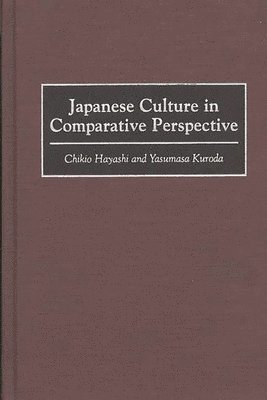
    Japanese Culture in Comparative Perspective

    AvChikio Hayashi,Yasumasa Kuroda

    Inbunden, Engelska, 1997

    1 049 kr

    Beställningsvara. Skickas inom 10-15 vardagar. Fri frakt över 249 kr.

    Beskrivning

    Japanese culture is inscrutable—but then, so is American culture seen from the viewpoint of the Japanese. As Hayashi and Kuroda make clear, the problem is one of perspective. Neither is really an enigma if the viewer can free him- or herself from the mother culture and look at the other culture from within its own context. Along the way, the authors answer many questions about Japan from the never-ending nature of its trade disputes to the reasons for the misconceptions of many Western writers.The authors challenge those who think every culture perceives, thinks, and expresses alike. They also challenge those who believe that Japanese culture has changed significantly in recent years. Hayashi and Kuroda look at ancient poems and 7th-century documents as well as the writings of Japan's Nobel laureate, Oe, to show that the essence of Japanese culture remains unchanged.By examining the use of language as well as analyzing modern statistical data, Hayashi and Kuroda show how the Japanese concept of self is indistinct and how the Japanese live in a mental world of multiple truths. Along the way the authors provide new interpretations and insights that are invaluable to all students of Japan, from policy makers to poets and painters.

    Produktinformation

    • Utgivningsdatum:1997-11-30
    • Mått:161 x 240 x 17 mm
    • Vikt:523 g
    • Format:Inbunden
    • Språk:Engelska
    • Antal sidor:240
    • Förlag:Bloomsbury Publishing Plc
    • ISBN:9780275958619

    Utforska kategorier

    • Kulturvetenskap inom Samhälle och politik
    • Antropologi inom Samhälle och politik

    Mer om författaren

    CHIKIO HAYASHI is Professor Emeritus at The Institute of Statistical Mathematics and President of the Japan Association for Public Opinion Research. He has had a long and distinguished career in statistical data analysis and survey research.YASUMASA KURODA is Professor of Political Science at the University of Hawaii at Manoa. He has organized three major international conferences. Both have published widely on comparative cultures.

    Innehållsförteckning

    • Foreword by Hayward R. Alker Preface Introduction: Search for the Core of Japanese Culture Rashomonesque Yamazakura: Ambiguous Language Model of Japanese Culture Enduring Japanese Culture Changing Japanese Culture Common Japanese Culture Unique Japanese Culture Japanese Culture and Its Vitality Conclusion: Rashomonesque Yamazakura Appendix References Subject Index Author Index