• Fri frakt över 249 kr
  • •
  • Snabba leveranser
  • •
  • Billiga böcker
Kundservice

Du är på sajten för privatpersoner.

Företag, bibliotek eller offentlig verksamhet?

Du handlar på classic.bokus.com, där alla dina funktioner finns intakta.
Till classic.bokus.com
Bokus logotyp. Gå till startsidan.
  • Erbjudanden
  • Nyheter
  • Student
  • Topplistor
  • Barn & ungdom
  • Bokus Play
  • E-böcker
  • Pocketböcker
  • Spel & pussel

10% rabatt på allt med kod NYSTART10 →

Sidfot

Mina sidor

    Hjälp

    • Kundservice
    • Vanliga frågor och svar
    • Frakt och leverans
    • Retur vid ångerrätt
    • Reklamera vara
    • Betalning
    • Köpvillkor
    • Allmänna villkor
    • Information om webbplatsens tillgänglighet

    Om Bokus

    • Om oss
    • Pressrum
    • För studenter
    • För företag
    • För bibliotek och offentlig verksamhet
    • För leverantörer
    • Hållbarhet

    Populärt

    • Aktuella erbjudanden
    • Presentkort
    • Studentlitteratur
    • Nya böcker
    • Topplistor
    • Signerade böcker
    • Engelska böcker

    Inspiration

    • Boktips
    • BookTok
    • Populära bokserier
    • Barnbokskaraktärer
    • Populära författare
    Logotyp för Bokus
    Följ oss på Facebook (extern länk)Följ oss på Instagram (extern länk)Följ oss på YouTube (extern länk)Följ oss på TikTok (extern länk)
    bokus @ CookiesAnpassa cookiesIntegritetspolicyKöpvillkor
    Till Citymail hemsida (extern länk)Till Budbee hemsida (extern länk)Till Postnord hemsida (extern länk)Till Schenker hemsida (extern länk)Till Early Bird hemsida (extern länk)Till Walleys hemsida (extern länk)
    1. Historia och arkeologi
    2. Historia
    3. Asiens historia

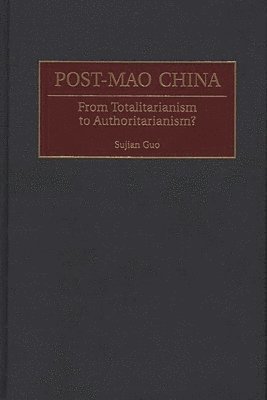
    Post-Mao China

    From Totalitarianism to Authoritarianism?

    AvSujian Guo

    Inbunden, Engelska, 2000

    1 080 kr

    Beställningsvara. Skickas inom 10-15 vardagar. Fri frakt över 249 kr.

    Beskrivning

    Guo challenges the predominant view that post-Mao China has moved away from communist totalitarianism and that totalitarianism is an outdated paradigm for China studies. He seeks to reconstruct a plausible macro-model in conceptual and comparative terms for defining regime identity and assessing the nature of regime change. Professor Guo then applies the model to the study of regime change in post-Mao China and reevaluates post-Mao changes across the five major empirical aspects of regime change (political, ideological, economic, legal, and social) and the most critical dimensions of each.The findings of Guo's study demonstrate that the practice of post-Mao reforms remains rooted in and committed to the hard core of Chinese communist totalitarianism and that the regime has attempted to revive many typical totalitarian practices. Most essential or core elements of the idea, practice, and institution of totalitarianism remain essentially unchanged in all major aspects of the post-Mao regime, though the post-Mao regime does suffer from a certain degree of regime weakening in its adjustments of the action means or protective belt of defending the hard core of the communist totalitarian regime. A controversial and essential analysis for scholars, researchers, and policy makers involved with contemporary China.

    Produktinformation

    • Utgivningsdatum:2000-01-30
    • Mått:161 x 240 x 18 mm
    • Vikt:490 g
    • Format:Inbunden
    • Språk:Engelska
    • Antal sidor:240
    • Förlag:Bloomsbury Publishing Plc
    • ISBN:9780275967802

    Utforska kategorier

    • Asiens historia inom Historia och arkeologi
    • Statsskick: diktatur inom Samhälle och politik

    Mer om författaren

    Sujian Guo is professor in the Department of Political Science and Director of the Center for US–China Policy Studies at San Francisco State University.

    Innehållsförteckning

    • Introduction: Theoretical Model Ideological Faith Crisis: Does the Communist Ideology Matter? Political Development: Withering Party Power? Legal Innovations: The Rule of Law? Social Changes: Takeover by Civil Society? Economic Reforms: Transition Towards Capitalism? Conclusion: The End or Continuity of Communist Totalitarianism? Bibliography