• Fri frakt över 249 kr
  • •
  • Snabba leveranser
  • •
  • Billiga böcker
Kundservice

Du är på sajten för privatpersoner.

Företag, bibliotek eller offentlig verksamhet?

Du handlar på classic.bokus.com, där alla dina funktioner finns intakta.
Till classic.bokus.com
Bokus logotyp. Gå till startsidan.
  • Erbjudanden
  • Nyheter
  • Student
  • Topplistor
  • Barn & ungdom
  • Bokus Play
  • E-böcker
  • Pocketböcker
  • Spel & pussel

10% rabatt på allt med kod: NYSTART10 →

Sidfot

Mina sidor

    Hjälp

    • Kundservice
    • Vanliga frågor och svar
    • Frakt och leverans
    • Retur vid ångerrätt
    • Reklamera vara
    • Betalning
    • Köpvillkor
    • Allmänna villkor
    • Information om webbplatsens tillgänglighet

    Om Bokus

    • Om oss
    • Pressrum
    • För studenter
    • För företag
    • För bibliotek och offentlig verksamhet
    • För leverantörer
    • Hållbarhet

    Populärt

    • Aktuella erbjudanden
    • Presentkort
    • Studentlitteratur
    • Nya böcker
    • Topplistor
    • Signerade böcker
    • Engelska böcker

    Inspiration

    • Boktips
    • BookTok
    • Populära bokserier
    • Barnbokskaraktärer
    • Populära författare
    Logotyp för Bokus
    Följ oss på Facebook (extern länk)Följ oss på Instagram (extern länk)Följ oss på YouTube (extern länk)Följ oss på TikTok (extern länk)
    bokus @ CookiesAnpassa cookiesIntegritetspolicyKöpvillkor
    Till Citymail hemsida (extern länk)Till Budbee hemsida (extern länk)Till Postnord hemsida (extern länk)Till Schenker hemsida (extern länk)Till Early Bird hemsida (extern länk)Till Walleys hemsida (extern länk)
    1. Samhälle och politik
    2. Krig och försvar
    3. Krigsvetenskap

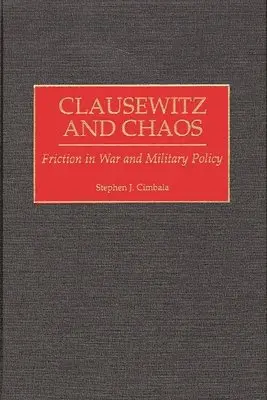
    Clausewitz and Chaos

    Friction in War and Military Policy

    AvStephen J. Cimbala

    Inbunden, Engelska, 2000

    1 049 kr

    Beställningsvara. Skickas inom 10-15 vardagar. Fri frakt över 249 kr.

    Beskrivning

    The great Prussian military theorist Carl von Clausewitz, in his classic On War, introduced the idea of friction in war. Friction was one of the most important ideas that Clausewitz put forward. His application of the term is generally taken to be limited to events on the field of battle. But had Clausewitz lived to the end of the 20th century, he undoubtedly would have broadened his understanding of friction to include the nexus between war and policy making. He would have done so because his most fundamental insight, apart from the significance of friction in war, was his insistence upon the priority of policy over war.Cimbala applies the concept of friction to a number of 20th century cases of war and policy making. He also applies it to some plausible scenarios for the next century. Although many U.S. military planners and policy makers appear to place their faith in technology as the sine qua non of success in security and defense policy, technology can be self defeating and myopic if political and strategic vision are lacking. For example, the mindless pursuit of information warfare in all its varieties may convince potential U.S. opponents that infowar is a cost effective way of negating U.S. military power. A provocative analysis for scholars, students, military professionals and other policy makers involved with strategy and military policy issues.

    Produktinformation

    • Utgivningsdatum:2000-11-30
    • Mått:156 x 235 x 18 mm
    • Vikt:539 g
    • Format:Inbunden
    • Språk:Engelska
    • Antal sidor:240
    • Förlag:Bloomsbury Publishing Plc
    • ISBN:9780275969516

    Utforska kategorier

    • Krigsvetenskap inom Samhälle och politik
    • Militär strategi inom Samhälle och politik
    • Militära operationer inom Samhälle och politik

    Mer om författaren

    STEPHEN J. CIMBALA is Distinguished Professor of Political Science at Penn State University (Delaware County) and has contributed to the literature on international security, defense studies, and nuclear arms control for more than twenty years. He serves on the editorial board of various professional journals and as a consultant to the U.S. goverment on arms control. He is the author or editor of 18 earlier Greenwood Press or Praeger Publishers titles, including, most recently, The Past and Future of Nuclear Deterrence.

    Innehållsförteckning

    • IntroductionCase One: Friction in Irrelevant and Inflexible War PlansCase Two: Friction in Nuclear Crisis ManagementCase Three: Failure Amid Success: Desert Storm and FrictionCase Four: Small Wars, Faux Wars and Peace Operations: Sources of FrictionCase Five: Deterrence and FrictionCase Six: Mass Destruction and Information Warfare: Friction in CollisionConclusion