• Fri frakt över 249 kr
  • •
  • Snabba leveranser
  • •
  • Billiga böcker
Kundservice

Du är på sajten för privatpersoner.

Företag, bibliotek eller offentlig verksamhet?

Du handlar på classic.bokus.com, där alla dina funktioner finns intakta.
Till classic.bokus.com
Bokus logotyp. Gå till startsidan.
  • Erbjudanden
  • Student
  • Topplistor
  • Barn & ungdom
  • Bokus Play
  • E-böcker
  • Ljudböcker
  • Pocketböcker
  • Spel och pussel

5% studentrabatt – använd koden KURSBOK27 →

Sidfot

Mina sidor

    Hjälp

    • Kundservice
    • Vanliga frågor och svar
    • Frakt och leverans
    • Retur vid ångerrätt
    • Reklamera vara
    • Betalning
    • Köpvillkor
    • Allmänna villkor
    • Information om webbplatsens tillgänglighet

    Om Bokus

    • Om oss
    • Pressrum
    • För studenter
    • För företag
    • För bibliotek och offentlig verksamhet
    • För leverantörer
    • Hållbarhet

    Populärt

    • Aktuella erbjudanden
    • Presentkort
    • Studentlitteratur
    • Nya böcker
    • Topplistor
    • Signerade böcker
    • Engelska böcker

    Inspiration

    • Boktips
    • BookTok
    • Barnbokskaraktärer
    • Populära författare
    Logotyp för Bokus
    Följ oss på Facebook (extern länk)Följ oss på Instagram (extern länk)Följ oss på YouTube (extern länk)Följ oss på TikTok (extern länk)
    bokus @ CookiesAnpassa cookiesIntegritetspolicyKöpvillkor
    Till Citymail hemsida (extern länk)Till Budbee hemsida (extern länk)Till Postnord hemsida (extern länk)Till Schenker hemsida (extern länk)Till Early Bird hemsida (extern länk)Till Walleys hemsida (extern länk)
    1. Filosofi och religion
    2. Religion och tro
    3. Religion: allmänt

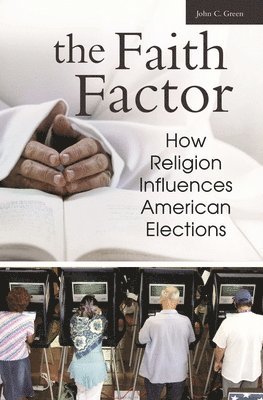
    Faith Factor

    How Religion Influences American Elections

    AvJohn C. Green

    Inbunden, Engelska, 2007

    588 kr

    Beställningsvara. Skickas inom 10-15 vardagar. Fri frakt över 249 kr.

    Fler format och utgåvor

    E-bok

    634 kr

    Beskrivning

    The impact of religion on the 2004 presidential election results provoked widespread consternation and surprise. In fact, religion and faith have played a vital role in American elections for some time, and here, Green explores the links and how they have changed over time.Green posits that an old religion gap describing longstanding political differences among religious communities has been supplanted by a new religion gap revealing political divisions based on religious behavior and belief. He puts the differences into context and documents the changing role of religion in politics over the last 60 years.The impact of religion on the 2004 presidential election results provoked widespread consternation and surprise. Given the intensity and closeness of the results, however, the role of religion should not have come as a shock. In fact, religion and faith have played a vital role in American elections for some time, and here, Green explores the links and how they have changed over time. Specifically, he concludes that there was an old religion gap that described longstanding political differences among religious communities, which has been supplanted by a new religion gap that shows political divisions based on religious behavior and belief. Green puts the differences into context and documents the changing role of religion in politics over the last sixty years.Covering three areas of religion that tend to influence election outcomes, Green illuminates the meaning of religious belonging, behaving, and believing in current political context. Each of these aspects of religion affects the way people vote and their views of issues, ideology, and partisanship. He reviews the importance of moral values in the major party coalitions and discusses the role religious appeals have in presidential campaigns. In addition, he compares the influence of religion to other factors such as gender, age, and income. Given the emphasis on the influence of religion on American politics and elections in recent years, this book serves as a cogent reminder that the situation is not new, and offers a careful analysis of the real role faith plays in the electing of government officials.

    Produktinformation

    • Utgivningsdatum:2007-03-30
    • Mått:161 x 240 x 17 mm
    • Vikt:513 g
    • Format:Inbunden
    • Språk:Engelska
    • Antal sidor:232
    • Förlag:Bloomsbury Publishing Plc
    • ISBN:9780275987183

    Utforska kategorier

    • Religion: allmänt inom Filosofi och religion
    • Kristendom inom Filosofi och religion
    • Val och folkomröstningar inom Samhälle och politik

    Mer om författaren

    John C. Green is Senior Fellow at the Pew Forum on Religion and Public Life and Distinguished Professor of Political Science at the University of Akron. He is also Director of the Ray C. Bliss Institute of Applied Politics at the University of Akron. He is the author or editor of The Christian Right in American Politics: Marching to the Millennium, The Financiers of Congressional Elections, The Diminishing Divide: Religion's Changing Role in American Politics, and The Bully Pulpit: The Politics of Protestant Clergy. He has published many other books and articles.

    Recensioner i media

    "[E]xamines the impact of religion on the 2004 presidential election, pushing the boundaries of our understanding of the role religion plays in American politics through his discussion of the old religion gap and the new religion gap. The old gap described political differences based on religious affiliation. The new gap portrays political differences based on religious behavior and belief. Green begins with analysis of the 2004 presidential election, an election which surprised some observers with the important role played by religion. The next part of the book details the two religion gaps, followed by analyses of the gaps in numerous demographic and social contexts, and across geographical regions. The analysis builds upon the findings of the Religion by Region project of the Leonard E. Greenberg Center for the Study of Religion in Public Life at Trinity College. Readers will find the statistical analyses easy to read and understand. Highly recommended. Upper-division undergraduates through practitioners." - Choice