• Fri frakt över 249 kr
  • •
  • Snabba leveranser
  • •
  • Billiga böcker
Kundservice

Du är på sajten för privatpersoner.

Företag, bibliotek eller offentlig verksamhet?

Du handlar på classic.bokus.com, där alla dina funktioner finns intakta.
Till classic.bokus.com
Bokus logotyp. Gå till startsidan.
  • Erbjudanden
  • Nyheter
  • Student
  • Topplistor
  • Barn & ungdom
  • Bokus Play
  • E-böcker
  • Pocketböcker
  • Spel & pussel

10% rabatt på allt med kod NYSTART10 →

Sidfot

Mina sidor

    Hjälp

    • Kundservice
    • Vanliga frågor och svar
    • Frakt och leverans
    • Retur vid ångerrätt
    • Reklamera vara
    • Betalning
    • Köpvillkor
    • Allmänna villkor
    • Information om webbplatsens tillgänglighet

    Om Bokus

    • Om oss
    • Pressrum
    • För studenter
    • För företag
    • För bibliotek och offentlig verksamhet
    • För leverantörer
    • Hållbarhet

    Populärt

    • Aktuella erbjudanden
    • Presentkort
    • Studentlitteratur
    • Nya böcker
    • Topplistor
    • Signerade böcker
    • Engelska böcker

    Inspiration

    • Boktips
    • BookTok
    • Populära bokserier
    • Barnbokskaraktärer
    • Populära författare
    Logotyp för Bokus
    Följ oss på Facebook (extern länk)Följ oss på Instagram (extern länk)Följ oss på YouTube (extern länk)Följ oss på TikTok (extern länk)
    bokus @ CookiesAnpassa cookiesIntegritetspolicyKöpvillkor
    Till Citymail hemsida (extern länk)Till Budbee hemsida (extern länk)Till Postnord hemsida (extern länk)Till Schenker hemsida (extern länk)Till Early Bird hemsida (extern länk)Till Walleys hemsida (extern länk)
    1. Samhälle och politik
    2. Sociologi och antropologi
    3. Antropologi

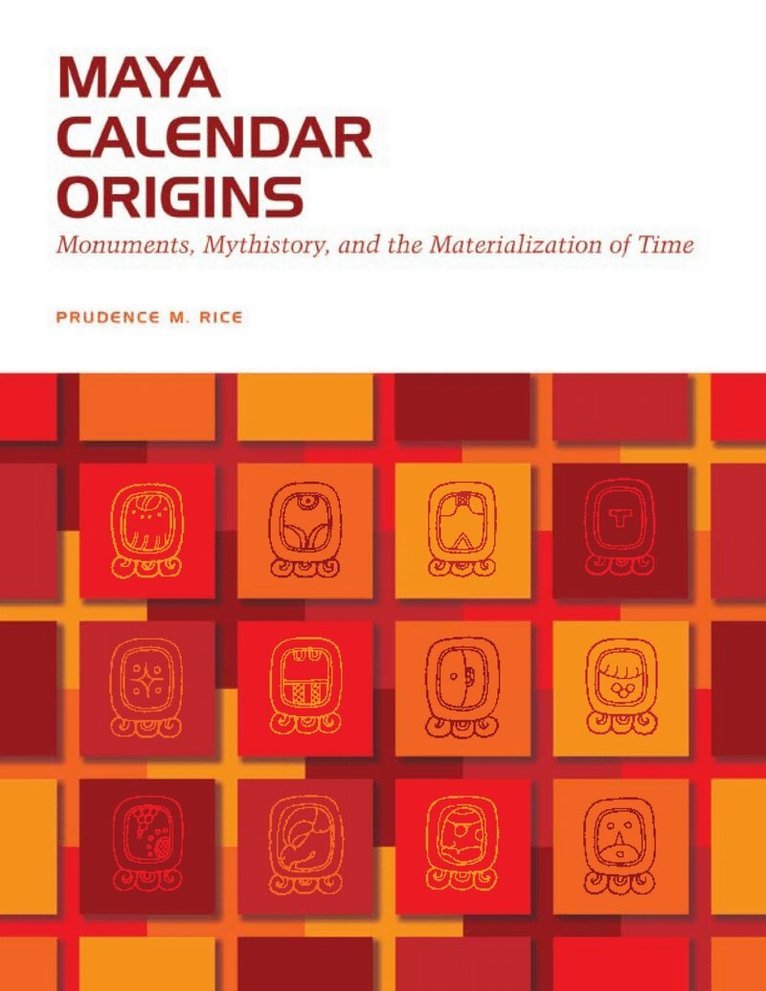
    Maya Calendar Origins

    Monuments, Mythistory, and the Materialization of Time

    AvPrudence M. Rice

    Häftad, Engelska, 2007

    285 kr

    Beställningsvara. Skickas inom 11-20 vardagar. Fri frakt över 249 kr.

    Beskrivning

    In Maya Political Science: Time, Astronomy, and the Cosmos, Prudence M. Rice proposed a new model of Maya political organization in which geopolitical seats of power rotated according to a 256-year calendar cycle known as the May. This fundamental connection between timekeeping and Maya political organization sparked Rice's interest in the origins of the two major calendars used by the ancient lowland Maya, one 260 days long, and the other having 365 days. In Maya Calendar Origins, she presents a provocative new thesis about the origins and development of the calendrical system.Integrating data from anthropology, archaeology, art history, astronomy, ethnohistory, myth, and linguistics, Rice argues that the Maya calendars developed about a millennium earlier than commonly thought, around 1200 BC, as an outgrowth of observations of the natural phenomena that scheduled the movements of late Archaic hunter-gatherer-collectors throughout what became Mesoamerica. She asserts that an understanding of the cycles of weather and celestial movements became the basis of power for early rulers, who could thereby claim "control" over supernatural cosmic forces. Rice shows how time became materialized-transformed into status objects such as monuments that encoded calendrical or temporal concerns-as well as politicized, becoming the foundation for societal order, political legitimization, and wealth. Rice's research also sheds new light on the origins of the Popol Vuh, which, Rice believes, encodes the history of the development of the Mesoamerican calendars. She also explores the connections between the Maya and early Olmec and Izapan cultures in the Isthmian region, who shared with the Maya the cosmovision and ideology incorporated into the calendrical systems.

    Produktinformation

    • Utgivningsdatum:2007-11-01
    • Mått:216 x 279 x 15 mm
    • Vikt:853 g
    • Format:Häftad
    • Språk:Engelska
    • Antal sidor:280
    • Förlag:University of Texas Press
    • ISBN:9780292716926

    Utforska kategorier

    • Antropologi inom Samhälle och politik
    • Kulturvetenskap inom Samhälle och politik
    • Amerikas historia inom Historia och arkeologi

    Mer om författaren

    Prudence M. Rice is Distinguished Professor of Anthropology at Southern Illinois University Carbondale.

    Innehållsförteckning

    • List of Figures and TablesNote on Orthography and DatesPrefaceAcknowledgments1. Introduction Popol Vuh, a Maya Creation MythTime and Preclassic MesoamericaChiefdoms and CyclesThe Early Maya and the Isthmian Region2. In the Beginning: Early Mesoamerican Prehistory Early Occupation: The Paleoindian or Lithic StageThe Archaic StageThe Archaic-to-Formative TransitionThe Early Mesoamerican TraditionDiscussion3. Mesoamerican Calendrics: Time and Its Recording The 260-day CalendarThe 360- and 365-day CalendarsThe Long Count and the MayOrigins of the Mesoamerican CalendarsRecording TimeDiscussion4. Maya Calendar Developments in Broader Context Originally Thirteen Months?Beginnings and EndingsThe Months and the Day Names: A Derivational ModelCalendrical Origins and the Popol Vuh5. Middle and Late Preclassic: The Gulf Coast Olmec and Epi-Olmec Architectural PatternsMonuments, Iconography, and ThemesDiscussion: Calendrical ImplicationsThe Epi-OlmecDiscussion6. Late Preclassic: Izapa and KaminaljuyÚ Izapa, ChiapasKaminaljuyÚ and Related SitesDiscussion: Calendrical Implications7. The Early Maya Lowlands: Origins and Settlements Origin MythsArchaeology: The Earliest Lowland Settlers and TheirLanguagesArchaeology and ArchitectureArchaeology and ExchangeDiscussion8. Early Lowland Maya Intellectual Culture: Writing, Stelae, and "Government" Writing SystemsThe Stela "Cult" and CalendricsTies to the IsthmusLeadership, Politics, and Government9. The Materialization and Politicization of Time Development of the CalendarsThe Popol Vuh and CalendarsPilgrimages and TollansCycling: Chiefly and CalendricalMaya Calendars: Order, Legitimacy, and WealthNotesReferences CitedIndex