• Fri frakt över 249 kr
  • •
  • Snabba leveranser
  • •
  • Billiga böcker
Kundservice

Du är på sajten för privatpersoner.

Företag, bibliotek eller offentlig verksamhet?

Du handlar på classic.bokus.com, där alla dina funktioner finns intakta.
Till classic.bokus.com
Bokus logotyp. Gå till startsidan.
  • Erbjudanden
  • Nyheter
  • Student
  • Topplistor
  • Barn & ungdom
  • Bokus Play
  • E-böcker
  • Pocketböcker
  • Spel & pussel

10% rabatt på allt med kod: NYSTART10 →

Sidfot

Mina sidor

    Hjälp

    • Kundservice
    • Vanliga frågor och svar
    • Frakt och leverans
    • Retur vid ångerrätt
    • Reklamera vara
    • Betalning
    • Köpvillkor
    • Allmänna villkor
    • Information om webbplatsens tillgänglighet

    Om Bokus

    • Om oss
    • Pressrum
    • För studenter
    • För företag
    • För bibliotek och offentlig verksamhet
    • För leverantörer
    • Hållbarhet

    Populärt

    • Aktuella erbjudanden
    • Presentkort
    • Studentlitteratur
    • Nya böcker
    • Topplistor
    • Signerade böcker
    • Engelska böcker

    Inspiration

    • Boktips
    • BookTok
    • Populära bokserier
    • Barnbokskaraktärer
    • Populära författare
    Logotyp för Bokus
    Följ oss på Facebook (extern länk)Följ oss på Instagram (extern länk)Följ oss på YouTube (extern länk)Följ oss på TikTok (extern länk)
    bokus @ CookiesAnpassa cookiesIntegritetspolicyKöpvillkor
    Till Citymail hemsida (extern länk)Till Budbee hemsida (extern länk)Till Postnord hemsida (extern länk)Till Schenker hemsida (extern länk)Till Early Bird hemsida (extern länk)Till Walleys hemsida (extern länk)
    1. Naturvetenskap och teknik
    2. Teknik och industri
    3. Elektronik och kommunikationer

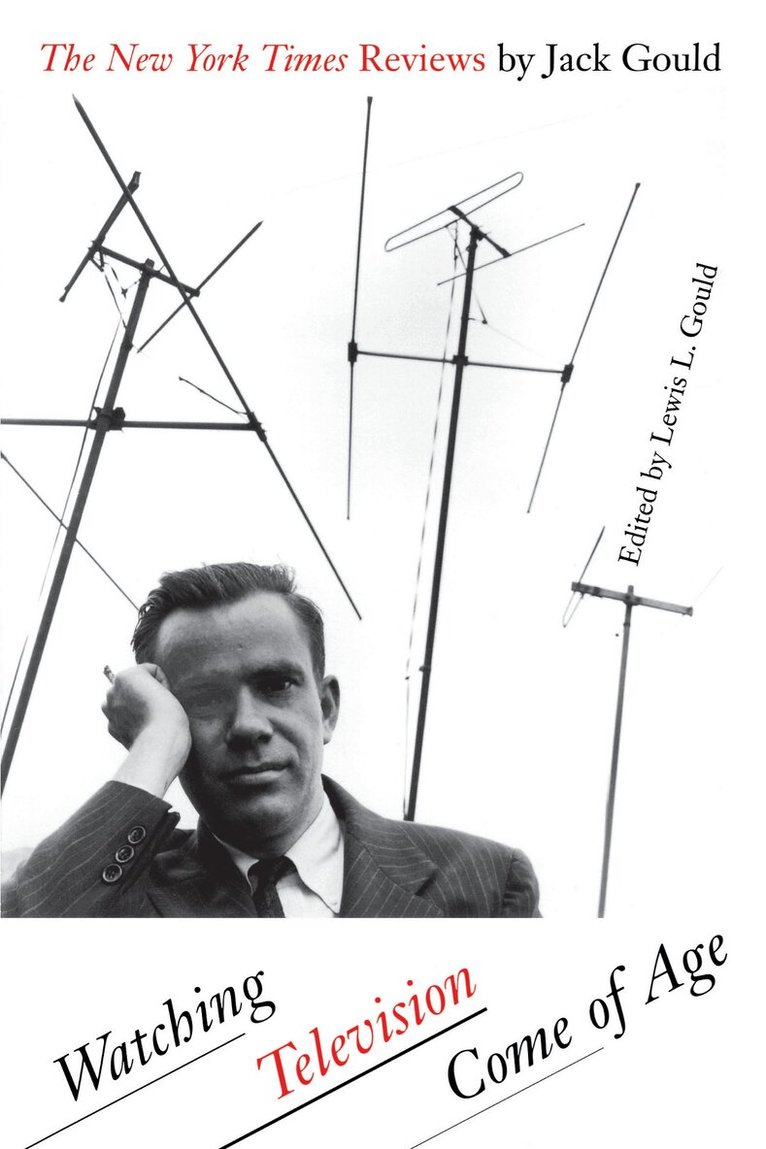
    Watching Television Come of Age

    The New York Times Reviews by Jack Gould

    AvLewis L. Gould

    Häftad, Engelska, 2002

    Del i serien Focus on American History Series

    271 kr

    Beställningsvara. Skickas inom 10-15 vardagar. Fri frakt över 249 kr.

    Beskrivning

    Providing video companionship for isolated housewives, afternoon babysitting for children, and nonstop evening entertainment for the whole family, television revolutionized American society in the post-World War II years. Helping the first TV generation make sense of the new medium was the mission of Jack Gould, television critic of The New York Times from 1947 to 1972. In columns noteworthy for crisp writing, pointed insights, and fair judgment, he highlighted both the untapped possibilities and the imminent perils of television, becoming "the conscience of the industry" for many people. In this book, historian Lewis L. Gould, Jack Gould's son, collects over seventy of his father's best columns. Grouped topically, they cover a wide range of issues, including the Golden Age of television drama, McCarthy-era blacklisting, the rise and fall of Edward R. Murrow, quiz show scandals, children's programming, and the impact of television on American life and of television criticism on the medium itself. Lewis Gould also supplies a brief biography of his father that assesses his influence on the evolution of television, as well as prefaces to each section.

    Produktinformation

    • Utgivningsdatum:2002-11-01
    • Mått:152 x 229 x 16 mm
    • Vikt:454 g
    • Format:Häftad
    • Språk:Engelska
    • Serie:Focus on American History Series
    • Antal sidor:266
    • Förlag:University of Texas Press
    • ISBN:9780292728462

    Utforska kategorier

    • Elektronik och kommunikationer inom Naturvetenskap och teknik
    • Kulturvetenskap inom Samhälle och politik
    • Medievetenskap inom Samhälle och politik

    Mer om författaren

    Lewis L. Gould has appeared on "Howdy Doody," "The CBS Morning News," and "The ABC World News Tonight." He is an internationally recognized scholar of American political history and commentator on the role of First Ladies.

    Innehållsförteckning

    • Preface and Acknowledgments Introduction: Portrait of a Television Critic Chapter One: The Golden Age of Television Drama Television Debut: Theatre Guild Makes Video Bow on NBC with Production of "John Ferguson," November 16, 1947 Matter of Form: Television Must Develop Own Techniques If It Is to Have Artistic Vitality, October 31, 1948 "Julius Caesar": Worthington Miner's Version in Modern Dress Proves Spectacular Television, March 13, 1949 A Plea for Live Video: Switch to Film for TV Was a Major Mistake, December 7, 1952 NBC Playhouse Offers Valid and Moving Hour with Production of Paddy Chayefsky's "Marty," May 27, 1953 "Patterns" Is Hailed as Notable Triumph, January 17, 1955 TV's Psychodrama: How to Keep 'Em Down on the Couch after They've Written for TV, August 7, 1955 Cheese, Mustard Ad Also Stars on Kraft Theatre, December 1, 1955 "Requiem for a Heavyweight": Rod Serling's Drama Scores a Knockout, October 12, 1956 Study of Alcoholism: Piper Laurie and Cliff Robertson Are Impressive in "Days of Wine and Roses," October 3, 1958 Chapter Two: The Shadow of a Blacklist Case of Jean Muir: Principles of Fair Play Yield to Pressure, September 3, 1950 Again, "Red Channels": The Civil Liberties Union Revives an Issue, April 13, 1952 The Case of Lucille Ball: Treatment of the Star Should Be Standard in Industry, September 20, 1953 Fifth Amendment: Danger Seen in Union Plan to Punish Members Claiming the Privilege, July 31, 1955 Report on Blacklisting: Fund for the Republic Study Dealing with Radio-TV Is Found Deserving of Commendation and Censure, July 1, 1956 What a Blacklist Means: A Review of John Henry Faulk's "Fear on Trial," November 22, 1964 Blacklisting's Effect: Censored Tape of Jean Muir's Remarks on '50s Travails Shown on ABC, January 15, 1965 Jack Gould to John Pope, October 13, 1971 Jack Gould to John Pope, October 31, 1971 Chapter Three: The Rise and Fall of Edward R. Murrow Edward R. Murrow's News Review "See It Now" Demonstrates Journalistic Power of Video, November 19, 1951 Murrow's "This Is Korea" Film over CBS Captures Poignancy and Frustration of Life in Battle, December 29, 1952 Celebrity Time: Murrow Puts Cameras into Their Homes in "Person to Person," October 7, 1953 Video Journalism: Treatment of Radulovich Case History by "See It Now" Is Fine Reporting, October 25, 1953 Murrow vs. McCarthy: "See It Now" on CBS Examines Senator and His Methods, March 11, 1954 "See It Now" Finale: Program Unexpectedly Ends Run of Seven Distinguished Years on CBS, July 8, 1958 "Harvest of Shame": Exploitation of U.S. Migratory Workers Is Documented on "CBS Reports," November 25, 1960 Murrow Departs: Commentator Leaving Broadcast Post For Challenging Federal Job, February 5, 1961 Chapter Four: The Influence of a Critic Kaufman Incident: "This Is Show Business" Dismisses Panelist for Pre-Christmas Quip, January 4, 1953 On Faith Healing: Preacher's Timely TV Miracles Raise Questions of Stations' Standards, February 18, 1956 Disgrace of the Networks: Chains Ignore Session at United Nations, October 31, 1956 More on U.N.: Networks Make Limited Progress in Their Coverage of World's Realities, November 2, 1956 TV Can Be Good, Too: "The Play of the Week" Is a Case in Point, November 22, 1959 Madison Avenue Case Study: "The Play of the Week" Faces Doom Jan. 30, December 29, 1959 "The Play of the Week": Demise of Drama Series Has Economic Moral, June 11, 1961 Lively Panel Show: Betty Furness Is Spry Hostess on WNTA, August 2, 1961 Jack Gould to Louis Loeb, October 19, 1961 Chapter Five: A Critic's Likes and Dislikes Comment on "Today": NBC's Early Morning Show Needs Some Work, January 20, 1952 The Nixon Telecast: Personal Story Brings High Drama to TV, September 28, 1952 Sweeping and Imaginative in Conception, "Omnibus" of Ford Foundation Makes Video Debut, November 10, 1952 Why Millions Love Lucy, March 1, 1953 Delightful "Peter Pan": Marriage of Media Is Noted in Inspired Video Offering, March 13, 1955 Johnny Carson: CBS Offers Answer to That Man Gobel, July 8, 1955 New Phenomenon: Elvis Presley Rises to Fame as Vocalist Who Is Virtuoso of Hootchy-Kootchy, July 6, 1956 Witty Commentator: Brinkley Enlivens NBC Convention Coverage, August 17, 1956 Elvis Presley: Lack of Responsibility Is Shown by TV in Exploiting Teenagers, September 16, 1956 Tribute to "Omnibus": Expected Loss of Program Brings Call for Similar Experimental Shows, July 30, 1958 Forthright Radio News Commentator: Smith's Analysis of Alabama Violence Shows Real Role of Commentator, May 28, 1961 Chapter Six: The Quiz Show Scandals Man in the Street: The Public Often Can Outshine TV Stars, August 14, 1955 Quizzes Mostly Talk: "$64,000 Question" and "Big Surprise" Use Less than Half Their Times on Queries, September 26, 1956 Under Suspicion: Investigation of TV Shows Shakes Viewer's Faith in TV's Integrity, September 7, 1958 A Plague on TV's House: Rigged Quiz Shows Viewed as Symptom of the Age, with Many Guilty Parties, October 12, 1959 Journalists' Junkets: Quiz Show Headlines Raise Question of How Clear Is Conscience of Press, October 27, 1959 The Quiz Scandal: Legal and Moral Issues of Van Doren Affair Said to Need Resolution, November 4, 1959 Formula for TV: Quiz Scandal Shows a Need for New Rules, November 8, 1959 Assessing Effects of Life under the Table: Influence of "Payola" on Culture Weighed, November 20, 1959 Chapter Seven: Children and Television Kukla and Ollie: Burr Tillstrom's Puppets Have a Spirit and Personality Unique in Video, March 27, 1948 Hail Howdy Doody! He Triumphs over Mr. X, Survives Mr. Y and Always Delights the Youngsters, November 14, 1948 Video and Children: Parents and Broadcasters Have Separate Roles, January 8, 1950 A Boy's Question: School Youngster Raises an Issue for Video, April 29, 1951 Pinky Lee Show Turns Children's Hour into Conspiracy against Parents, November 8, 1954 Peril in Small Pills: Pushing of Vitamins by "Ding Dong School" Indicates Deficiency in Commercials, December 23, 1955 Juvenile Audiences Suffering from Chains' Delinquency in Planning, December 2, 1956 Parent-Teacher Organization Issues Its First Appraisal of Programs, September 13, 1959 Chapter Eight: Tracking the Impact of Television The Paradoxical State of Television, March 30, 1947 Family Life, 1948 A.T. (After Television), August 1, 1948 TV Daddy and Video Mama: A Dirge, May 14, 1950 What TV Is-and What It Might Be, June 10, 1951 TV at the Crossroads: A Critic's Survey, March 9, 1952 Europe's TV Picture-and Ours, August 23, 1953 Chapter Nine: Television and Its Critic TV Tube Bites TV Critic, January 3, 1954 Television Today: A Critic's Appraisal, April 8, 1956 Tuning in on Dixie: Mocking Birds Sing, but Who Listens? Everyone's Inside Looking at TV! April 15, 1956 Where TV Critics Strike Out: Some Sweeping Charges about Their Manifold Deficiencies, May 19, 1957 A Critical Reply: An Answer to Objections Raised in the TV Industry to the Role of Critics, May 26, 1957 Critic Dissects the Anatomy of a Flop, Ruminates about His Role on "Open End," January 27, 1959 Index