• Fri frakt över 249 kr
  • •
  • Snabba leveranser
  • •
  • Billiga böcker
Kundservice

Du är på sajten för privatpersoner.

Företag, bibliotek eller offentlig verksamhet?

Du handlar på classic.bokus.com, där alla dina funktioner finns intakta.
Till classic.bokus.com
Bokus logotyp. Gå till startsidan.
  • Erbjudanden
  • Nyheter
  • Student
  • Topplistor
  • Barn & ungdom
  • Bokus Play
  • E-böcker
  • Pocketböcker
  • Spel & pussel

10% rabatt på allt med kod: NYSTART10 →

Sidfot

Mina sidor

    Hjälp

    • Kundservice
    • Vanliga frågor och svar
    • Frakt och leverans
    • Retur vid ångerrätt
    • Reklamera vara
    • Betalning
    • Köpvillkor
    • Allmänna villkor
    • Information om webbplatsens tillgänglighet

    Om Bokus

    • Om oss
    • Pressrum
    • För studenter
    • För företag
    • För bibliotek och offentlig verksamhet
    • För leverantörer
    • Hållbarhet

    Populärt

    • Aktuella erbjudanden
    • Presentkort
    • Studentlitteratur
    • Nya böcker
    • Topplistor
    • Signerade böcker
    • Engelska böcker

    Inspiration

    • Boktips
    • BookTok
    • Populära bokserier
    • Barnbokskaraktärer
    • Populära författare
    Logotyp för Bokus
    Följ oss på Facebook (extern länk)Följ oss på Instagram (extern länk)Följ oss på YouTube (extern länk)Följ oss på TikTok (extern länk)
    bokus @ CookiesAnpassa cookiesIntegritetspolicyKöpvillkor
    Till Citymail hemsida (extern länk)Till Budbee hemsida (extern länk)Till Postnord hemsida (extern länk)Till Schenker hemsida (extern länk)Till Early Bird hemsida (extern länk)Till Walleys hemsida (extern länk)
    1. Samhälle och politik
    2. Samhälle och kultur
    3. Kultur och medier
    4. Kulturvetenskap

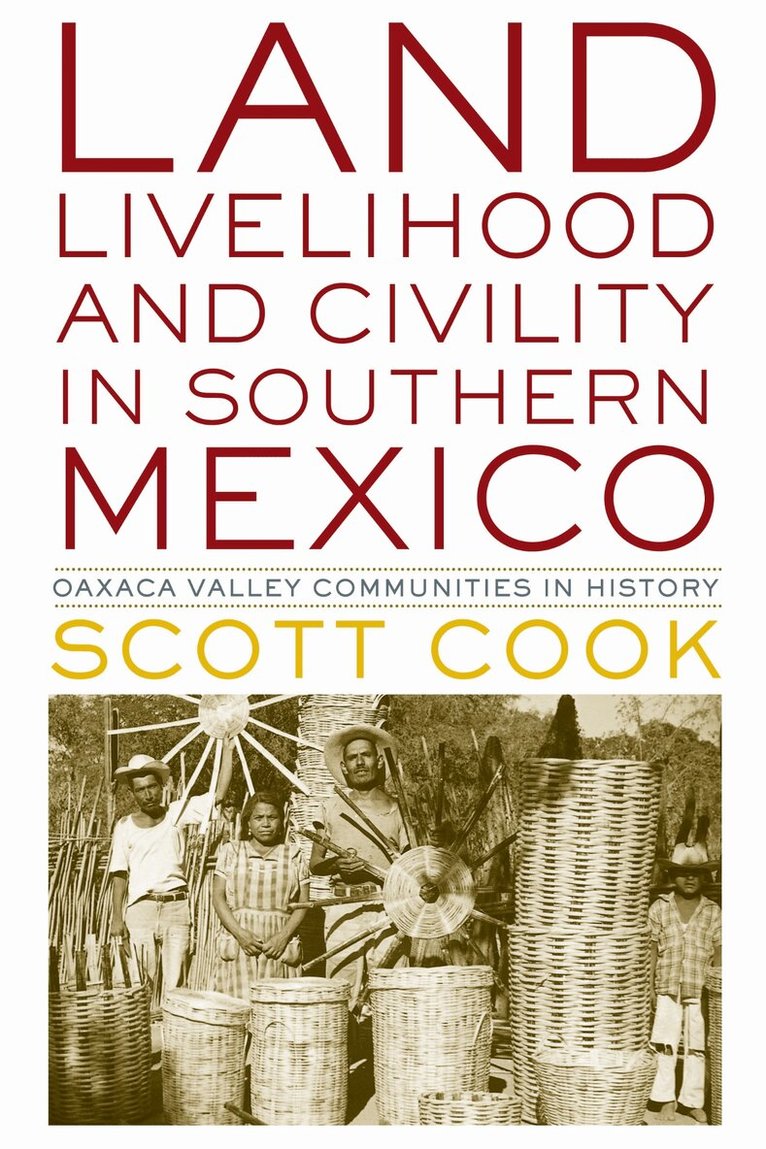
    Land, Livelihood, and Civility in Southern Mexico

    Oaxaca Valley Communities in History

    AvScott Cook

    Häftad, Engelska, 2014

    409 kr

    Beställningsvara. Skickas inom 10-15 vardagar. Fri frakt över 249 kr.

    Fler format och utgåvor

    Inbunden

    840 kr

    Beskrivning

    In the Valley of Oaxaca in Mexico’s Southern Highland region, three facets of sociocultural life have been interconnected and interactive from colonial times to the present: first, community land as a space to live and work; second, a civil-religious system managed by reciprocity and market activity wherein obligations of citizenship, office, and festive sponsorships are met by expenditures of labor-time and money; and third, livelihood. In this book, noted Oaxacan scholar Scott Cook draws on thirty-five years of fieldwork (1965–1990) in the region to present a masterful ethnographic historical account of how nine communities in the Oaxaca Valley have striven to maintain land, livelihood, and civility in the face of transformational and cumulative change across five centuries.Drawing on an extensive database that he accumulated through participant observation, household surveys, interviews, case studies, and archival work in more than twenty Oaxacan communities, Cook documents and explains how peasant-artisan villagers in the Oaxaca Valley have endeavored over centuries to secure and/or defend land, worked and negotiated to subsist and earn a living, and striven to meet expectations and obligations of local citizenship. His findings identify elements and processes that operate across communities or distinguish some from others. They also underscore the fact that landholding is crucial for the sociocultural life of the valley. Without land for agriculture and resource extraction, occupational options are restricted, livelihood is precarious and contingent, and civility is jeopardized.

    Produktinformation

    • Utgivningsdatum:2014-05-15
    • Mått:152 x 229 x 25 mm
    • Vikt:513 g
    • Format:Häftad
    • Språk:Engelska
    • Antal sidor:403
    • Förlag:University of Texas Press
    • ISBN:9780292772526

    Utforska kategorier

    • Kulturvetenskap inom Samhälle och politik
    • Antropologi inom Samhälle och politik

    Mer om författaren

    Scott Cook is Professor Emeritus of Anthropology at the University of Connecticut, where he also directed the Center for Latin American and Caribbean Studies and the Puerto Rican/Latino Studies Institute. His seven previous books include Markets in Oaxaca, Obliging Need: Rural Petty Industry in Mexican Capitalism, and Understanding Commodity Cultures: Explorations in Economic Anthropology with Case Studies from Mexico. He lives in San Marcos, Texas.

    Recensioner i media

    Provides one of the most thorough accounts of Central Oaxaca’s modern political and economic system. Cook skillfully weaves together archaeological, historical, and his own ethnographic data. . . . Although it will be required reading for any scholar of Oaxaca, Cook’s comprehensive work is an invaluable contribution to the study of the social relations embedded in Mexican and Latin American rural economies. (Journal of Anthropological Research) This volume is a testimony to the lasting influences of social practices that anchor households to a territory that is historically and culturally constituted as a single entity, even when repeatedly crisscrossed by migration flows, contested national policies, and neoliberal reforms. . . . This book will be an illuminating experience for advanced undergraduate and professional readers interested in peasant survival strategies, agrarian struggles, and the social and economic anthropology of Meixco and Latin America. (American Anthropologist)

    Innehållsförteckning

    • List of Maps and TablesPrefaceAcknowledgmentsIntroduction1. The Teitipac Communities: Peasant-Artisans on the Hacienda’s Periphery2. Hacienda San Antonio Buenavista from Two Perspectives: Hacendado and Terrazguero3. San Juan Teitipac: Metateros Here and There4. San SebastiÁn Teitipac: Metateros and Civility5. San Lorenzo Albarradas, XaagÁ, and the Hacienda Regime6. "Castellanos" as Plaiters and Weavers: San Lorenzo Albarradas and XaagÁ7. The Jalieza Communities: Peasant-Artisans with Mixed Crafts8. Santa Cecilia Jalieza: Defending Homeland in Hostile Surroundings9. Magdalena OcotlÁn: From Terrazgueros to Artisanal Ejidatarios10. Magdalena’s Metateros: Servants of the Saints and the Market11. ConclusionPhoto EssayGlossaryNotesBibliographyIndex