• Fri frakt över 249 kr
  • •
  • Snabba leveranser
  • •
  • Billiga böcker
Kundservice

Du är på sajten för privatpersoner.

Företag, bibliotek eller offentlig verksamhet?

Du handlar på classic.bokus.com, där alla dina funktioner finns intakta.
Till classic.bokus.com
Bokus logotyp. Gå till startsidan.
  • Erbjudanden
  • Nyheter
  • Student
  • Topplistor
  • Barn & ungdom
  • Bokus Play
  • E-böcker
  • Pocketböcker
  • Spel & pussel

10% rabatt på allt med kod: NYSTART10 →

Sidfot

Mina sidor

    Hjälp

    • Kundservice
    • Vanliga frågor och svar
    • Frakt och leverans
    • Retur vid ångerrätt
    • Reklamera vara
    • Betalning
    • Köpvillkor
    • Allmänna villkor
    • Information om webbplatsens tillgänglighet

    Om Bokus

    • Om oss
    • Pressrum
    • För studenter
    • För företag
    • För bibliotek och offentlig verksamhet
    • För leverantörer
    • Hållbarhet

    Populärt

    • Aktuella erbjudanden
    • Presentkort
    • Studentlitteratur
    • Nya böcker
    • Topplistor
    • Signerade böcker
    • Engelska böcker

    Inspiration

    • Boktips
    • BookTok
    • Populära bokserier
    • Barnbokskaraktärer
    • Populära författare
    Logotyp för Bokus
    Följ oss på Facebook (extern länk)Följ oss på Instagram (extern länk)Följ oss på YouTube (extern länk)Följ oss på TikTok (extern länk)
    bokus @ CookiesAnpassa cookiesIntegritetspolicyKöpvillkor
    Till Citymail hemsida (extern länk)Till Budbee hemsida (extern länk)Till Postnord hemsida (extern länk)Till Schenker hemsida (extern länk)Till Early Bird hemsida (extern länk)Till Walleys hemsida (extern länk)
    1. Medicin
    2. Medicin: icke kliniska discipliner
    3. Medicinsk genetik

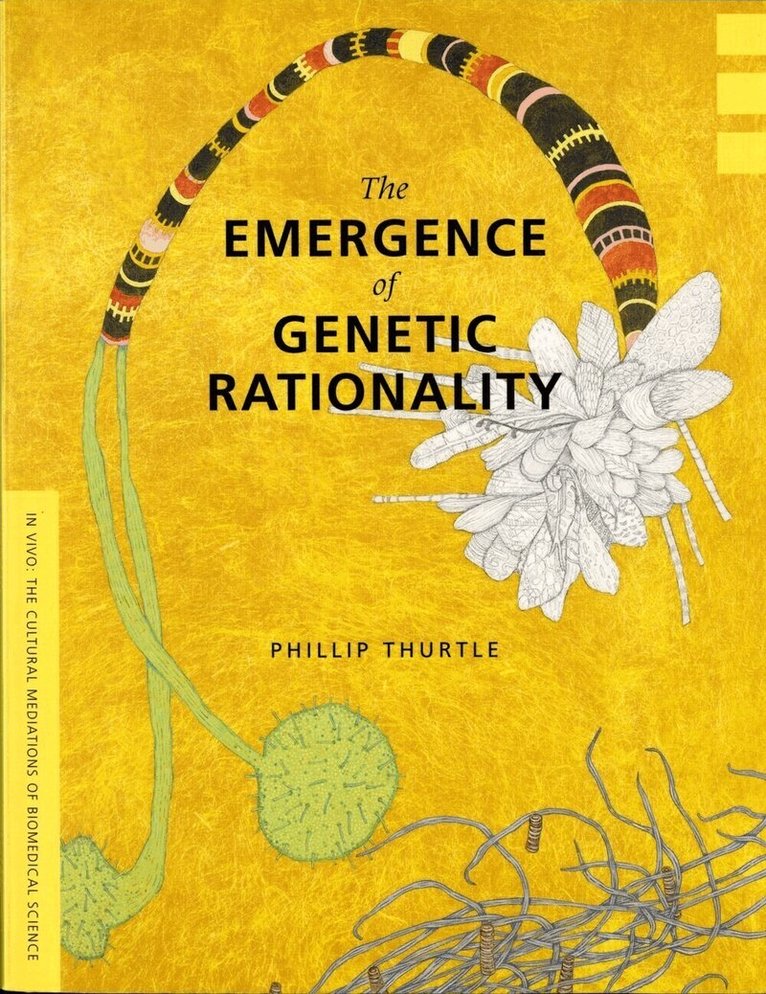
    Emergence of Genetic Rationality

    Space, Time, and Information in American Biological Science, 1870-1920

    AvPhillip Thurtle

    Häftad, Engelska, 2007

    Del i serien In Vivo: The Cultural Mediations of Biomedical Science

    586 kr

    Beställningsvara. Skickas inom 3-6 vardagar. Fri frakt över 249 kr.

    Fler format och utgåvor

    Inbunden

    1 747 kr

    E-bok

    606 kr

    Beskrivning

    The emergence of genetic science has profoundly shaped how we think about biology. Indeed, it is difficult now to consider nearly any facet of human experience without first considering the gene. But this mode of understanding life is not, of course, transhistorical. Phillip Thurtle takes us back to the moment just before the emergence of genetic rationality at the turn of the twentieth century to explicate the technological, economic, cultural, and even narrative transformations necessary to make genetic thinking possible.The rise of managerial capitalism brought with it an array of homologous practices, all of which transformed the social fabric. With transformations in political economy and new technologies came new conceptions of biology, and it is in the relationships of social class to breeding practices, of middle managers to biological information processing, and of transportation to experiences of space and time, that we can begin to locate the conditions that made genetic thinking possible, desirable, and seemingly natural.In describing this historical moment, The Emergence of Genetic Rationality is panoramic in scope, addressing primary texts that range from horse breeding manuals to eugenics treatises, natural history tables to railway surveys, and novels to personal diaries. It draws on the work of figures as diverse as Thorstein Veblen, Jack London, Edith Wharton, William James, and Luther Burbank. The central figure, David Starr Jordan - naturalist, poet, eugenicist, educator - provides the book with a touchstone for deciphering the mode of rationality that genetics superseded.Building on continental philosophy, media studies, systems theory, and theories of narrative, The Emergence of Genetic Rationality provides an inter-disciplinary contribution to intellectual and scientific history, science studies, and cultural studies. It offers a truly encyclopedic cultural history that challenges our own ways of organizing knowledge even as it explicates those of an earlier era. In a time in which genetic rationality has become our own common sense, this discussion of its emergence reminds us of the interdependence of the tools we use to process information and the conceptions of life they animate.

    Produktinformation

    • Utgivningsdatum:2007-12-20
    • Mått:152 x 229 x 23 mm
    • Vikt:635 g
    • Format:Häftad
    • Språk:Engelska
    • Serie:In Vivo: The Cultural Mediations of Biomedical Science
    • Antal sidor:396
    • Förlag:University of Washington Press
    • ISBN:9780295987507

    Utforska kategorier

    • Medicinsk genetik inom Medicin
    • Naturvetenskapens historia inom Naturvetenskap och teknik

    Mer om författaren

    Phillip Thurtle is assistant professor in the Comparative History of Ideas Program, University of Washington.

    Recensioner i media

    ". . . fascinating and wide-ranging. . . Revealing that challenge [the need to articulate the connections between the emergence and realization of genetic rationality] may be the most lasting contribution of this narrative for the history of genetics."

    Innehållsförteckning

    • AcknowledgmentsIntroductionI. Harnessing Heredity: Middle Class Mores and Information Management in Large-Scale BreedingPrelude1. Middle Class Mores: Beaufort's Bastards2. Breeding True: Processing a New EliteConclusion-"A Backward Glance": Corporate Inheritance as Bastard BirthII. Fish-Market Phenomenology: The Habits of Thought and the Space of Exchange in Late Nineteenth-Century Natural HistoryPrelude3. The Political Economy of Natural History4. Homologous Networks of Exchange: The Intersubjective Infrastructure of Scientific Exchange5. Categorizing Experience: Space and Time in Nineteenth-Century Natural History6. The Pacific Railway Survey: The Subject in the Panoramic ModeIII. History Writing Great Men Writing History: Recapitulation Narratives and Stories as Scientific ModelsPrelude7. Storied Pasts8. The Plot Thickens: The Political Economic Dimensions of Biological StoriesConclusion-Osborn and the Horse: The Conservative Literary Inheritance of Evolutionary StoriesIV. The Poetics of Wandering: Time, Narrative, and the Affective/Phenomenological BodyPrelude9. Wandering and Narrative10. Wandering and Inheritance in Light of the Sensory-Motor Complex11. Writing, Goods, and MemoryConclusion-New Folds in Space and TimeV. Hybrid Space, Hybrid Time: Record Keeping and the Indexing of Genomic Space and TimePrelude12. Industrial Perspectives: Luther Burbank13. Record Keeping: A Post-Hermeneutic Means for Charting the Space of FlowsConclusionThe Different Domains of LifeNotesBibliographyIndex