• Fri frakt över 249 kr
  • •
  • Snabba leveranser
  • •
  • Billiga böcker
Kundservice

Du är på sajten för privatpersoner.

Företag, bibliotek eller offentlig verksamhet?

Du handlar på classic.bokus.com, där alla dina funktioner finns intakta.
Till classic.bokus.com
Bokus logotyp. Gå till startsidan.
  • Erbjudanden
  • Student
  • Topplistor
  • Barn & ungdom
  • Bokus Play
  • E-böcker
  • Ljudböcker
  • Pocketböcker
  • Spel och pussel

Pocketfynda! Hundratals böcker för 49 kr/st →

Sidfot

Mina sidor

    Hjälp

    • Kundservice
    • Vanliga frågor och svar
    • Frakt och leverans
    • Retur vid ångerrätt
    • Reklamera vara
    • Betalning
    • Köpvillkor
    • Allmänna villkor
    • Information om webbplatsens tillgänglighet

    Om Bokus

    • Om oss
    • Pressrum
    • För studenter
    • För företag
    • För bibliotek och offentlig verksamhet
    • För leverantörer
    • Hållbarhet

    Populärt

    • Aktuella erbjudanden
    • Presentkort
    • Studentlitteratur
    • Nya böcker
    • Topplistor
    • Signerade böcker
    • Engelska böcker

    Inspiration

    • Boktips
    • BookTok
    • Barnbokskaraktärer
    • Populära författare
    Logotyp för Bokus
    Följ oss på Facebook (extern länk)Följ oss på Instagram (extern länk)Följ oss på YouTube (extern länk)Följ oss på TikTok (extern länk)
    bokus @ CookiesAnpassa cookiesIntegritetspolicyKöpvillkor
    Till Citymail hemsida (extern länk)Till Budbee hemsida (extern länk)Till Postnord hemsida (extern länk)Till Schenker hemsida (extern länk)Till Early Bird hemsida (extern länk)Till Walleys hemsida (extern länk)
    1. Samhälle och politik
    2. Sociologi och antropologi
    3. Sociologi

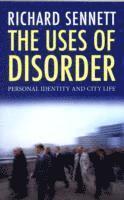
    Uses of Disorder

    Personal Identity and City Life

    AvRichard Sennett

    Häftad, Engelska, 2008

    423 kr

    Beställningsvara. Skickas inom 5-8 vardagar. Fri frakt över 249 kr.

    Fler format och utgåvor

    E-bok

    220 kr

    Häftad

    243 kr

    E-bok

    97 kr

    Beskrivning

    Richard Sennett is one of the world's leading sociologists, and this book, first published in 1970, was his first single-authored work. It launched his exploration of communities and how they live in cities, and outlined his view that order breeds narrow, violence-prone lives, while an 'equilibrium of disorder' brings vigour and diversity to urban life. The New York Times described it as 'the best available contemporary defence of anarchism'.'The Uses of Disorder' followed the student and urban rebellions of the late 1960s. But it remains relevant to the problems of city life sixty years on. In a new preface Sennett considers his own objectives in writing the book and the enduring benefits of a strong and fresh urban experience in the twenty-first century. The body of the text remains unchanged, ready for a new generation of readers.Richard Sennett is professor of social and cultural theory at the London School of Economics, and Bemis Professor of Social Science at MIT.

    Produktinformation

    • Utgivningsdatum:2008-09-19
    • Mått:140 x 216 x 13 mm
    • Vikt:291 g
    • Format:Häftad
    • Språk:Engelska
    • Antal sidor:224
    • Förlag:Yale University Press
    • ISBN:9780300148275

    Utforska kategorier

    • Sociologi inom Samhälle och politik
    • Statsvetenskap och politisk teori inom Samhälle och politik
    • Sociala grupper och identitet inom Samhälle och politik

    Mer om författaren

    Richard Sennett is professor of social and cultural theory at the London School of Economics, and Bemis Professor of Social Science at MIT. Among his books is The Culture of the New Capitalism (2006), published by Yale.

    Recensioner i media

    "'The issues Sennett raises are fundamental and profound. The book is utopian in the best sense - it tries to define a radically different future and to show that it could be constructed from the materials at hand.' New York Times Book Review 'We are prompted to think and dream and question old and tired cliches and some more recent ones, too, by an author whose mind is rich, wide-ranging, and, best of all, not afraid of life's ambiguities, not tempted to banish them all with ideological rhetoric' Robert Coles"