• Fri frakt över 249 kr
  • •
  • Snabba leveranser
  • •
  • Billiga böcker
Kundservice

Du är på sajten för privatpersoner.

Företag, bibliotek eller offentlig verksamhet?

Du handlar på classic.bokus.com, där alla dina funktioner finns intakta.
Till classic.bokus.com
Bokus logotyp. Gå till startsidan.
  • Erbjudanden
  • Nyheter
  • Student
  • Topplistor
  • Barn & ungdom
  • Bokus Play
  • E-böcker
  • Pocketböcker
  • Spel & pussel

10% rabatt på allt med kod: NYSTART10 →

Sidfot

Mina sidor

    Hjälp

    • Kundservice
    • Vanliga frågor och svar
    • Frakt och leverans
    • Retur vid ångerrätt
    • Reklamera vara
    • Betalning
    • Köpvillkor
    • Allmänna villkor
    • Information om webbplatsens tillgänglighet

    Om Bokus

    • Om oss
    • Pressrum
    • För studenter
    • För företag
    • För bibliotek och offentlig verksamhet
    • För leverantörer
    • Hållbarhet

    Populärt

    • Aktuella erbjudanden
    • Presentkort
    • Studentlitteratur
    • Nya böcker
    • Topplistor
    • Signerade böcker
    • Engelska böcker

    Inspiration

    • Boktips
    • BookTok
    • Populära bokserier
    • Barnbokskaraktärer
    • Populära författare
    Logotyp för Bokus
    Följ oss på Facebook (extern länk)Följ oss på Instagram (extern länk)Följ oss på YouTube (extern länk)Följ oss på TikTok (extern länk)
    bokus @ CookiesAnpassa cookiesIntegritetspolicyKöpvillkor
    Till Citymail hemsida (extern länk)Till Budbee hemsida (extern länk)Till Postnord hemsida (extern länk)Till Schenker hemsida (extern länk)Till Early Bird hemsida (extern länk)Till Walleys hemsida (extern länk)
    1. Historia och arkeologi
    2. Historia
    3. Historia: särskilda händelser och ämnen
    4. Socialhistoria och kulturhistoria

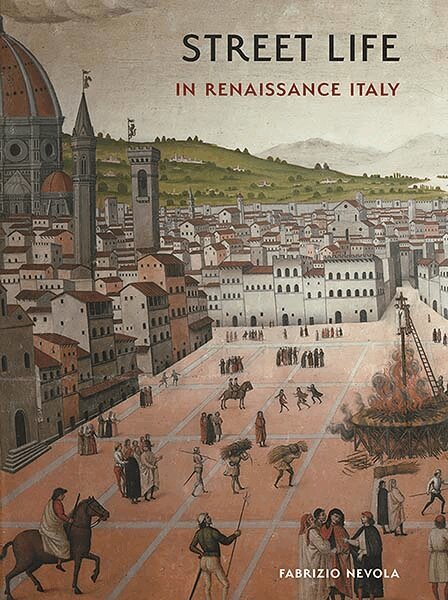
    Street Life in Renaissance Italy

    AvFabrizio Nevola

    Inbunden, Engelska, 2020

    533 kr

    Beställningsvara. Skickas inom 5-8 vardagar. Fri frakt över 249 kr.

    Beskrivning

    A radical new perspective on the dynamics of urban life in Renaissance ItalyThe cities of Renaissance Italy comprised a network of forces shaping both the urban landscape and those who inhabited it. In this illuminating study, those complex relations are laid bare and explored through the lens of contemporary urban theory, providing new insights into the various urban centers of Italy’s transition toward modernity. The book underscores how the design and structure of public space during this transformative period were intended to exercise a certain measure of authority over its citizens, citing the impact of architecture and street layout on everyday social practices. The ensuing chapters demonstrate how the character of public space became increasingly determined by the habits of its residents, for whom the streets served as the backdrop of their daily activities. Highlighting major hubs such as Rome, Florence, and Bologna, as well as other lesser-known settings, Street Life in Renaissance Italy offers a new look at this remarkable era.

    Produktinformation

    • Utgivningsdatum:2020-11-24
    • Mått:178 x 254 x 27 mm
    • Vikt:1 166 g
    • Format:Inbunden
    • Språk:Engelska
    • Antal sidor:320
    • Förlag:Yale University Press
    • ISBN:9780300175431

    Utforska kategorier

    • Socialhistoria och kulturhistoria inom Historia och arkeologi
    • Arkitekturhistoria inom Kultur
    • Konsthistoria inom Kultur

    Mer om författaren

    Fabrizio Nevola is professor of art history and visual culture at the University of Exeter.

    Recensioner i media

    “Fabrizio Nevola's beautiful book, Street Life in Renaissance Italy, is rich in detail and imagery.”—Emily Michelson, Times Higher Education"The quality of the present work is indisputable. The book makes a valuable contribution to recent developments within the architectural and urban history of the Italian Renaissance, and to reflections upon the mechanisms that have shaped, and continue to shape, the cities we inhabit. With his ability as a storyteller, Nevola will surely engage a wide variety of readers in a fascinating discovery of street life in Renaissance Italy."—Nele De Raedt, Architectural Histories"This is a beautifully produced and original book that reassesses urban life in ‘Renaissance Italy’ from the street up. It combines material from a wide range of written sources – chronicles, letters, sermons, biographies, statute laws, fictional tales, and architectural treatises – with the visual evidence of buildings, sites, and paintings […] an attractive and valuable contribution to both social and cultural history, and will become a standard point of reference and debate for many years."—Trevor Dean, Cultural and Social History"Nevola's book is an exercise in bridging this binary, between the street as a built environment envisioned by rulers and elites, and a space given meaning through the daily movements of its residents. Formed by multiple forces, Nevola argues, the pre-modern street was the ‘key ecosystem of everyday urban living’ (p. 269). […] The book presents a convincing framework for how to study the daunting complexities of street life. […] Because of the comparative approach and critical application of theory, there is plenty for those interested in other periods and disciplines to chew on. Not only wide-ranging and thorough, the book also raises questions and ideas beyond its scope. […] There may not be a blueprint for how to write about these complex, contested urban spaces, but by committing to look at streets from multiple perspectives Nevola has set a high standard."—Charlie Tavernor, Urban History"In this ambitious book, Fabrizio Nevola explores the interaction between buildings and people in the thoroughfares of the Italian Renaissance city. Street life, like musical performance, is ephemeral and its recovery is a challenging task for the historian. […] Working within [a] theoretical framework, Nevola draws on an impressive range of sources, including documents, chronicles, reports by travellers and ambassadors, novelle, maps, paintings, prints and public inscriptions, and he animates the imagery of urban life by starting each chapter with an anecdote or an extract from a novella."—Deborah Howard, Architectural History“[Street life in Renaissance Italy] offers us a diverse and nuanced account of the complexities of street life in the Italian Renaissance city. It sets a high standard for future research into this intriguing topic.”—David P. H. Napolitano, QFIAB