• Fri frakt över 249 kr
  • •
  • Snabba leveranser
  • •
  • Billiga böcker
Kundservice

Du är på sajten för privatpersoner.

Företag, bibliotek eller offentlig verksamhet?

Du handlar på classic.bokus.com, där alla dina funktioner finns intakta.
Till classic.bokus.com
Bokus logotyp. Gå till startsidan.
  • Erbjudanden
  • Nyheter
  • Student
  • Topplistor
  • Barn & ungdom
  • Bokus Play
  • E-böcker
  • Pocketböcker
  • Spel & pussel

10% rabatt på allt med kod: NYSTART10 →

Sidfot

Mina sidor

    Hjälp

    • Kundservice
    • Vanliga frågor och svar
    • Frakt och leverans
    • Retur vid ångerrätt
    • Reklamera vara
    • Betalning
    • Köpvillkor
    • Allmänna villkor
    • Information om webbplatsens tillgänglighet

    Om Bokus

    • Om oss
    • Pressrum
    • För studenter
    • För företag
    • För bibliotek och offentlig verksamhet
    • För leverantörer
    • Hållbarhet

    Populärt

    • Aktuella erbjudanden
    • Presentkort
    • Studentlitteratur
    • Nya böcker
    • Topplistor
    • Signerade böcker
    • Engelska böcker

    Inspiration

    • Boktips
    • BookTok
    • Populära bokserier
    • Barnbokskaraktärer
    • Populära författare
    Logotyp för Bokus
    Följ oss på Facebook (extern länk)Följ oss på Instagram (extern länk)Följ oss på YouTube (extern länk)Följ oss på TikTok (extern länk)
    bokus @ CookiesAnpassa cookiesIntegritetspolicyKöpvillkor
    Till Citymail hemsida (extern länk)Till Budbee hemsida (extern länk)Till Postnord hemsida (extern länk)Till Schenker hemsida (extern länk)Till Early Bird hemsida (extern länk)Till Walleys hemsida (extern länk)
    1. Ekonomi och Ledarskap
    2. Nationalekonomi
    3. Ekonomisk historia

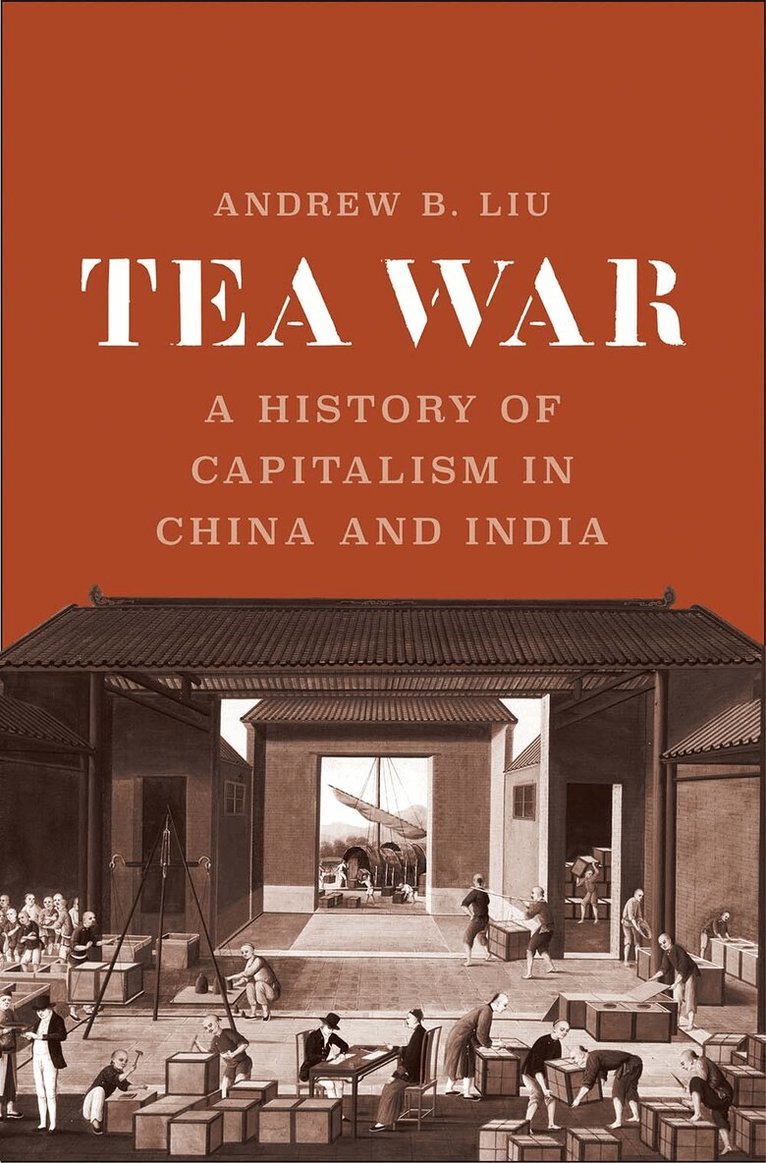
    Tea War

    A History of Capitalism in China and India

    AvAndrew B. Liu

    Inbunden, Engelska, 2020

    452 kr

    Beställningsvara. Skickas inom 5-8 vardagar. Fri frakt över 249 kr.

    Beskrivning

    A history of capitalism in nineteenth‑ and twentieth‑century China and India that explores the competition between their tea industries  “Tea War is not only a detailed comparative history of the transformation of tea production in the 19th and early 20th centuries, but it also intervenes in larger debates about the nature of capitalism, global modernity, and global history.”— Alexander F. Day, Occidental CollegeTea remains the world’s most popular commercial drink today, and at the turn of the twentieth century, it represented the largest export industry of both China and colonial India. In analyzing the global competition between Chinese and Indian tea, Andrew B. Liu challenges past economic histories premised on the technical “divergence” between the West and the Rest, arguing instead that seemingly traditional technologies and practices were central to modern capital accumulation across Asia. He shows how competitive pressures compelled Chinese merchants to adopt abstract industrial conceptions of time, while colonial planters in India pushed for labor indenture laws to support factory-style tea plantations. Characterizations of China and India as premodern backwaters, he explains, were themselves the historical result of new notions of political economy adopted by Chinese and Indian nationalists, who discovered that these abstract ideas corresponded to concrete social changes in their local surroundings. Together, these stories point toward a more flexible and globally oriented conceptualization of the history of capitalism in China and India.

    Produktinformation

    • Utgivningsdatum:2020-06-23
    • Mått:156 x 235 x 25 mm
    • Vikt:704 g
    • Format:Inbunden
    • Språk:Engelska
    • Antal sidor:360
    • Förlag:Yale University Press
    • ISBN:9780300243734

    Utforska kategorier

    • Ekonomisk historia inom Ekonomi och Ledarskap
    • Asiens historia inom Historia och arkeologi
    • Allmän historia och världshistoria inom Historia och arkeologi

    Mer om författaren

    Andrew B. Liu is assistant professor of history at Villanova University, where his research focuses on China, transnational Asia, and the history of capitalism.

    Recensioner i media

    “Mr Liu ranges widely in his carefully researched and well-crafted narrative. He is most concerned with the conduct and impact of the tea trade, but punctuates the story of profit and exploitation with fascinating cultural titbits.”—The Economist“Maritime historians interested in capitalism studies will find it rewarding to read Liu’s brilliant (re)interpretations of political-economy theories.”—Dan Du, International Journal of Maritime History“An impressive and insightful examination of the tea production competition between China and India in the nineteenth and early twentieth centuries. . . . Tea War is an important assessment of the significance of global trade and production via a refreshing pivot to the emerging industrial capitalist economies of China and Asia.”—Troy Bickham, Cultural and Social HistoryWinner of the 2022 Ralph Gomory Prize, sponsored by the Business History ConferenceLonglisted for the International Convention of Asia Scholars’ Prize for the Best Book in the Humanities, sponsored by the International Convention of Asia Scholars (ICAS)“Tea War is not only a detailed comparative history of the transformation of tea production in the 19th and early 20th centuries, but it also intervenes in larger debates about the nature of capitalism, global modernity, and global history.”— Alexander F. Day, Occidental College“In Tea War, Andy Liu grapples with the question of how to write the history of capitalism beyond the North Atlantic. His comparative study of two Asian frontier regions presses us to rethink the conventional signposts around which the history of capitalism has conventionally been written. He shows how careful empirical inquiry and social theory can inform each other in innovative and exciting ways.”—Andrew Sartori, New York University“Andy Liu’s Tea War opens worlds by closing in on the processes of tea production in nineteenth-century India and China. Liu’s contentions about capitalism provoke; his meticulous empirical excavations persuade.”—Rebecca E. Karl, New York University