• Fri frakt över 249 kr
  • •
  • Snabba leveranser
  • •
  • Billiga böcker
Kundservice

Du är på sajten för privatpersoner.

Företag, bibliotek eller offentlig verksamhet?

Du handlar på classic.bokus.com, där alla dina funktioner finns intakta.
Till classic.bokus.com
Bokus logotyp. Gå till startsidan.
  • Erbjudanden
  • Nyheter
  • Student
  • Topplistor
  • Barn & ungdom
  • Bokus Play
  • E-böcker
  • Pocketböcker
  • Spel & pussel

10% rabatt på allt med kod: NYSTART10 →

Sidfot

Mina sidor

    Hjälp

    • Kundservice
    • Vanliga frågor och svar
    • Frakt och leverans
    • Retur vid ångerrätt
    • Reklamera vara
    • Betalning
    • Köpvillkor
    • Allmänna villkor
    • Information om webbplatsens tillgänglighet

    Om Bokus

    • Om oss
    • Pressrum
    • För studenter
    • För företag
    • För bibliotek och offentlig verksamhet
    • För leverantörer
    • Hållbarhet

    Populärt

    • Aktuella erbjudanden
    • Presentkort
    • Studentlitteratur
    • Nya böcker
    • Topplistor
    • Signerade böcker
    • Engelska böcker

    Inspiration

    • Boktips
    • BookTok
    • Populära bokserier
    • Barnbokskaraktärer
    • Populära författare
    Logotyp för Bokus
    Följ oss på Facebook (extern länk)Följ oss på Instagram (extern länk)Följ oss på YouTube (extern länk)Följ oss på TikTok (extern länk)
    bokus @ CookiesAnpassa cookiesIntegritetspolicyKöpvillkor
    Till Citymail hemsida (extern länk)Till Budbee hemsida (extern länk)Till Postnord hemsida (extern länk)Till Schenker hemsida (extern länk)Till Early Bird hemsida (extern länk)Till Walleys hemsida (extern länk)
    1. Naturvetenskap och teknik
    2. Matematik och naturvetenskap
    3. Biologi
    4. Biovetenskap

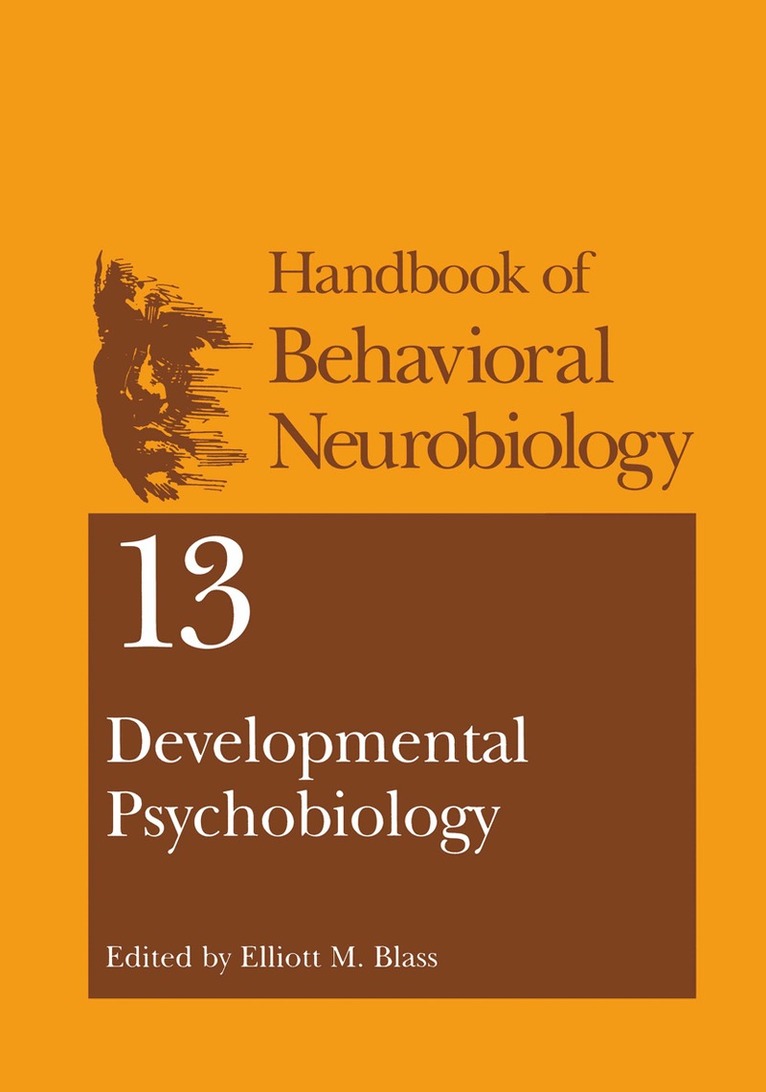
    Developmental Psychobiology

    AvElliott M. Blass,Elliott M. Blass

    Inbunden, Engelska, 2001

    Del i serien Handbooks of Behavioral Neurobiology

    2 165 kr

    Beställningsvara. Skickas inom 10-15 vardagar. Fri frakt över 249 kr.

    Beskrivning

    ELLIOTT M. BLASS Fifteen years have passed since the first volume on developmental psychobiology (Blass, 1986) appeared in this series and 13 since the publication of the second volume (Blass, 1988). These volumes documented the status of the broad domain of scientific inquiry called developmental psychobiology and were also written with an eye to the future. The future has been revolutionary in at least three ways. First, there was the demise of a descriptive ethology as we had known it, to be replaced first by sociobiology and later by its more sophisticated versions based on quantitative predictions of social interactions that reflected relatedness and inclu­ sive fitness. Second, there was the emergence of cognitive science, including cogni­ tive development, as an enormously strong and interactive multidisciplinary effort. Making the "functional" brain more accessible made this revolution all the more relevant to our discipline. In the laboratory, immunocytochemical detection of immediate / early genes, such as los, now allows us to trace neuronal circuits activated during complex behaviors. The "functional" brain of primates, especially humans, was also made very accessible through neuroimaging with which we can look at and into brains as they solve and attempt to solve particular tasks. Those of us who were trained in neurology as graduate students two or three decades ago recognize only the people in white coats and patients in beds or on gurneys when we visit neurologi­ cal units today. The rest is essentially new.

    Produktinformation

    • Utgivningsdatum:2001-09-30
    • Mått:178 x 254 x 39 mm
    • Vikt:1 383 g
    • Format:Inbunden
    • Språk:Engelska
    • Serie:Handbooks of Behavioral Neurobiology
    • Antal sidor:619
    • Upplaga:2001
    • Förlag:Springer Science+Business Media
    • ISBN:9780306464898

    Utforska kategorier

    • Biovetenskap inom Naturvetenskap och teknik
    • Människans biologi inom Naturvetenskap och teknik

    Innehållsförteckning

    • Introduction. 1. Section 1: Early Development of Behavior and the Nervous System: An Embryological Perspective: A Postscript from the End of the Millennium; R.W. Oppenheim. Section 2: Early Development of Behavior and the Nervous System. An Embryological Perspective; R.W. Oppenheim, L. Haverkamp. 2. Spatial Coding in the Olfactory System: The Role of Early Experience; B.A. Johnson, M. Leon. 3. Tunable Seers: Activity-Dependent Development of Vision in the Cat and Fly; H.V.B. Hirsch, S. Bliss Tieman, M. Barth, H. Ghiradella. 4. The Development of Sex Differences in the Nervous System; N.G. Forger. 5. The Developmental Context of Thermal Homeostasis; M.S. Blumberg. 6. Development of Behavior Systems; J.A. Hogan. 7. The Development and Function of Nepotism: Why Kinship Matters in Social Relationships; W.G. Holmes. 8. Play: Attributes and Neural Substrates; G.M. Burghardt. 9. Emerging Psychobiology and the Avian Song System; T.J. DeVoogd, C.H.A. Lauay. 10. The Developmentof Action Sequences; J.C. Fentress, S. Gadbois. 11. Selective Breeding for an Infantile Phenotype (Isolation Calling): A Window on Developmental Processes; S.A. Brunelli, M.A. Hofer. 12. The Ontogeny of Motivation: Hedonic Preferences and their Biological Bases in Developing Rats; A. Weller. 13. Taste Development; D. Hill. 14. Infant Stress, Neuroplasticity and Behavior; P. Kehoe, W. Shoemaker. 15. Science Lies its Way to the Truth... Really; M.J. West, A.P. King. Index.