• Fri frakt över 249 kr
  • •
  • Snabba leveranser
  • •
  • Billiga böcker
Kundservice

Du är på sajten för privatpersoner.

Företag, bibliotek eller offentlig verksamhet?

Du handlar på classic.bokus.com, där alla dina funktioner finns intakta.
Till classic.bokus.com
Bokus logotyp. Gå till startsidan.
  • Erbjudanden
  • Nyheter
  • Student
  • Topplistor
  • Barn & ungdom
  • Bokus Play
  • E-böcker
  • Pocketböcker
  • Spel & pussel

10% rabatt på allt med kod NYSTART10 →

Sidfot

Mina sidor

    Hjälp

    • Kundservice
    • Vanliga frågor och svar
    • Frakt och leverans
    • Retur vid ångerrätt
    • Reklamera vara
    • Betalning
    • Köpvillkor
    • Allmänna villkor
    • Information om webbplatsens tillgänglighet

    Om Bokus

    • Om oss
    • Pressrum
    • För studenter
    • För företag
    • För bibliotek och offentlig verksamhet
    • För leverantörer
    • Hållbarhet

    Populärt

    • Aktuella erbjudanden
    • Presentkort
    • Studentlitteratur
    • Nya böcker
    • Topplistor
    • Signerade böcker
    • Engelska böcker

    Inspiration

    • Boktips
    • BookTok
    • Populära bokserier
    • Barnbokskaraktärer
    • Populära författare
    Logotyp för Bokus
    Följ oss på Facebook (extern länk)Följ oss på Instagram (extern länk)Följ oss på YouTube (extern länk)Följ oss på TikTok (extern länk)
    bokus @ CookiesAnpassa cookiesIntegritetspolicyKöpvillkor
    Till Citymail hemsida (extern länk)Till Budbee hemsida (extern länk)Till Postnord hemsida (extern länk)Till Schenker hemsida (extern länk)Till Early Bird hemsida (extern länk)Till Walleys hemsida (extern länk)
    1. Naturvetenskap och teknik
    2. Matematik och naturvetenskap
    3. Biologi

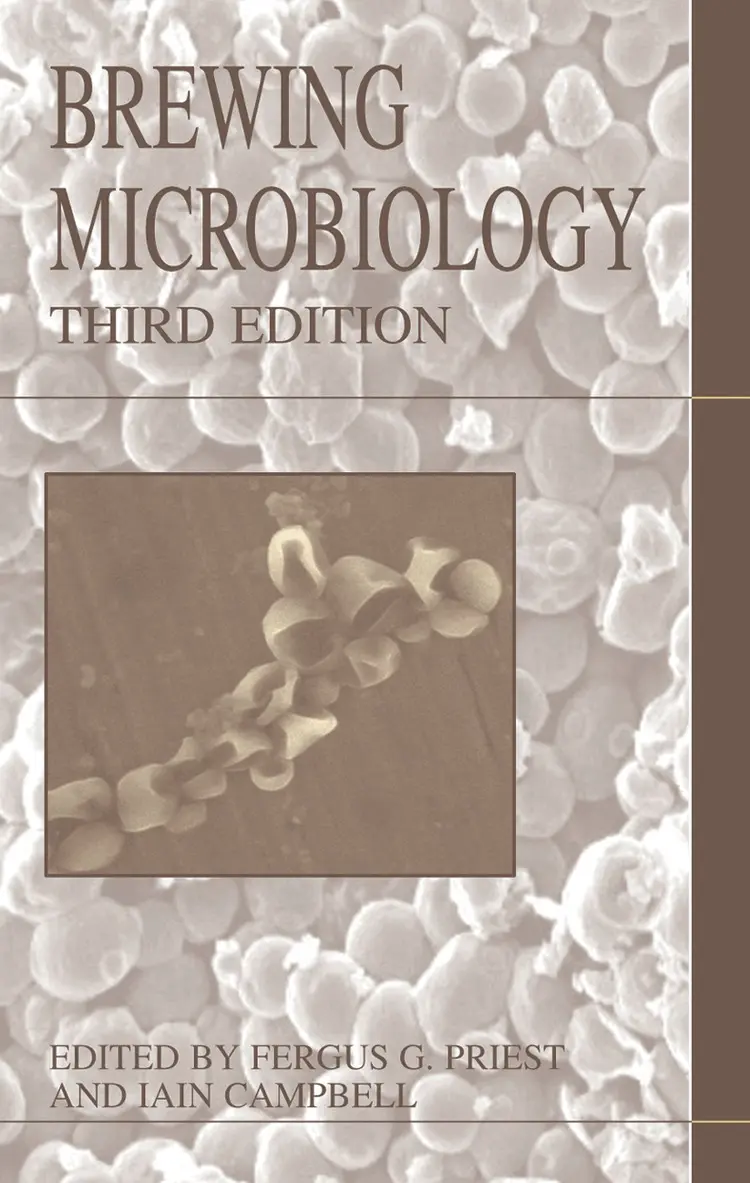
    Brewing Microbiology

    AvF.G. Priest,Iain Campbell

    Inbunden, Engelska, 2002

    2 485 kr

    Beställningsvara. Skickas inom 10-15 vardagar. Fri frakt över 249 kr.

    Beskrivning

    Much has happened in the brewing industry since the last edition of this book was published in 1996. In particular, there has been substantial con­ solidation of larger brewing companies as major multinational concerns, and at the other end of the spectrum the microbrewing scene in various parts of the world has become established as a sustainable enterprise. For those involved in the scientific and technical aspects of fermented bever­ age production the changes have been no less daunting. The complete genome sequence of Saccharomyces cerevisiae has been determined and studies are underway in numerous laboratories throughout the world to unravel the expression of the genome (transcriptomics and proteomics) and understand exactly "how a yeast works. " This will undoubtedly con­ tribute to our understanding of yeast fermentation and flavor generation in a revolutionary way because it will enable the simultaneous monitor­ ing of all genes in the organism during the fermentation. In Chapters 2 and 3 of this volume Colin Slaughter and John Hammond bring the reader up-to-date in this rapidly moving area and cover the remarkable achievements of modern biochemistry and molecular biology. lain Campbell has also revised the systematics of culture and wild yeasts in Chapter 7. The other major technical change since the last edition of this book is the introduction of molecular characterization and detection of microor­ ganisms based largely, but not exclusively, on the polymerase chain reac­ tion (PCR) for amplification of specific DNA fragments.

    Produktinformation

    • Utgivningsdatum:2002-11-30
    • Mått:155 x 235 x 32 mm
    • Vikt:774 g
    • Format:Inbunden
    • Språk:Engelska
    • Antal sidor:399
    • Upplaga:3
    • Förlag:Springer Science+Business Media
    • ISBN:9780306472886

    Utforska kategorier

    • Biologi inom Naturvetenskap och teknik
    • Tillverkningsteknik inom Naturvetenskap och teknik

    Innehållsförteckning

    • 1 Microbiological aspects of brewing.- Malting.- Brewing, mashing, and hop boiling.- Fermentation.- Postfermentation treatments.- Concluding remarks.- References.- 2 The biochemistry and physiology of yeast growth.- The cell cycle.- The growth and fermentation cycle.- Cell composition, nutrition, and general metabolism.- Energy and intermediary metabolism.- Yeast biochemistry and beer production.- Summary.- References.- 3 Yeast genetics.- Genetic features of Saccharomyces cerevisiae.- The need for new brewing yeasts.- Genetic techniques.- Application of recombinant DNA methods to brewing yeasts.- Molecular biological approaches to yeast differentiation.- The nature of the brewing yeast genome.- The commercial use of genetically modified brewing yeasts.- Conclusions.- Acknowledgment.- References.- 4 The microbiota of barley and malt.- The microbiota of barley.- The microbiota of malt.- Effects of microorganisms on malting.- Effects of the microbiota on beer and distilled spirit.- Health hazards.- Assessment of mold contamination.- References.- 5 Gram-positive brewery bacteria.- Lactic acid bacteria.- Lactobacillus.- Pediococcus.- Leuconostoc.- Homofermentative cocci.- Kocuria, Micrococcus and Staphylococcus.- Endospore-forming bacteria.- Identification of genera of Gram-positive bacteria of brewery origin.- Concluding remarks.- References.- 6 Gram-negative brewery bacteria.- Acetic acidbacteria.- Enterobacteriaceae.- Zymomonas.- Anaerobic Gram-negative rods.- Megasphaera.- Miscellaneous non-fermentative bacteria.- Detection, enumeration, and isolation.- Conclusions.- References.- 7 Wild yeasts in brewing and distilling.- Systematics of yeasts.- Properties for identification of yeasts.- Detection of wild yeasts.- Identification of wild yeasts.- Effects of wild yeasts in the brewery.- Elimination of wild yeasts.- References.- 8 Rapid detection and identification of microbial spoilage.- Impedimetric techniques (conductance, capacitance).- Microcalorimetry.- Turbidometry.- How cytometry.- ATP bioluminescence.- Microcolony method.- Direct epiflourescence filter technique (DEFT).- Chemscan.- Protein fingerprinting by polyacrylamide gel electrophoresis.- Karyotyping (chromosome fingerprinting).- Immunoanalysis.- Hybridization using DNA probes.- Polymerase chain reaction.- Random amplified polymorphic DNA PCR.- Summary.- Acknowledgments.- References.- 9 Rapid identification of microorganisms.- What is identification?.- Approaches to identification.- Nucleic acid-based identification.- Techniques for examining proteins.- Methods that examine aspects of cell composition.- Techniques for studying morphology and behavior.- Concluding remarks.- Acknowledgments.- References.- 10 Microbiology and sanitation in U.S. microbrewies.- The raw materials.- The process and product.- Beer contact surfaces.- Concluding remarks.- References.- 11 Cleaning and disinfection in the brewing industry.- Definitions.- Standards required in a brewery.- Cleaning methods available.- Soil composition.- Process of detergency.- Chemistry of detergents.- Caustic and alkaline detergents.- Sequestrants.- Acids.- Surface-active agents.- Disinfectants and sanitizers used in breweries.- Oxidizing disinfectants.- Nonoxidizing disinfectants.- Water treatment.- Steam.- Summary.- References.- 12 Microbiological methods in brewing analysis.- Microbiological analysis of raw materials.- Yeast.- Wort and fermentation.- Sterility of plant.- Beer.- Conclusions.- References.